
The 2026 Data Leak Threat: Detroit IT Support for Unbreakable Business Reputation
Corporate data leaks keep executives awake at night for good reason. The financial reality of a modern cyberattack is staggering and growing worse every year. Recent reports show the average data breach costs surged to an all-time high of $10.22 million in the United States. That figure represents a devastating blow to even the healthiest corporate balance sheet.
However, the real danger goes way beyond short-term monetary fines and sanctions imposed by the authorities. With cyber threats becoming more advanced in 2026, a data leak involving the general population will quickly undermine a mid-to-large enterprise’s reputation. There is a loss of trust on the part of the customers, vendors, and partners who discover that you have not taken care of their sensitive information.
Complex supply chains, advanced manufacturing systems, and enormous healthcare systems are found in Detroit. These industries must have an absolute high availability. A failure of the service not only halts an office inside the company, but it also paralyzes manufacturing lines and slows down essential services in the region.
With the sophistication of cyber threats, protecting your brand no longer takes merely the installation of antivirus software, but an active collaboration. With its partnership with a local technology team, you will have access to a high-end endpoint security system and quick disaster recovery that will have your business up and your reputation untarnished.
Key Takeaways
- The most devastating and enduring financial consequences of contemporary data leaks are lost business and reputation.
- The adoption of AI and automation into proactive endpoint security is a financial requirement that is hard and fast to implement in order to prevent contemporary cyber threats in 2026.
- Speed of disaster recovery is the key to reducing operational downtime and preserving public confidence.
- The combination of local IT agility with physical, enterprise data center infrastructure forms a special, non-breakable security benefit.
The Hidden Price Tag: How Data Leaks Destroy Brand Trust
When a cyber incident strikes the news, the first thing that is often addressed is technical recovery measures and possible litigation costs. However, the actual price of a 2026 data breach hits right at the core of your business’s consumer trust. It is a long and arduous journey to reestablish a tattered brand, and most companies have exhausted their resources before they can restore their reputation.
Any downtime on operations is immediately frustrating to your customers. Once the critical systems are offline, the orders will be stopped, communication will not be possible, and clients will be in the dark. Such turmoil rapidly destroys brand loyalty and leads your best customers into the hands of your competitors.
The economic repercussions of this broken trust can be measured very well. Studies have established that organizations are incurring an average of 1.47 million dollars per case in lost business (including system downtime), lost customers, and damaged reputation.
You are not simply paying IT teams to repair the hacked-down servers. You are hemorrhaging revenue even after the first breach has been contained. Renewals of contracts are reduced, sales cycles are frozen, and people relate your brand name to laxity instead of dependability.
The reputational harm is even worse in the B2B segment. Enterprise customers perform tight vendor risk evaluation before contract signing. In case your company has been known to leak data in the past, you will automatically fail these security audits. Once trust is lost, it is extremely difficult to regain a lost enterprise contract.
Fighting AI with AI: Modernizing Your Endpoint Security
The digital threat landscape is shifting at an alarming pace. Bad actors are no longer relying on slow, manual hacking techniques to penetrate corporate networks. They now use artificial intelligence to create highly sophisticated, automated cyber threats capable of bypassing traditional firewalls in mere seconds.
The modern cybercriminals can scan thousands of corporate networks at the same time with the help of machine learning algorithms. They seek small loopholes, which could be an unpatched server or a weakly secured employee password. As soon as they locate a gap, the software will use it automatically with no human input.
Simple, reactive antivirus software would not be suitable to protect businesses in 2026 at all. Old systems merely wait until they are hit by a known virus signature before it can do anything. This small delay in a high-availability setting means that system glitches can propagate, and huge data exfiltration can become possible before anyone even realizes that the intrusion is taking place.
Your corporate defense systems need to be able to think as quickly as the attackers to prevent these automated threats. The contemporary endpoint security employs ongoing behavioral analysis to trace network traffic and close down suspicious traffic in real-time. This active approach prevents any threats before they can steal even a single file in your servers.
The payback of this proactive solution is unquestionable to corporate budgets. According to security research, all organizations that implemented security AI and automation on a large scale in their operations were able to save an average of 2.2 million dollars in comparison to their counterparts who used legacy tools.
| Security Approach | Threat Detection Speed | Incident Response | Financial Impact |
| Legacy Antivirus | Days or weeks | Manual, reactive investigation | High risk of data loss and fines |
| AI-Driven Security | Milliseconds | Automated, immediate isolation | Millions saved in breach mitigation |
Rapid Disaster Recovery: Your Ultimate Reputation Safety Net
Restoring your corporate data is just half a battle in recent cybersecurity. The speed of your recovery is the defining border between a small internal IT hiccup and a big PR crisis, when a network inevitably goes down. When your business is closed for a few days, people will be aware of that, and panic will travel faster.
The dwell time is the time that an attacker spends within a network. The more time a hacker is free, the more he/she encrypts or steal data. The end point of any contemporary IT strategy is to shrink this window of exposure. Research always indicates that the time it takes to detect and contain a data breach longer than 200 days costs your organization an average of $5.01 million; the longer your system is down or insecure, the higher your recovery expense.
Ensuring Business Continuity
It is no use having a backup that will require one week to restore the files. Until it is too late, when they are in an actual emergency, many executives find out that their backup drives are corrupted. A trusted partner will perform thorough, regular tests to ensure that your data is clean and can be deployed at any time.
By partnering with an established IT support provider in Detroit, your business gains access to a modernized infrastructure designed for rapid failover. These disaster recovery services provide scalable, on-demand resources that instantly spin up duplicate virtual environments, dramatically reducing your recovery time. While your security teams utilize “remote hands” to isolate the threat behind the scenes, your employees experience zero disruption. This seamless continuity provides a worry-free technology experience, ensuring your business continues processing orders as if nothing happened—the ultimate reputation safety net.
Why Detroit Enterprises Need Local, Heavy-Duty Infrastructure
It is a common misconception among many mid-to-large organizations to turn their network security over to generic, outsourced managed service providers. In case of a crisis strike, such remote call centers tend to leave executives in a sterile ticketing queue. The waiting of slow remote tech support has a deep frustration when your business is losing money by the minute.
Collaborating with a localized Detroit IT specialist is an entirely new service experience. You have the peace of mind that comes with responsive experts who consider your technology as their own. A local team will be aware of the operational pacing of Detroit businesses and will be able to muster engineers on-site.
Technology is a people business after all. You require an account manager who will come to your office, cross the table, and tell you about complicated security measures in simple terms. This personalized service is indeed something that is not present with giant, nameless technology conglomerates.
With complete dependency on remote, shared cloud services, you cannot determine the physical infrastructure holding your corporate secrets. This is altered completely when dealing with a local infrastructure partner. They store your data in hardened centers that are monitored by superior biometrics, backup power systems, and 24/7 surveillance.
A leading local vendor will take a hands-on approach to hardware benefits right to the table. They provide you with enterprise-level protection of your physical infrastructure in your backyard by owning and operating their own large, hardened data center. You reap the rewards of the infrastructure-level without the huge capital investment.
Local companies can use flexible utility billing systems where they only pay according to the amount of computing power they consume. This is the localized strategy that provides the enormous potential of a global cloud provider and the here and now, intimate service of a local partner.
| Support Model | Issue Resolution | Infrastructure Ownership | Accountability |
| Generic Outsourced MSP | Slow ticketing queues | Relies entirely on third-party clouds | Low, distant support staff |
| Detroit Local IT Partner | Immediate, localized response | Owns heavy-duty data centers | High, personalized partnership |
Conclusion
The economic realities of 2026 make no time to rest. Cyber threats are very automated, incessant, and costly to address. Those organizations that will flourish will be those that put operational resilience first.
The 2026 threat environment will require a multi-layered defense strategy that is highly coordinated to be able to survive. Your company requires fast-detection tools, recovery measures, and an unwavering infrastructure to withstand automated cyberattacks. Less than that will put your customer data in the hands of bad actors of the modern era.
Protecting your brand image requires a business-level ally who has a first-hand feel of what is at stake. You cannot defend a state-of-the-art enterprise using tools that were based on a past decade, that are reactive. Your technology base should be resilient, initiative-oriented, and locally-based.
Detroit business leaders need to cease to be satisfied with reactive IT support. Today, you can create an indestructible technological base. Secure your important data, guarantee the availability of your business, and the safety of your reputation from the next attack before it comes.
Popular on OTW Right Now!
-
 From Email to Data Security: Building a Reliable Digital Setup for a New Business
-
 Building Digital Trust: How Organizations Are Strengthening Their Defenses Against Evolving Cyber Threats
-
 How Tech Startups Can Build Stronger Cybersecurity Through CMMC Compliance
-
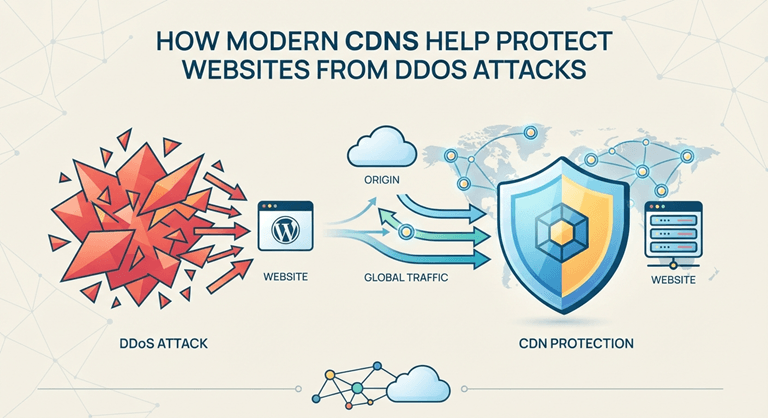
 How Modern CDNs Help Protect Websites from DDoS Attacks

About The Author

Gagan Bhangu
Founder of otechworld.com and managing editor. He is a tech geek, web-developer, and blogger. He holds a master's degree in computer applications and making money online since 2015.