
How Can Managed Print Services Reduce Costs And Improve Document Security?

Printing remains an essential part of daily business operations, from preparing contracts and invoices to handling customer records and internal reports. However, managing printers across departments can become surprisingly expensive.
Toner runs out unexpectedly, equipment requires frequent repairs, and employees print documents they no longer need. Meanwhile, inconsistent printing practices make it difficult to track expenses or identify waste. Beyond these costs, unattended printouts and unrestricted access to sensitive files can expose confidential business information.
These challenges often grow as organizations expand, making existing print management practices harder to maintain.
This is where managed print services come in. These services combine cost monitoring, equipment management, and appropriate security controls to help businesses make printing more efficient and protect important information.
This article explains how managed print services reduce operational expenses, improve document security, and create a more controlled printing environment.
1. Centralized Print Management Helps Control Operational Costs
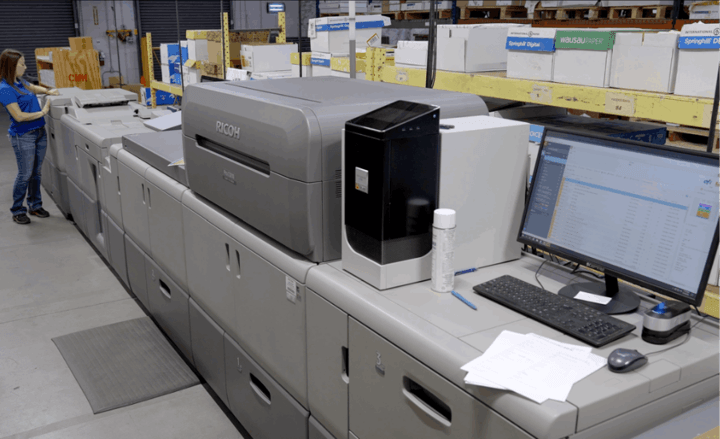
Managing printers independently across departments makes it difficult to understand how much printing actually costs. Separate supply purchases, maintenance invoices, and equipment expenses can create fragmented spending.
By bringing these activities together, managed print services help businesses gain a clearer picture of their overall printing expenses.
A managed program begins with an assessment of the existing print environment. This process examines device usage, printing volumes, supply consumption, and maintenance requirements.
With this information, they can identify underused equipment, unnecessary printing, and opportunities to simplify your setup. Consequently, spending decisions become based on actual needs rather than assumptions.
Centralized management also makes budgeting easier. Instead of handling numerous disconnected purchases and service requests, businesses can coordinate covered expenses through an agreed service arrangement.
Consolidated reporting helps teams understand where their money goes and which areas need attention. Although savings depend on the organization’s current setup and contract terms, better visibility creates a practical foundation for reducing avoidable costs.
2. Optimized Printer Fleets Reduce Waste and Maintenance Expenses
More printers do not necessarily mean greater productivity. When every department maintains its own equipment, businesses may end up paying for devices that receive little use. Each additional printer can also introduce more supply requirements, maintenance tasks, and potential service interruptions.
Managed print services help address this problem by matching equipment to actual demand. For example, an office with several lightly used desktop printers might benefit from a smaller number of strategically placed multifunction devices. The machines are capable of printing, scanning, and copying, eliminating the need to have different machines.
Nevertheless, placement and capacity should consider the workflows of employees in order to prevent queue formation or access issues.
Another cost control opportunity is through preventive maintenance. Routine maintenance is able to detect emerging problems with the equipment even before they lead to a lot of downtime or costly maintenance.
Automated toner replenishment also prevents shortages of toner that interrupt valuable work. This means that employees waste less time trying to figure out how to solve common issues, and the business is able to use its equipment and other resources to better benefit.
3. Secure Printing Controls Protect Confidential Documents
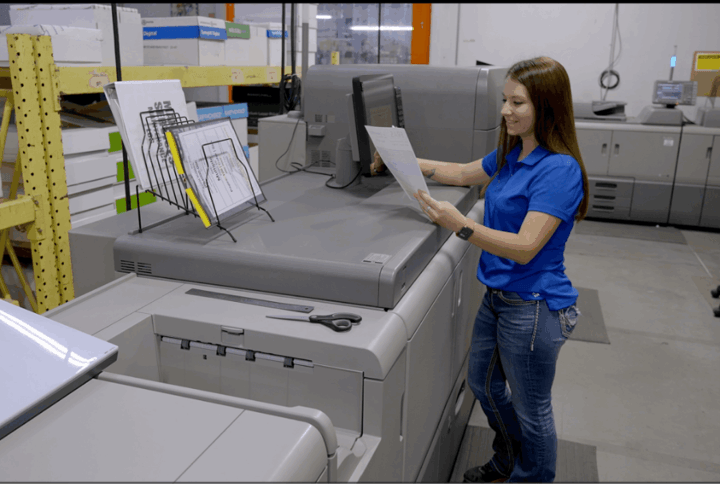
Cost-cutting is important, yet the security of sensitive information is also critical. Consider an employee printing a contract containing financial details and leaving it unattended beside a shared printer. Anyone passing through the area might see or collect those pages. The same risks occur when confidential reports are forwarded to devices that do not have proper access controls.
Secure pull printing assists in lessening this exposure. Rather than sending out a document, the system stores the print job until the authorized user logs into the machine. Authentication methods may include a PIN, access card, or supported login credentials. This will assist in ensuring that the documents reach their target audiences instead of being abandoned in trays.
Secure data transmission and access controls offer extra protection. Companies can also limit printing rights based on the job roles and use supported encryption to secure information across systems and devices. These controls are especially useful in health care providers, financial institutions, and law firms. However, secure printing should be a component of a broader information security program that encompasses the right policies, user education, and access control.
4. Print Tracking and Usage Policies Strengthen Security and Accountability
In the absence of centralized tracking, businesses might not be able to tell who printed a document, what device processed the job, or where unwarranted output is generated. This invisibility may add to the cost and make it more difficult to trace unusual printing activity. Thus, one of the components of responsible document management is print monitoring.
Print management software will be able to give reports about printing quantities, device usage, and user or departmental usage. These reports may assist administrators in recognizing unwarranted printing, examining abnormal trends, and more efficiently spending money, depending on the system. As an example, a department that prints a lot of single-sided documents could have printing defaults revised, or its document processes reevaluated.
Clear printing policies make these insights more useful. Waste can be minimized with the use of duplex printing, which is the default setting, limitation of unnecessary color printing, and limited access to sensitive documents. Meanwhile, administrators ought to set up the logging and retention settings in a sensitive manner to guarantee employees’ privacy.
Monitoring according to clear policies gives businesses a better sense of responsibility and does not require unnecessary gathering of information or limiting legitimate working hours.
5. Automated Workflows Reduce Manual Handling and Security Risks
Printing is usually just a portion of a bigger document procedure. Employees can print the forms, scan filled forms, send email attachments, and forward information between departments. Each additional step consumes time and creates another opportunity for mistakes, misplaced paperwork, or unauthorized disclosure.
These tedious jobs can be made easier with document workflow automation done by managed print services. Routed to approved locations, sorted into specific repositories, or fed into well-established business processes, scanned documents can be processed depending on the available software and integrations. To give an example, an accounts team can scan an invoice directly into an authorized processing workflow, rather than having to send paper copies.
Printing and storage costs can also be reduced by reducing the paper handling that is not necessary. Nevertheless, the highest value is achieved with automation when workflows are modeled according to the business need and security policies. Access controls, proper document storage and secure storage are still necessary.
When print operations are linked to appropriate digital operations, businesses can cut down on the manpower and enhance control over the flow of information within the business.
Bringing it Together
Managed print services help businesses address printing costs and document security through a coordinated approach. Centralized expense tracking, optimized equipment, preventive maintenance, and smarter printing policies can reduce waste and improve operational efficiency. Meanwhile, secure document release, access controls, usage monitoring, and workflow automation help protect sensitive information.
The best results come from evaluating existing printing habits and selecting controls that match actual business needs. With the right management strategy, printing becomes easier to monitor, more predictable to budget for, and safer to use across the organization.
Popular on OTW Right Now!




About The Author

Gagan Bhangu
Founder of otechworld.com and managing editor. He is a tech geek, web-developer, and blogger. He holds a master's degree in computer applications and making money online since 2015.