
Release-Day Surprises Fade With AI Code Security
There is a special kind of tension that hangs in the air on release day. You can almost feel it in your shoulders, in the rapid Slack messages, in the quiet pause before someone finally says, “It’s live.” Teams work for weeks, sometimes months, to get a product out the door. Then, in a single afternoon, excitement can turn into panic if a hidden vulnerability appears at exactly the wrong moment. That emotional whiplash is something many development teams know all too well.
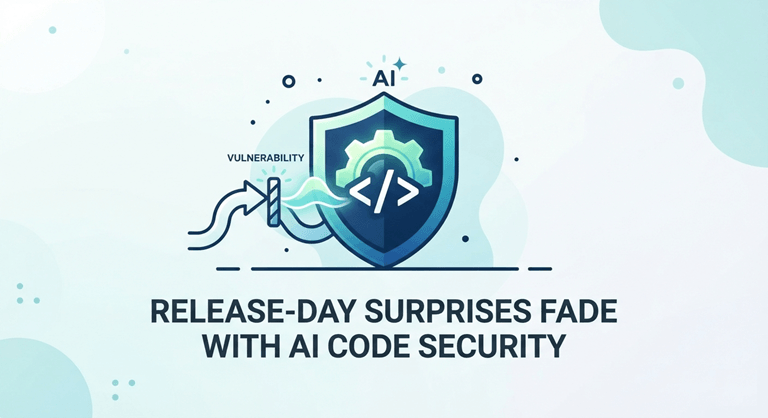
The good news is that this story is changing. With stronger automation, faster detection, and smarter analysis, AI code security is helping teams replace dread with confidence. Instead of waiting for last-minute scans or post-release alarms, you can catch problems earlier, understand them faster, and move toward launch with a steadier heart.
Why Release Day Feels So Fragile
Software releases have an emotional component since they are not just code. They have deadlines, expectations of customers, company reputations, and the pride of all concerned. A late discovery of a security issue will not only delay deployment but also make it much more difficult. Iff a security issue is discovered late, it will not make deployment easy; it will make it much harder. Can come as a surprise to a team.
That’s why the prevention aspect is really important. A few traditional security reviews may be performed too late, or manually; they may not be able to catch up with the modern development cycles. Time has elapsed since the discovery was made by the time an issue is discovered, and the pressure is already high. AI code security changes that rhythm by identifying risky patterns while code is still being written and reviewed, long before a surprise can hijack the day.
How AI Code Security Tools Reduce Last-Minute Chaos
The most significant benefit of AI code security solutions isn’t just in terms of speed. It is timing. These will help teams identify shortcomings in their development and not in the hurried pre-release check. It’s a change that’s easy to say but has a big impact on the entire workflow.
With earlier security feedback, developers can make fixes at their own pace and in a logical, orderly fashion. They don’t have to make hasty choices. Here, they are not caught up in whether or not they should push back a release or take needless risks. They can tackle vulnerabilities in the code as it is new to them, which may result in better outcomes and reduced repetition of vulnerabilities.
Now there are many tools that can identify insecure dependencies, flag suspicious code behavior, isolate secrets accidentally made public in repositories, and even determine which findings are worthy of immediate action. This can only benefit those who are busy in an engineering team, as it means less noise, more focus.
What Makes These Systems So Effective
There is no way manual security solutions can cope with modern security issues. Applications move quickly. Codebases grow. Open-source libraries multiply. The cloud environments are constantly changing. In the current context, security can’t be reactive.
The principle behind AI-based systems is that they learn patterns, compare incoming code against existing threats,s and highlight any deviations from those patterns that warrant investigation. They can also aid in comprehending context. Warned is one thing. One warning is one thing. Information in the form of a warning, along with an explanation, the severity, and likely remedies, is far more useful.
There’s a little small story to capture this human aspect in technology. One of the members of one team described another developer’s code review process as the more serious and good kind. He was doing no such thing to impress anybody. He was just someone with a keen interest in paying attention, asking questions, and keeping the team from silly errors. It’s this kind of attitude that makes intelligent security support invaluable. It gives a sense of a responsible, vigilant attitude towards every commit, merge, and release candidate.
Where Sensitive Code Needs Extra Protection
The risks of all the code are not equal. There are some areas where the sensitivity is higher than in others. Payments, customer records, API keys, infrastructure configurations, and authentication logic are all areas of concern. A bug ticket can have repercussions that extend beyond the area in which the bug occurs.
There’s a story that all teams can relate to. One developer, having marked a file ‘probably fine ‘ at first sight, was later convinced of its danger. A developer marked a file ‘probably fine’ when he first saw it, but changed his opinion later. Several hours later, someone saw that it included a hardcoded credential for one of the production services. Everybody went very quiet in the room. This turned out to be a difficult time due to the code sensitivity, but it was resolved rather quickly. This is where automation of security insight really comes in handy. It can help you to perceive what your tired eyes may be missing.
AI code security tools, if used correctly, can identify them in high-risk areas at an early stage and on a consistent basis. They can’t make the final decision on their own, but they do make it much easier. Once you start to experience a rise in release pressure that may feel more like a necessity than a luxury.
Bringing Security Into the Everyday Workflow
Teams have trouble with security because it can seem like it’s isolated from development. When vulnerabilities are checked at the end of the event, they are afraid of it, because it’s a huge event. When security is integrated into the daily workflow, however, it takes on a life of its own and feels routine, reasonable, and even enabling.
This can be achieved in pull request scanning, live feedback within the code bases, dependency monitoring, and policy checks in CI/CD pipelines. You don’t have one big, poignant turning point; you have a series of small, practical adjustments throughout the course.
There’s a reason why this is so emotionally as well as technically. Consider a humid summer work environment that fails to cool an hour prior to a huge launch. All persons are at once uncomfortable. Tempers shorten. Focus slips. Little things seem bigger than they actually are. Later-stage security turmoil feels like this. It makes them all feel more stressed than ever. That’s a breath of fresh air with smarter and earlier detection. Helps teams refill their air tanks.
What to Look for When Choosing a Solution
When considering options, consider usability as well as detection ability. The best platform is the one that your team will have to use. Seek clarity in reporting, minimal false positives, robust integrations, and remediation suggestions. “Speed is important, but so is clarity.”
It’s also important to know if the system can accommodate your stack, workflows, and compliance requirements. There can be a lot of friction with a rigid solution rather than a value. A good one integrates seamlessly into your process, subtly increases your level of security, and doesn’t hijack your productivity.
Most important of all, select a solution that will enable people to make better decisions and not be flooded with alerts. Security should be a source of confidence, not confusion.
Software delivery isn’t going to be about de-emphasizing urgency. Releases will always be accompanied by some energy, anticipation, and a bit of nerves. But in the days of surprise vulnerabilities, this need not be the case anymore. While teams can have a great deal of confidence with the right habits and the right support, they can end up in panic mode if they don’t get them right.
This is what AI code security really offers. It can’t only detect issues. It helps build trust in the release process. But when teams buy into the process, release day becomes an exciting day again – for the right reasons.
Popular on OTW Right Now!



About The Author

Gagan Bhangu
Founder of otechworld.com and managing editor. He is a tech geek, web-developer, and blogger. He holds a master's degree in computer applications and making money online since 2015.