
Understanding Outdoor Patio Drainage Problems and How Proper Grading Protects Your Home
Rainwater will quickly expose any flaws in the design of a backyard. A patio that looks absolutely perfect when it’s dry can end up with a range of problems after a good downpour in the form of puddles, slippery patches, and erosion. These problems generally originate below the surface in the form of poor drainage and ground preparation.
Good drainage is about much more than just getting the water from a puddle to the lawn. The soil type, the slope, any buildings in the vicinity, and how the water is already flowing all have an impact on how well the patio will perform. Ignoring these factors can lead to a whole host of maintenance problems and premature deterioration.
Homeowners benefit from understanding drainage principles before installing or renovating permanent hardscape features. The Grate Outdoors can evaluate how site conditions influence surface design and water movement. Careful planning helps create an attractive gathering area that remains practical during changing weather conditions.
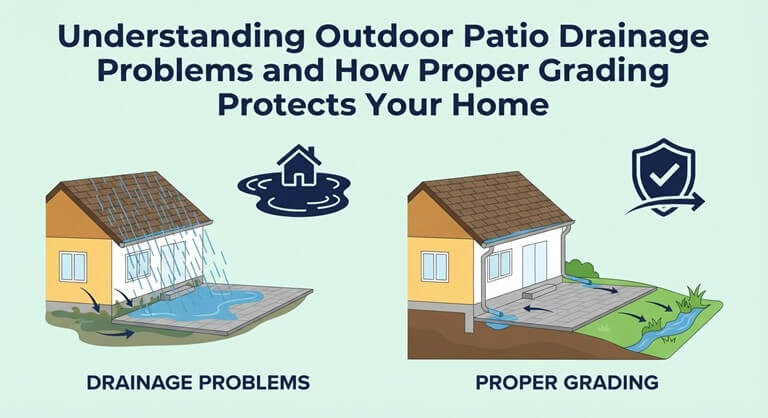
Understanding Why Water Collects on Patios
Standing water occurs when the rain falls faster than it can drain. It can be due to insufficient slope, low spots, blocked drains, or simply increased runoff from adjacent areas. Each of those is a different problem and will require a different solution.
A small pool of water may not seem like much initially, but if it’s left to accumulate, it will eventually cause damage to the patio and to the vegetation around it.
Recognizing Persistent Drainage Warning Signs
After it’s rained, take a look at where the water is standing. If you see puddles, loose joint sand, or soil that’s been washed away, then that could be indicative of something more serious. It’s the sort of thing that will help if you’re then going to get a professional in.
How Surface Grading Directs Rainwater
Grading determines the direction that water will flow across your patio. Good grading will see the water run off to the correct places. The precise gradient you’ll need is going to be dictated by the materials you’re using, your yard, and any applicable rules.
Your patio should be designed to carry water away from the house and any other buildings. You also need to ensure that you’re not creating a drainage problem for your neighbors.
The aim is to get the water moving in a controlled fashion rather than to make the patio too steep. It should still be walkable, of course.
Understanding Soil Conditions Beneath Hardscape
The type of soil underneath your patio will have a bearing on how well it drains. Sandy soil will allow water to percolate through it much more quickly than clay, and ground that’s been disturbed will tend to settle unevenly. All of this is relevant when you’re building and planning drainage.
If the base under your patio isn’t packed down properly, it can sink in places after it’s been built, and water can then collect in areas that were previously level.
A pro could help you work out the best way to prepare the ground. The soil type has to be factored in from the outset rather than being an afterthought.
Protecting Nearby Foundations From Runoff
If rainwater is running towards your house, it can cause all sorts of moisture problems around the foundation and adjacent structures (dampness, erosion, etc.). That’s why drainage planning needs to take into account how the patios and buildings are going to interact.
Gutters and downspouts will also have an effect on where the water ends up. Check where they discharge and take that into account when you’re working out the slope of your patio.
The Grate Outdoors can help you plan your patio as part of the overall drainage of your yard. It’s far better to manage the water for the whole site rather than just patching up individual puddles.
Comparing Surface Drainage and Subsurface Drainage
Surface drainage is about the water running over the patio when it’s raining. Subsurface drainage is the water moving through the soil and the base. Some yards will require both.
A drain you can see won’t necessarily solve the problem of saturated ground below. The same applies to permeable materials, which may not be of any use if the water is coming from higher up in the yard.
When Additional Drainage Features Help
Some properties require channels, drains, or underground pipework to get rid of water. Whether or not they work is going to be down to where the water can go and how much there is. A good professional design will help to avoid all sorts of errors.
Recognizing Problems With Improper Base Preparation
A good patio requires the correct base layers in the way it’s constructed. If the ground isn’t dug out sufficiently, the materials aren’t right, or the base isn’t compacted properly, then the patio won’t last. It will settle over time, and that settling will alter the slope and impact drainage.
The surface fix won’t do it. If the base is unstable, then the puddles are going to come back.
A good patio installer will check both the base and the final height of the patio. Getting it right in those respects will improve the drainage and will, of course, help the surface to last.
Understanding How Material Selection Affects Drainage
Different paving materials deal with water in their own way. Concrete, stone and pavers all have to be laid in different ways and have their own characteristics. How well they perform is also very much dependent on what’s beneath them.
Permeable paving allows water to pass through the gaps or through the special materials. It will only work well if it has the correct base and is properly maintained.
Don’t select patio materials simply because they look good. It’s just as important to consider how they perform in terms of drainage.
Managing Runoff From Surrounding Landscaping
Water on your patio could be coming from outside the area itself (i.e., the sloped lawn, the garden beds, the higher ground, the roof drains, etc.). It’s important to identify these sources before you finalize your patio plan.
Shaping the yard can help direct water to the right places. The placement of plants can also have an effect on erosion and the movement of soil.
Your entire backyard should be working as a drainage system. If yot go and fix one bit at a time, you could end up with a whole host of new problems.
Preventing Erosion Around Patio Edges
If water runs off in one place, it can slowly erode the soil at the edges of your patio and, in time, expose the base or damage any plants nearby. Look out for any gaps or areas that have been washed away.
Use edge restraints and good drainage details to keep your patio stable. These should be appropriate to the type of surface and the ground around it.
Check the edges of your patio after a good downpour. Catching small erosion early will prevent it from becoming a bigger issue.
Considering Drainage During Patio Renovations
When you’re redoing a patio, it’s a good opportunity to sort out any water issues. Simply putting new materials over a bad base won’t address the original problems. You need to check the drainage prior to any cosmetic improvements.
The height of the doors, steps, and adjacent buildings will obviously have an effect on how you can grade your patio. They will in turn affect your drainage options.
A patio installer will be able to tell you whether you need a minor bit of repair or whether it’s time for a full rebuild. Getting the right advice can save you a bundle.
Understanding Seasonal Drainage Maintenance
Even the very best drainage will need some maintenance. Leaves, dirt, mulch, and all sorts of other debris can clog drains. It’s important to check them regularly to ensure the water is flowing as it should.
After a storm, check any drains or collection points you can get to and clean them in a manner that’s appropriate for your patio materials.
Regular cleaning won’t deal with the bigger grading issues. If the problems keep cropping up, then it’s time to get a pro in.
Knowing When Professional Evaluation Is Necessary
It’s perfectly normal for patios to get wet when it’s raining. If, however, you’re seeing puddles, sinking areas, a lot of erosion, or dampness in the vicinity of your house, then there may be a more serious issue, and it may well be worth having an expert take a look.
A professional can look at the slopes, the soil, the drains, and how your patio was actually built. Their advice should be aimed at solving the actual problem rather than just the one you’re seeing.
The Grate Outdoors can tell you what to think about when it comes to patio improvements. Clear advice to help you make the right decisions when it comes to fixing up any problems.
Creating a Durable and Well-Drained Patio
Good patio drainage is all about good grading, the right base, and managing the runoff. Soil, landscaping, and the buildings around it all have an influence. Getting it right at the outset will go a long way to avoiding problems down the track.
A well-designed patio will drain water well, look good, and be a comfortable place to use. The correct slope and drainage will of course be dictated by how you intend to use the patio.
You can go a long way to protecting your patio investment by planning it properly, selecting the right materials, and then, of course, keeping it well maintained. A patio that drains well is a great place to have outdoor enjoyment and will also help to prevent any water issues around the house.
Popular on OTW Right Now!




About The Author

Gagan Bhangu
Founder of otechworld.com and managing editor. He is a tech geek, web-developer, and blogger. He holds a master's degree in computer applications and making money online since 2015.