
Key Considerations When Selecting Physical Security Hardware
A security breach doesn’t announce itself. No warning. No countdown. One compromised entry point or unauthorized access to a restricted zone can spiral quickly, leading to reputational damage, asset loss, and liability that stack up in ways you don’t see coming. Choosing the right physical security hardware isn’t just a safeguard anymore; it’s genuinely a core business decision.
According to ASIS Online, more than 70% of organizations experience only one to five serious access incidents annually when the right hardware is in place. It’s this number that reveals to you what a well-designed system does.
So now that we’ve established the stakes, here’s the real question: where do you actually start? Spoiler: it begins long before you browse a product catalog.
Essential Components in Modern Physical Security Systems
A good system is not made up of unrelated products thrown together. Each should play a specific role, and importantly, they should be synergistic with each other. When they don’t, gaps become vulnerabilities.
Cutting-Edge Entry Control With an Access Controller Board
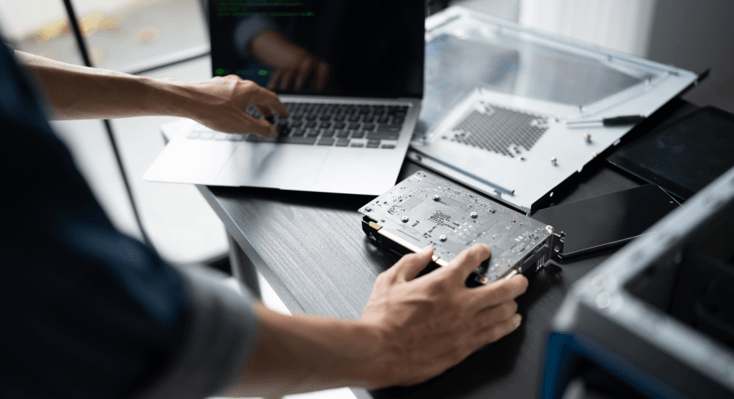
Centralized entry management has become one of the most important layers in modern facility protection. At its core sits an access controller board, which ties door locks, credential readers, alarms, and monitoring systems into a single intelligent platform. The true value is the fact that your security team can manage users, review activity, and respond to events, and will not need to juggle five different systems. It’s a more coherent, more responsive manner of operating a facility.
Surveillance Technology for Proactive Protection
The capabilities of surveillance technology today are much more extensive than simply taking video of people later. When it comes to video analytics, motion-triggered alerts, and mobile monitoring, your team can address an event as it happens, rather than the next morning. Additional detection layers with perimeter sensors and smart motion detectors reduce the time between incident and response by adding detection coverage beyond cameras.
Robust Locking Mechanisms and Entry Barriers
Visibility is important, but it doesn’t physically impede anyone. Electronic locks, biometric readers, RFID credentials, bollards, and turnstiles- these are the elements that actually control human movement through your space. Monitoring will indicate what is occurring, but physical barriers will indicate what is possible.
Environmental and Tamper Detection Devices
Unauthorized people are not the only ones who can cause physical threats. These are all potential threats: fire, flood, smoke, and spoofing. Damage can be contained well before human intervention if environmental sensors are coupled with automatic response mechanisms, lockdowns, alerts, and system triggers.
You know what they are; now the question is, how do you assess and combine them?
Top Priorities for Choosing Security Hardware That Matches Your Organizational Needs
There is no common theme among the two facilities. A warehouse in an industrial area has different risk factors than a corporate office in downtown or a bustling medical office. That’s a big gap in context. It’s like purchasing a lock without measuring a door.
Customized Risk Assessment Before Hardware Selection
Don’t succumb to the temptation to purchase popular items. Walk the facility. Trace the flow of traffic, identify your weaknesses, and mark all potential points of attack. A comprehensive site walkthrough conducted by a security consultant will identify potential issues that no product brochures can ever reveal, and will help prevent costly mistakes later on.
Balancing Budget With Real Risk Exposure
Security should be commensurate with the security that you are protecting. When funds aren’t spent, there are significant gaps that can leave you with a problem. If you are spending money on a feature that you really don’t need in your operation, then you are using resources that could go into something else. Create a list of priorities. Harden the most critical areas first and then work outwards.
Long-Term Scalability of Physical Security Devices
Here’s something that gets overlooked more than it should: the hardware you buy today has to grow with you. Any physical security devices you invest in should be ready to handle more access points, more users, and deeper integrations as your organization evolves. Locking yourself into a system that can’t scale is a costly lesson.
Building blocks of a modern, well-coordinated security setup, however, are here.
Comprehensive Security Hardware Selection Guide for Maximum Protection
A useful security hardware selection guide doesn’t hand you a shopping list. It gives you a repeatable process for making smart, defensible decisions across every category.
Key Metrics to Compare Security Devices Effectively
| Criteria | What to Evaluate |
| Reliability | Mean time between failures (MTBF) |
| Durability | Environmental ratings (IP/IK) |
| Certifications | UL, CE, ISO compliance |
| Authentication | Failure rate across credential types |
| Maintenance | Ease of firmware updates and service access |
Best Practices for Integrating Physical Security Devices
Interoperability isn’t a nice-to-have; it’s foundational. When physical security devices can’t communicate with each other, response times suffer, and gaps open up in ways that are hard to detect until something goes wrong. Centralized control makes audits easier, and fewer alerts are missed on unified platforms. Check that the two items fit together before completing the purchase—every time.
Ensuring Regulatory Compliance and Privacy
Even with an integrated system, it’s important to play by the rules. How credentials and access logs are stored and accessed on connected devices is regulated by GDPR, ISO standards, and local regulations. Failure to comply goes beyond just the technical aspect of it; it means real money and legal implications! Make compliance a part of the choice, rather than an add-on.
Advanced Trends Shaping the Best Physical Security Systems
The market for physical security is estimated to be USD 112.30 billion in 2024 and is expected to grow to USD 119.90 billion in 2025 at a CAGR of 7.07% (marketresearch.com). It’s not just the industry buzz; it’s about organizations making a smart and connected investment in infrastructure.
Artificial Intelligence and Analytics in Threat Detection
AI-enabled behavior analysis can detect abnormalities that may not be noticed by a human- such as someone standing near a restricted door, or strange access times at unusual hours- before they get to the stage of causing trouble. That change from reactive to proactive is a real change in the manner in which a security team works on a day-to-day basis.
IoT-Enabled Physical Security Devices
The more data that is fed into AI, the better it can perform. Internet of Things (IoT) sensors, locks, and cameras deliver live data to your system and allow for intelligent automatic reactions that human teams can’t match at the same speed or uniformity.
Cloud-Based Access and Security Management
Cloud platforms extend IoT intelligence by providing you with a single dashboard, where you can control the various sites. Quick deployment and remote management isn’t a luxury for growing businesses that operate across multiple locations; it’s a true operational benefit.
Mistakes to Avoid When Choosing Security Hardware
The best technology is inadequate in the absence of a sound selection process. Not taking into account the compatibility of new purchases with legacy hardware equipment results in costly integration problems. If you’re not factoring in how much your needs will increase, then you may have to replace hardware at a much earlier date than you think you need.
It’s becoming a greater risk not to consider the cybersecurity aspect of connected physical devices: they’re network entry points after all. Everyone else who is not a facility manager, IT, or compliance person is not in the loop and nearly always raises red flags at the last minute or leaves something out of the equation.
Key Strategies to Maximize ROI on Security Hardware Investments
The avoidance of those errors will keep your base, and if you take advantage of committed habits, you can raise the returns on each dollar invested.
Scrutinize vendors. A competitive sticker price is much less important than warranty terms, local support infrastructure, and history of firmware updates. Conduct regular audits and find out whether your hardware has drifted or your credentials are outdated, without you realizing it, before they become vulnerabilities.
Avoid underinvesting in staff training – staff training is one of the most frequently under-funded aspects of any security rollout and actually has an impact on how effective your staff will be using the system. Last but not least, use analytics that your hardware already provides. Monitor performance trends and be able to pinpoint areas of weakness and substantiate future investments with actual data.
Common Questions About Physical Security Hardware
When implementing physical security controls, what should you consider?
Some critical issues are the lack of staff knowledge of physical security procedures, the use of weak credentials to access areas, and the lack of surveillance coverage. Failure to take action to address each of these gaps can compromise even the best of hardware choices.
What are the key components of physical security?
Some of the features of a core system are access control, surveillance and monitoring, security staff, secure transportation systems, and emergency systems. They form a combination of layers of protection that decrease the risk of one weak link.
What innovations are trending in physical security hardware?
Among the most impactful trends are AI-powered behavior analytics, sensors connected to the Internet of Things, cloud-based access management, and mobile credential systems. These technologies are helping to reduce security system deployment times, ease administration, and improve the performance of the security system as a whole.
Final Thoughts on Selecting the Right Physical Security Hardware
All three of these aspects are crucial to getting it right: understanding your risks clearly; selecting devices that really work together; and keeping ahead of new threats and new technology. The best physical security systems aren’t assembled in a single purchasing decision; they’re built through deliberate, well-informed choices made consistently over time.
Start honestly, follow a reliable security hardware selection guide, and keep refining as your environment changes. An effective system is not a finished product. It’s a daily task and one that will continue to reap rewards every day it’s done as it should.
Popular on OTW Right Now!



About The Author

Gagan Bhangu
Founder of otechworld.com and managing editor. He is a tech geek, web-developer, and blogger. He holds a master's degree in computer applications and making money online since 2015.