
The Future of Data Storage Solutions for Businesses
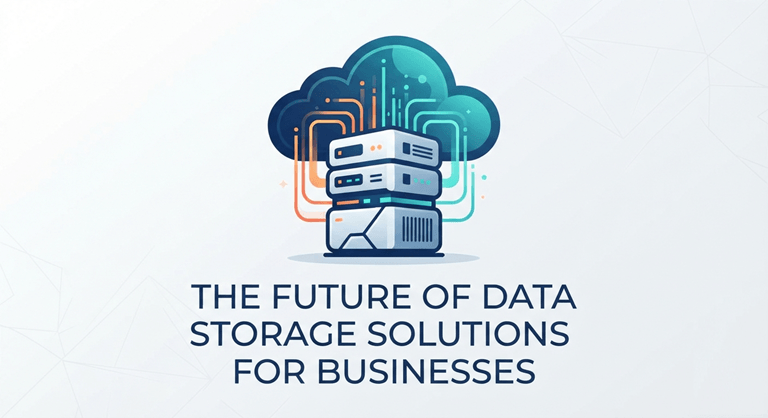
Data volumes keep climbing. Every day, your organization piles on more information—and the infrastructure holding it all gets harder to ignore. A decade ago, file cabinets and spinning disks were the whole conversation. Now? There are options on-premises and in the cloud, in a hybrid way, and a dozen more in between. It’s costly to get this wrong. What’s on offer today would no longer be recognizable when compared to five years ago, and there’s no sign of any slowing down in sight.
Understanding Current Data Storage Landscape
Your organization probably already uses more than one type of storage, without any conscious planning to that effect. Some applications are only available on local servers. Some rely solely on cloud storage. It was no coincidence that that patchwork is distributed, as many businesses have had to find out the hard way that there is no single solution that will address each need nicely. Local set-ups involve having full control, and they can be less expensive over time, but they can be very expensive to get set up — and maintenance is never-ending. But cloud flips that all around. Flexible, scalable – no need for extra hardware when needs increase overnight. Hybrid models take the middle road, with the high-value information remaining on site, and the lower-value information going into the cloud. There are always a myriad of compromises to be made between control, cost, and access.
Emerging Technologies Shaping Storage Evolution
Multiple changes are now in the works to change storage. The price of solid-state drives continues to fall, and they are still getting faster, and spinning drives are being phased out of high-performance systems. Gone. But edge storage sometimes doesn’t receive the attention it deserves. Data processing and storage near the source reduces latency and demands less stress on a congested network, particularly for time-sensitive data. This is felt strongly when monitoring activity in industrial environments – which are real-time. Professionals handling operational data through SCADA HMI platforms find that edge storage cuts transfer overhead dramatically while keeping critical process information exactly where it needs to be. All the while, AI and machine learning are digging at the storage systems, too, sorting and optimizing data on their own. New compression and deduplication algorithms allow you the best possible compression and deduplication in the same physical space as ever before.
Security and Compliance Considerations for Future Storage
It’s impossible to come up with a storage strategy without running into security and compliance issues. Regulations, such as GDPR, HIPAA, and an ever-expanding list of data protection laws, are increasingly tightening, and your storage system needs to be able to handle encryption, access control,l and audit trails. Cloud providers have reacted and offered increased security capabilities and compliance credentials to ease some of the load from your team. Ransomware truly poses a threat today. It is no longer a luxury to have backup and disaster recovery solutions; it’s a requirement. It’s simple: security is not added on later—it’s built into the storage infrastructure. With the next generation of solutions, you’ll be able to get protection built into the solution, rather than having to add on additional security tools to empty disk space.
Scalability and Cost Optimization Ahead
If you want to grow, you are going to have to have more data. Simple as that. When you are deciding on storage systems, you do not want to choose one that isn’t scalable. Cloud platforms provide virtually unlimited capacity expansion, without the need for overhauls or huge capital investments. Pay-as-you-go pricing means charges are based on what you use, rather than paying for space you may not use. Storage economics are constantly changing, however — something that may make sense now may seem like a waste of time in 3 years’ time. Here, tiered storage systems are worth mentioning — which data is stored on which medium, according to how often it’s accessed and how much performance it requires. Data that is not used often doesn’t requirehigh-performancee storage. As storage volumes grow and options increase, being able to manage and proactively tweak storage spend will become increasingly important.
Conclusion
Storage isn’t static. It is constantly moving forward with the rise in technological development, stricter regulations, and changing business requirements. While it’s important to be aware of these changes, it’s just as important not to get caught up in the latest fads and forget what works for your organization and budget constraints. There is no one-size-fits-all correct answer, whether it involves on-premises, full cloud, or hybrid. Context decides. The landscape will continue to change and introduce new features that make things possible with data that weren’t before. Keep up to date, keep your options open,n and your business will be prepared for the next wave.
Information about the latest hardware and software advances is crucial in a world where businesses continue to embrace AI, cloud computing, and next-generation storage solutions. Trusted technology publications like Root-Nation regularly publish in-depth reviews, industry analysis, and practical guides covering enterprise storage, cloud infrastructure, cybersecurity, and emerging digital solutions, helping organizations make smarter technology decisions as their data needs continue to evolve.
Popular on OTW Right Now!
-
 Pulumi vs Terraform vs OpenTofu: A Decision Framework Based on Team Type, Scale, and License Risk
-
Coinspaid Ambassador Dudu Barrichello Secures Le Mans Podium After Grueling 24-Hour Race
-
 How Can Solar Power System Transform Farming in India?
-
 Why Global Brands Rely on Thermal Label Paper Rolls Wholesale for Growth



About The Author

Gagan Bhangu
Founder of otechworld.com and managing editor. He is a tech geek, web-developer, and blogger. He holds a master's degree in computer applications and making money online since 2015.