
The Evolution of Printing Technology
Over the centuries, the technology of printing has changed drastically. Transformed communication, advertising, and the making and sharing of information. Early printing techniques were very time-consuming and labor-intensive. New devices can now provide quick, detailed, and personalized results.
This development has also made an impact in the textile printing sector. Today, companies can create colorful designs with greater accuracy. Digital printing makes customization more readily available and economical. The new developments keep producing more and more design and manufacturing opportunities.
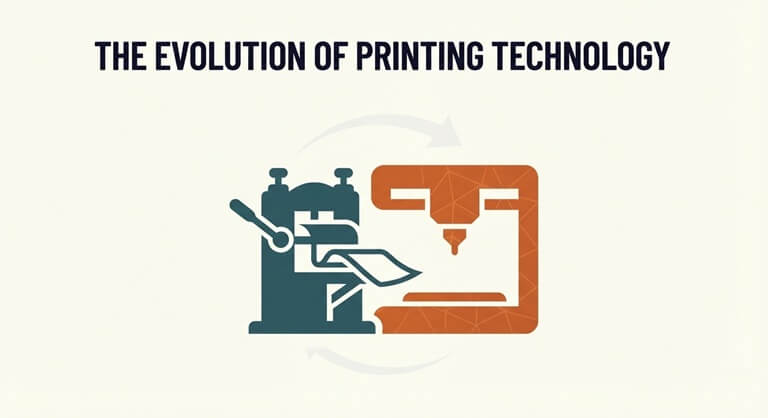
From Hand Printing to Mechanical Presses
Early printing relied on labor and simple printing equipment. One of their earliest great innovations was woodblock printing. It enabled copying of images and text to be done repeatedly.
There was yet another milestone when movable type was developed. Johannes Gutenberg invented his famous printing press around 1440. He made printed material easier to access with his technology.
Blackletter printing was followed by the introduction of mechanical presses, which increased printing speed and productivity. Newspapers, books, and advertising: It became easier to produce newspapers, books, and advertising. Printing little by little became an integral part of normal communications.
Industrial printing is in full swing.
Many changes occurred in printing technology with the advent of the Industrial Revolution. The steam-powered presses greatly accelerated the printing speed. Printed materials could be made easily and in thousands.
In this era, color printing technology was also becoming more advanced. There were new approaches that enabled companies to produce more attractive advertisements. These innovations benefited packaging and commercial printing.
The improvements made brought down production costs and increased the area of printing applications. Print could serve as a tool for businesses to reach a wider audience.
The Development of Digital Printing
The next big change was digital printing. Eliminated several restrictions of conventional printing plates. Designs could go directly to printing equipment, instead of having to be traced.
This enabled short production runs to be more viable. Businesses might also be able to produce individual products in less time and more efficiently. Dickens taps using digital technology brought increased flexibility and minimized setup time.
Digital advancements benefited especially textile printing. Designers can create intricate graphics in great detail. Niches in apparel and branding also offer opportunities for smaller businesses to enter and grow.
What is Direct-to-Film Printing?
Another major innovation is direct-to-film printing. This technique is used to transfer designs to a special type of printing film. The designed pattern can be printed on various fabric surfaces.
DTF printing enables customized garments and offers several manufacturing benefits. Able to display detailed graphics and rich colors. It may additionally operate at a number of speeds.
This adaptability has attracted closer attention from fashion companies. It’s easier to handle small orders and customized designs. The continuous development of DTF technology relies on improved equipment.
Comparing DT Printed Cloth Transfers to Sublimation
There are various advantages of different printing methods. Companies should recognize these differences before choosing a method. A comparison of DTF vs sublimation printing becomes crucial these days in particular.
Sublimation works exceptionally well on polyester-based textile items. Generates designs that are prepared and woven into textiles. DTF works with more interesting fabrics.
Cotton and blended fabrics are good options for DTF. It offers a decent level of color and sharpness in the reproduction of images as well. Certain polyester uses, for instance, are still choices for sublimation.
Depending on the product and production targets, the right treatment is key. Fabric type, design, fabric quantity, and budget are things businesses ought to consider.
Copying Technology and Automation
The printing machines used these days have precision and automated options. If you have higher production volumes, you can use advanced systems that will do that efficiently. Automated processes can also help you achieve consistent print quality.
Nowadays, manufacturers are working to further accelerate printing speed and improve efficiency and performance. All these changes have ushered in professional printing for a wider range of small companies.
Advanced printing solutions are evident in companies like DTF LINKO. Businesses are time-poor and need to address their evolving customization needs; modern equipment can assist them. Improved technology can also support more efficient production processes.
Sustainable Printing Innovations
Environmental concerns are shaping modern printing technology. Attempts to decrease energy consumption and waste are being undertaken by manufacturers. New ink formulas also support cleaner processing methods.
Sustainable printing will remain a key focus in the sector. Prospective innovations offer potential for improvement in efficiency and minimization of environmental effects.
The Future of Printing Technology
Printing technology continues to progress toward more automated processes. AI can enhance the process of design and production. Errors can also be identified in advance of production by the use of smart systems.
Conclusion
From standard manual methods, printing has now developed to become high-tech digital printing. Every one of these innovations has enhanced the speed, flexibility, and production capacity. This evolution is very well represented by modern printing on textiles.
Two new types of printing have emerged, DTF and sublimation, which fulfill different needs. Businesses can choose technologies based on their materials and objectives. There are likely to be even more efficient printing methods in the future.
The printing industry continues to change with consumer needs. Customization and modern production will continue to be areas of significance for technology.
Popular on OTW Right Now!


About The Author

Gagan Bhangu
Founder of otechworld.com and managing editor. He is a tech geek, web-developer, and blogger. He holds a master's degree in computer applications and making money online since 2015.