
How to Choose the Right Leather Apron for Cooking
Buying a leather apron for the first time feels straightforward until you start comparing options and realize how different they actually are. The prices vary, and the material descriptions are not detailed; most product pages use the same comforting language, whether they’re selling a product or not.
A heavy-duty leather cooking apron made from genuine full-grain cowhide is a completely different product from a bonded leather alternative sold at a similar price, and knowing the difference before you buy saves you from having to replace it within a season. This guide covers what actually matters so you can make the right call the first time.
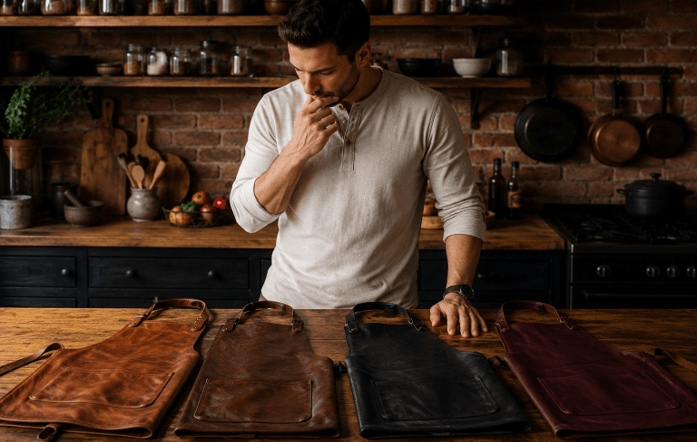
Why Leather Outperforms Fabric in a Kitchen Environment
Leather or cotton vs. canvas depends on what kitchens can throw at each.
Cotton absorbs everything. It absorbs grease or sauce splatter, marinades,s and more, and it does not run off. Canvas is a bit better but still suffers from degradation with repeated washings. Both offer little resistance to heat near open flames or hot surfaces.
Full-grain leather behaves entirely differently. Does not absorb grease or moisture; wiping after cooking will remove much of the residue without much scrubbing. It will not catch fire from brief exposure to a heat source, like fabric does. This doesn’t wear out at the end of each season; rather, it acquires a patina that makes it more distinctive with each passing season.
Understanding Leather Grades Before You Buy
The grade of leather used is the most critical aspect to consider when selecting a leather apron. The words premium, genuine, and high quality don’t imply a standard grading system. As covered in the oTechWorld guide to reading a product page before you buy, specific material grades matter far more than reassuring adjectives.
Here is what the actual grades mean:
Full-grain leather: This is the highest-quality leather, the thickest and strongest part of the hide. Maintains the natural grain surface for durability and years of use.
Top-grain leather: It has been sanded to smooth out the surface. A good material, a little lighter than full-grain. A good alternative if full-grain is not in the price range.
Bonded leather: It is created from leftover scrap leather that is compressed and glued. It has cracks and peels after only a few months of use—bad value for money, whatever the price.
Design Features That Matter for Daily Kitchen Use
Design details are what make the leather apron function well in daily use after the leather grade has been confirmed.
The strap really does count and more than a buyer might think. Long cooking sessions put all of the apron weight on your neck with just one neck strap. A cross-back strap design distributes that weight between both shoulders and makes a big difference over the long haul at the stove.
The next two are pocket depth and placement. Your thermometer, kitchen cloth, tasting spoon, and small tools stay within easy reach of your arm at all times on a well-designed apron. This is counteracted completely by shallow pockets.
Maintenance Is Simpler Than You Think
The fabric apron must be regularly machine washed to maintain its appearance. A leather apron requires a dry cloth to wipe down after cooking, a cornstarch spot treatment for grease stains 20-30 minutes before brushing off, and a beeswax conditioner once a month or twice a month. Machine washable – No Shrinkage – No Shape Distortion.
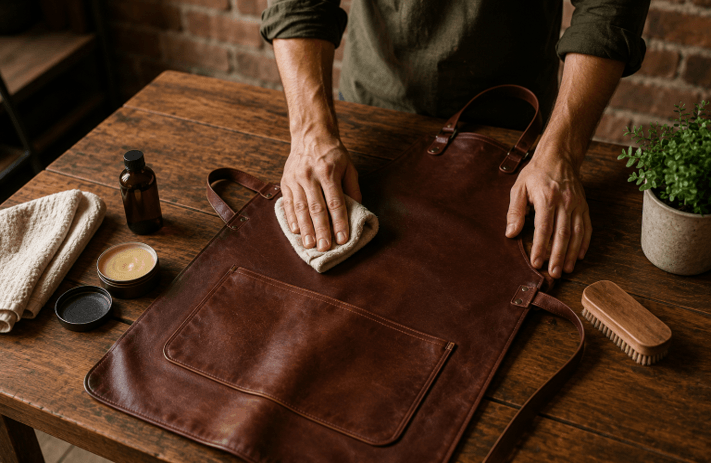
Usually, people overlook the most important step: conditioning. Non-regularly conditioned leather becomes less flexible and develops surface cracks. When done regularly, it takes about 10 minutes and will make the apron last 10 years or so.
Where to Find One Worth the Investment
It’s possible to find split leather in general homeware stores that seem to be on par with bonded leather, but they will break down within a few months. Leather brands specializing in leather products employ higher-quality leather, hardware, and stitching, all chosen with quality in mind. For a wider range of styles for cooking, grilling, and professional kitchen use, handcrafted leather aprons with cross-back straps, reinforced pockets, and solid metal hardware are available from brands that specialize exclusively in leatherworkwear
The Bottom Line
Leather apron quality can vary widely, and cost is not necessarily indicative of quality. Review the grade of leather, the design and hardware of the apron, ap and the maintenance responsibility. Purchasing one from the right end of the market keeps it, and you won’t have to worry about it for years.
Popular on OTW Right Now!




About The Author

Gagan Bhangu
Founder of otechworld.com and managing editor. He is a tech geek, web-developer, and blogger. He holds a master's degree in computer applications and making money online since 2015.