
How Technology Is Transforming Emergency Preparedness
Emergency preparedness has come a long way from static binders and occasional drills. Today, organizations operate in a world where risks are more complex, unpredictable, and fast-moving than ever before. As a result, technology has become the backbone of modern preparedness strategies, helping businesses and institutions move from reactive responses to proactive, well-coordinated action.
The Evolution of Emergency Preparedness
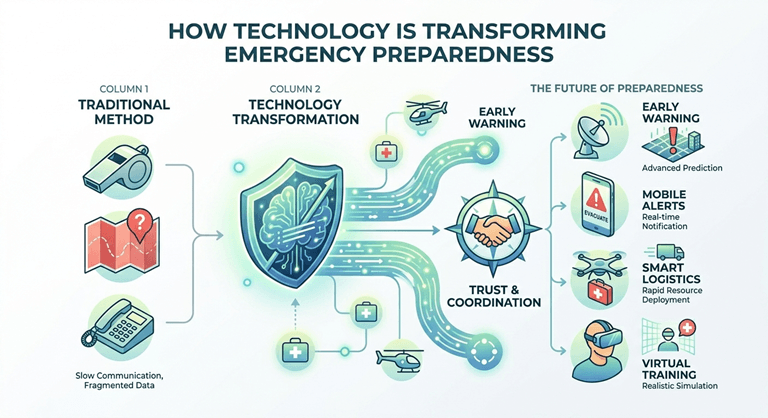
For decades, emergency preparedness relied on printed procedures, manual reporting, and limited communication channels. While these methods provided a foundation, they often lacked the flexibility required in real-world situations. In this evolving landscape, adopting a reliable building emergency management system is a critical step toward ensuring seamless coordination during crises. These systems provide the structure and intelligence needed to handle emergencies with clarity, speed, and confidence.
Technology has introduced a new era where preparedness is continuous and adaptable. Instead of relying solely on past experiences, organizations can now use real-time data and predictive tools to anticipate risks before they escalate. This shift has made emergency planning more dynamic, ensuring that response strategies remain relevant in changing environments.
Real-Time Communication as a Lifeline
Clear and immediate communication is one of the most critical elements in any emergency. Technology has dramatically improved how information is shared, ensuring that everyone receives updates without delay.
Mass notification systems can instantly send alerts through multiple channels, including text messages, mobile apps, and email. This ensures that individuals are informed regardless of where they are. More importantly, two-way communication allows people to report their status, request assistance, or provide updates from the ground.
This level of connectivity reduces confusion and helps decision-makers maintain control in high-pressure situations.
Centralized Systems for Better Visibility
Information management is one of the largest problems during emergency response. In a scenario where data is distributed in various systems or departments, there is a problem with making informed decisions.
Information technology is the solution to this issue as it addresses this issue by putting the information in one place. These systems offer real-time monitors where vital information like personnel location, updates on incidents, and availability of resources is indicated.
Having a clear picture of the situation, leaders will be able to make quicker and more precise decisions, which will increase the overall effectiveness of the response.
Mobile Technology and On-the-Go Coordination
Mobile devices have become essential tools in emergency preparedness. They allow individuals to access critical information and take action no matter where they are.
Using mobile applications, teams are able to get alerts, track evacuation orders, and contact others in real-time. This is made possible by its mobility so that the emergency plans do not go to waste even in cases where individuals are not in their normal workstations.
Moreover, mobile tools allow tracking in real-time and digital check-ins, and it is easier to take into consideration all the people in case of an emergency.
Automation Streamlines Emergency Response
Time is very important during a crisis, and manual procedures may slow down the process. Automation will remove the delays and make sure that the important activities are performed as soon as possible.
Without involving humans in the process, automated systems can generate warnings, delegate duties, and start response procedures. This minimises the chances of mistakes and ensures consistency in dealing with emergencies.
With predetermined workflows, organizations will be able to react fast and effectively, even during stressful situations.
Enhancing Collaboration Across Teams
Emergencies seldom occur in a single department. They frequently need the coordination of several teams, locations, and even outside agencies.
Technology allows smooth cooperation by creating common platforms on which everybody can receive identical information. This helps to align all the stakeholders and get them working towards the same objective.
Better collaboration eliminates misunderstandings and enables the teams to react better, even in complicated circumstances.
Cloud-Based Solutions for Greater Resilience
Emergency system access and maintenance have been changed by cloud technology. Storing information on the cloud means that organizations will have access to important information all the time, even in the case of physical infrastructure failure.
Such availability enables teams to keep running in the case of disruption, be it due to a natural catastrophe, a technical breakdown, or other emergencies.
Plans can be updated, information shared, and operations can be expanded as well, more easily with cloud-based systems.
Artificial Intelligence
Artificial intelligence is playing an increasingly important role in emergency preparedness. By analyzing large amounts of data, AI can identify patterns and predict potential risks.
This enables organizations to be proactive before problems become serious. As an example, AI may point out some areas of concern within a building or identify trends that suggest a higher chance of some incidents happening.
Besides prediction, AI may facilitate real-time decision-making with recommendations depending on the prevailing circumstances.
Smart Technology and Connected Environments
With the emergence of smart technology, emergency preparedness has now gained an extra dimension of capability. The environment can be monitored, and some functions can automatically react to some conditions by sensors and connected devices.
For instance, fire detection systems can trigger alarms and activate evacuation protocols instantly. Environmental sensors can detect hazards such as gas leaks or air quality issues, providing early warnings that allow for quick action.
Such technologies bring about a more responsive environment, whereby systems are capable of responding more quickly than human intervention alone.
Training Through Simulation and Digital Tools
Emergency preparedness cannot be done simply by technology; it needs individuals who are knowledgeable about its use. Digital tools and simulation software have made training more advanced.
Organizations are now able to perform realistic exercises that simulate different emergency situations. These simulations assist the teams in rehearsing their responses and detecting their vulnerabilities, besides instilling confidence.
Online training systems also simplify the process of offering continuous training, so that all people remain ready.
Data-Driven Insights and Continuous Improvement
Technology can not only assist in times of emergency but also in the post-emergency period. Through gathering and processing data, organizations will be able to see how well they responded and areas that can be improved.
Detailed reports give information on what was good and what could be enhanced. Such information can be invaluable in terms of improving the emergency plans and enhancing future preparedness.
Continuous improvement will make sure that organizations are ever-changing and adapting to new challenges.
Connectivity and Reliability in Critical Moments
During a crisis, good connectivity is a must. High-tech systems are developed to keep the interactivity alive in the event of the breakdown of traditional networks.
Organizations are able to use several communication channels and backup systems, which will help them to deliver important messages to the recipients without interruptions. This is the main aspect of the coordination and safety in case of a crisis.
Overcoming Challenges in Technology Adoption
Although there are numerous advantages of technology, it should be used in the most effective way. Organizations need to select systems that are easy to use and are in line with their needs.
These tools should be properly trained so that employees can be able to use them. Systems should also be updated and maintained regularly to ensure that they are at their optimum performance.
When implemented correctly, technology becomes a powerful ally in emergency preparedness rather than a complication.
Looking Ahead: The Future of Preparedness
Although there are numerous advantages of technology, it should be used in the most effective way. Organizations need to select systems that are easy to use and are in line with their needs.
These tools should be properly trained so that employees can be able to use them. Systems should also be updated and maintained regularly to ensure that they are at their optimum performance.
The future of preparedness lies in the ability of technology and human expertise to collaborate in a well-coordinated manner to make the environment safer.
Final Thoughts
The way organizations prepare for an emergency has been transformed by technology. It enhances quicker and more efficient responses to crisis situations by providing real-time communication, centralized data, and sophisticated tools.
With risks constantly changing, it is imperative to keep up with these innovations to remain prepared. Companies investing in appropriate technologies and developing them as part of their strategies will be more likely to keep people safe, reduce disruption, and find their way through uncertain situations with confidence.
Investment in the appropriate systems today is not only raising the level of immediate response but also resilience in the long term. Innovation and proven strategies will help businesses to ensure safer environments in which individuals will feel safe, informed, and prepared to respond when it counts the most.
Popular on OTW Right Now!



About The Author

Gagan Bhangu
Founder of otechworld.com and managing editor. He is a tech geek, web-developer, and blogger. He holds a master's degree in computer applications and making money online since 2015.