
How Shopify CRO Works Before and After Launch
Many brands think conversion rate optimization starts only after a Shopify store is live, traffic is coming in, and enough data has been collected. In practice, that is too late.
Shopify CRO starts much earlier.
In the case of a new store, CRO is approximately making greater strategic, UX, and technical choices prior to launch. It is reducing the unnecessary friction, having the proper structure in place, and applying the e-commerce best practices that have been tested and tried. In the case of an established store, CRO is more data-driven. That step is aimed at understanding user behavior, identifying weak links in the funnel, and improving performance based on analytics, heat maps, and actual customer behavior.
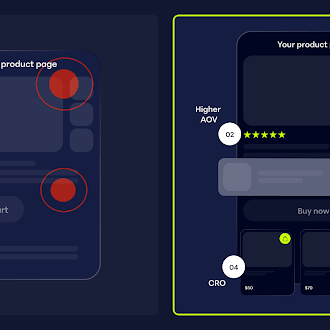
This difference is important since not all stores should have the same look of the CRO process.
A store that is yet to be launched should have a firm foundation. An existing store with traffic and sales must be diagnosed, prioritized, and continuously iterated.
The aim of both is the same: to make it easier to enable the right customer to buy, to make the funnel less frictional, and to add more value to every visitor.
CRO for New Shopify Stores: Optimization Before Launch
A new Shopify store might not possess historical data, but it does not imply that CRO should wait. Indeed, much of the CRO work occurs even before launch.
At this point, brands can yet evade structural errors. They will be able to think through the funnel, base the user journey on real buying behavior, and get tracking rightfully installed before the initial paid traffic campaigns are launched.
It is not guessing at pre-launch CRO. It is concerning applying tactics, rival research, UX conceptions, and established e-commerce trends to make wiser choices at the outset.
Start with an e-commerce strategy, not random improvements
Before thinking about CRO elements like sticky add-to-cart buttons, upsell blocks, or free shipping bars, a new store like Webspirit understands its business model and sales logic.
That means answering questions like:
- Is this a single-product store or a catalog store?
- Is the product an impulse purchase or a considered purchase?
- Does the customer need education before buying?
- Is the business trying to maximize first-order revenue, long-term retention, or both?
- Are subscriptions, bundles, or add-ons important to the model?
- What objections will customers likely have before purchasing?
These are not just business questions. They directly affect the conversion strategy.
A one-product store, in particular, can require a more targeted homepage, more storytelling, and a richer product page. A catalog store might require greater focus on the UX of collection pages, filtering, category hierarchy, and product discovery. A subscription-based brand might require more repetition-purchase messages and improvement in the presentation of the subscription on the product page.
In the absence of this strategic layer, CRO tends to be a set of fragmented ideas as opposed to a system.
Use competitor research to reduce risk before launch
Competitor research is among the most helpful methods of avoiding unnecessary errors in a new Shopify store.
This is not equivalent to imitating other brands. It involves getting familiar with what customers already know in the niche. The competitors influence the expectation levels regarding product presentation, trust indicators, navigation, product offer structure, and the checkout experience. When your store does not in the slightest consider those expectations, your users will experience friction despite a modern-looking design.
A practical competitor review should look at:
- homepage messaging and layout
- category and collection structure
- product page hierarchy
- trust-building elements
- review and UGC placement
- cart experience
- bundle and upsell logic
- delivery, returns, and guarantee communication
- mobile user experience
This assists in responding to questions that are useful prior to launching. What is already expected in the market? What are the weaknesses of competitors? Which patterns are prevalent, as they are actually useful, and which ones are merely clutter?
Such research provides a new store with a better base of CRO.
Build funnel pages with best practices from day one
Pre-launch CRO is also about building the main funnel pages in a way that supports clarity, trust, and action.
A homepage should not exist only to look polished. It should quickly explain the offer, guide users toward the next step, and reinforce credibility. For some stores, that means leading users into product categories. For others, it means focusing on one hero product and moving users deeper into the product page.
Collection pages should make browsing easier, not more tiring. Product discovery should feel simple, filters should make sense, and mobile browsing should not become frustrating. Even before launch, these things can be designed using proven UX patterns.
Web pages containing products are of particular significance in pre-launch CRO since they tend to be under the most conversion pressure. The product page needs to be well-structured, the benefits are to be emphasized, the possible objections must be addressed, and the way to buy must be clear. The hesitation is minimized through reviews, delivery information, returns, frequently asked questions, and social proof. The selection of variants must look easy. The calls to action must be conspicuous. Add-to-cart behavior must be simple to access on mobile and comprehend.
Pre-launch CRO thinking should also not be a thing that is left behind to come in later. An enjoyable cart experience has a follow through. It must be smooth, non-slippery, and comfortable. It is also a typical place to add AOV opportunities like cart upsells, free shipping quotas, or free complements.
Many stores are opened with the appearance of the pages that seem to be completed, but are not actually conversion-oriented. That usually results in unnecessary drop-offs on the initial day of paid traffic.
Set up analytics and tracking before the launch
One of the most overlooked parts of CRO for new stores is technical preparation.
Any store that opens without the proper tracking is already wasting a great deal of insight. The first traffic is usually one of the most useful types of traffic to analyze since it shows the location of the initial friction points. Unless analytics and behavior tracking are installed correctly at the start, that learning period is wasted.
Before launch, stores should think about setting up:
- analytics platforms
- key event tracking
- add-to-cart and checkout tracking
- source and campaign attribution
- heatmaps
- session recordings
- funnel visibility across the main journey
This is not meant to make the setup complicated. This is meant to ensure that once the users begin visiting the site, the business can actually learn what they do.
In the absence of this, teams tend to make assumptions for too long.
If you want to see how conversion-focused planning fits into the broader build process, this is where a structured approach to Shopify website design services becomes especially valuable, because design, UX, page structure, and tracking setup all influence conversion performance from the start.
Pre-launch CRO is really hypothesis building
For a new store, CRO is not yet based on store-specific historical data. But it is still based on logic.
At this stage, the team is forming informed hypotheses using:
- competitor insights.
- UX best practices.
- purchase psychology.
- mobile behavior patterns.
- niche-specific expectations.
- offer structure and AOV logic.
As an example, a brand can theorize that a sticky add-to-cart will increase the rate of mobile action, that a higher positioning of reviews on the page will decrease hesitation, or that displaying a bundle rather than a single-item purchase will increase average order value.
These concepts are not guesses. They are assumptions of pre-launch conversion that can be validated or refined with actual user data.
That is what CRO before launch actually means: creating an improved launch point rather than letting issues manifest themselves.
CRO for Existing Shopify Stores: Improving What Real Users Already Show You
After a store is live and getting traffic, the process of CRO is different.
As it is, generic best practices remain helpful at that time, but they should not be used to make all decisions anymore. The need to know what is really going on within the funnel and why users are not progressing is now prioritized.
Here, the existing-store CRO is far more diagnostic.
It is not just to make pages look better. It is to spot the areas of performance failure, where users are hesitant, where they fall out, and what it is possible to optimize on first so as to produce maximum benefit.
Start with data, not opinions
For an existing store, the first step in CRO is understanding behavior through data.
That usually means looking at:
- traffic volume and quality
- device split
- landing page performance
- product page engagement
- add-to-cart rate
- cart-to-checkout rate
- checkout completion
- funnel drop-offs
- performance by source or campaign
- behavior patterns in heatmaps
- session recordings and friction points
This is where teams usually get to know that the problem at hand is not what they have thought.
A shop might believe that the issue is the lack of trust, whereas the real problem is the poor clarity of product pages. The homepage might be thought to be in need of a redesign by another brand, but the actual loss is occurring in mobile collection browsing. Otherwise, it is not the page, but the quality of traffic.
Stores tend to spend time correcting what is not right without behavioral insight.
Popular bottlenecks in the Shopify funnel
The majority of the current stores lose conversions at several known points. Niche, offer, and source of traffic have specific bottlenecks, though some for any offer are recurring.
Weak first-screen clarity is a common problem on the home page. Users arrive and do not instantly figure out the value proposition, the type of product, or the next action. In some cases, the page is polished and tells too little. In other instances, there are excess information at the wrong time, and users lack where to concentrate.
Messy product discovery, poor filtering, confusing category logic, and poor mobile usability are the most prevalent problems on collection pages. Users can take an interest and get overwhelmed before they get to a product page.
Bottlenecks are more prevalent on product pages. The loss of users in stores is common since the product value is not presented in an obvious way, the benefits are hidden in general content, the reviews are too small or far, the information about shipping or returns is not clear enough, or the add-to-cart section does not look good enough. In some cases, even the offer is weak. There are occasions when the page fails to provide enough objections. At other times, it may demand too much before sufficient confidence is established.
Uncertainty is a major cause of friction in the cart. Unforeseen expenses, unclear delivery dates, bad mobile design, or distracting cart design may decrease momentum. Ready to purchase, users start to wait.
The ubiquitous issues presented at checkout include surprise charges, a lack of trust in making payments, excessive work, poor mobile compatibility, or a sense of lack of assurance.
Much of the CRO of existing stores is concerned with determining which of these friction points are important to that particular business.
Why do users not buy even when traffic is coming
Solid traffic does not necessarily mean that a store will sell. That does not necessarily imply that the traffic is not valuable. It can easily imply that there is something in the experience that is interrupting interest in purchasing.
Users might fail to purchase as the opening page is not as per the purpose of the advertisement or search query that referred them. They might not make the purchase due to the vagueness of the page, the level of trust is not high, the offer is not strong enough, or the store wants them to buy without having enough information.
The product page fails to provide answers to simple questions in certain instances. In others, the cost system is baffling, or the delivery information causes uncertainty. In some cases, mobile UX is the largest issue. A page that works well on the desktop could be exasperating on the phone, particularly when key functions are hidden, the content does not stack, or the page is too difficult to scroll.
That is why CRO could not be diminished to the testing of button colors or some little changes in design. Very frequently, the problem lies deeper in the offer communication, funnel logic or user confidence.
What to pay attention to first in analytics
When working on CRO for an existing Shopify store, not every metric deserves equal attention at the beginning, especially when leveraging top Shopify CRO Agency USA for better results.
It is more productive to initially concentrate on those areas that have the greatest potential impact.
Beginning with the largest drop-offs in the funnel. When there are numerous users visiting the product page and not many of them are adding to cart, then that page should be taken seriously. The cart experience can be an issue in case the users add to the cart but do not initiate checkout often. In case they start the checkout process and do not finish, then the friction near purchase should be revised.
Mobile and desktop behavior is another aspect that needs to be compared. Most of the stores unknowingly miss a lot of conversion potential on mobile without knowing how big the gap is.
Landing pages with high traffic are the ones that need to be checked early, since even a slight improvement made there can give some significant results. Special attention should be paid to product pages since they may have the burden of conversion. Cart abandonment trends are important since they are able to indicate friction at the finish line. The behavior of AOV is also to be reviewed since conversion and better basket size do not usually work alone, but rather in combination.
When one looks at it all at once, it tends to produce noise. The key to being a good CRO begins with prioritization.
Common CRO fixes for existing Shopify stores
When the weak points are made more evident, the second step is to improve the experience in a concentrated manner.
When the users are not interacting with the store early on the journey, the fix can be executed in either clearer headlines, more powerful first-screen messages, improved CTA guidance, simplified page hierarchy, or faster speed. Minimizing visual confusion can go a long way in a lot of situations.
When users are browsing but fail to add to the cart, then there is a likelihood that the product page requires some work. That can include explaining the value proposition, better communicating the benefits, redesigning the add-to-cart section, making trust indicators more prominent, or simplifying the variant selection. Even a simple shift of important information up the page can sometimes help eliminate hesitation.
In the case of the users who add products to the cart and fail to make a purchase, the cart experience can be reassured and simplified. Better summaries, more trust messaging, delivery transparency, and fewer distractions could all be used. The review of the mobile checkout experience is also beneficial to some stores.
In case the average order value is low, CRO work could entail improved merchandising within the design. Baskets can be increased using bundles, cross-sells, quantity incentives, add-ons, and free-shipping threshold strategies when these are introduced in their natural manner.
What matters is that the fixes to be made should be based on observed behavior and not a random CRO checklist.
CRO should be an ongoing process, not a one-time project
The greatest mistake that brands commit is the treatment of CRO as a one-time intervention.
They inspect the store once, come up with a batch of improvements, and go on. But there is a change in user behavior. Sources of traffic vary. products vary. Competitors change. Promotional strategy changes. The use of mobile evolves.
That is why CRO is the best process as a cycle.
A store gathers data, examines behavior, pinpoints friction, develops hypotheses, refines the experience, evaluates the outcome, and repeats. This, in the long run, produces a much stronger system than individual redesign work.
It is also useful in assisting businesses to know more about their customers. CRO is not simply about getting pages to work. It is the knowledge of how people really shop, what makes them trust, and what is slowing them down.
Final thoughts
The position of the Shopify CRO does not start at the point of its launch, and it does not imply the same thing at all stages of the business.
In the case of a new store, CRO implies a better structure, UX, more intelligent page logic, better integrations, and reduced avoidable errors. It is the process of building a better groundwork prior to the arrival of the traffic.
In the case of an existing store, CRO implies relying on analytics, heatmaps, session behavior, and funnel data to locate bottlenecks, get insight into why users hesitate, and optimize the experience with evidence and not assumptions.
A combination of both approaches is the most effective way to achieve the strongest Shopify growth. To begin with purpose. Then continuously optimize on actual behavior.
It is what makes CRO more of a strategy than a set of tactics.
Popular on OTW Right Now!
-
 How to Choose the Right Gaming Computer: A Buyer’s Guide for First-Time Builders and Upgraders
-
 Things Software Testing Teams Should Check Before Adopting an AI Agent
-
 Step-by-Step Guide to Migrating Your HR Processes to Dynamics 365
-
 How to Spot a Fake Profile Online: A 2026 Guide to Verifying Photos and Emails

About The Author

Gagan Bhangu
Founder of otechworld.com and managing editor. He is a tech geek, web-developer, and blogger. He holds a master's degree in computer applications and making money online since 2015.