
The Quiet Shift in How Developers Are Picking Saas Revenue Worth Building
A New Mindset Is Replacing the Old SaaS Gold Rush.
The SaaS industry no longer follows random ideas and hopes for one rather steadily. Manufacturers today are more strategic, more record-breaking, and more selective about what they make. The biggest choice is how they test saas revenue before even writing a line of code.

This peaceful transformation may not be obvious out loud, but it is powerful nonetheless. Instead of specializing in promotion-driven ideas, manufacturers are now prioritizing sustainability, scalability, and long-term profitability. Over the years, the focus has shifted to building structures that support a strong shared revenue model and predictable profit streams.
From “Cool Ideas” to Revenue-Backed Validation
On the other side, manufacturers often made gear entirely based on trends or private interests. Now the process has become remarkable. Before the evolution of an idea begins, there is in-depth research on whether or not an idea can generate meaningful SaaS revenue in the long run.
It examines individual demand, competitive fees, and monetization opportunities. Developers don’t speculate; They do the verification. A strong membership business growth opportunity is now an important consideration that ensures products are not just profitable, but profitable and scalable.
The Rise of Problem-First Development Thinking
Modern developers are constantly switching to solving annoying, real-world problems instead of building tools. This change immediately affects SaaS revenue, as products that solve immediate problems definitely attract faster-paying customers.
Instead of broad platforms, niche-focused SaS items are recognized. These targeted solutions often perform well because they align flawlessly with the advertised target audience. This also improves buyer lifetime value, as customers are much more likely to stick with tools that solve their day-to-day demand situations without delay.
Why Predictability Matters More Than Ever
One of the most important drivers behind this change is predictability. Developers are no longer satisfied with inconsistent profits. They want stable and predictable saas revenue that grows steadily over the years.
This is where a strong everyday sales model will be important. Fully subscription-based structures allow developers to estimate eternity revenue, plan scaling strategies, and invest optimistically for growth. Forecasting capabilities are now seen as an added luxury rather than a quick period of increases in revenue.
Pricing Strategy Is Now a Core Skill
Pricing is no longer an afterthought – part of product design is far from mandatory. Meanwhile, developers spend an enormous amount of time refining their SaaS pricing methodology before launching their product.
Without delay, a properly designed pricing version impacts saas revenue, conversion rates, and retention. Tiered pricing, freemium models, and usage-first-based billing are all thoroughly explored. The goal is to balance consumer affordability while ensuring long-term subscription business growth and maximizing profitability.
The Shift Toward Smaller, Profitable SaaS Products
Instead of pursuing billions of dollars of unicorn ideas, many developers actually aim to build smaller, highly meaningful devices. These micro-SaaS objects are easy to manipulate and often provide regular SaaS revenue without the need for large teams.
This approach flawlessly aligns with the lean habit selling model, where even a small number of undeviating customers can circulate solid profits and improve customer lifetime value, as smaller items often yield more focused and valuable stories.
Data Is Driving Every Decision Now
Developers increasingly rely on facts to guide their decisions. Market research, user feedback, and analysis play an important role in determining whether a SaaS idea is worth pursuing.
This statistics-driven technique ensures that saas revenue is not left at a disadvantage. Metrics such as churn rate, acquisition price, and acquirer lifetime cost are analyzed early in the technique. This allows developers to catch sensitive points, as well as optimize before scaling.
Building for Long-Term Value Instead of Quick Wins
For intense producers, quick entry techniques have become less attractive. Instead, there is an interest in building a system that provides payments all the time over the years. This process culminates in multiple pots and scalable sales flows.
By aligning product improvement with a robust and repeatable sales model, manufacturers can build companies that gradually grow instead of fluctuating unpredictably and now use long-term questions instead of short-term ones.
The Importance of Retention Over Acquisition
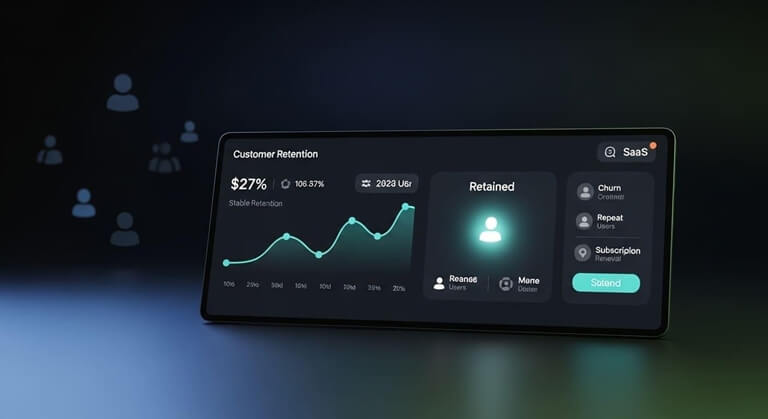
Another big change is the focus on retaining customers instead of constantly acquiring new ones. Developers are now realizing that long-term saas revenue is heavily dependent on keeping existing customers happy.
A strong retention strategy increases consumer life expectancy and reduces reliance on ad spend. This also helps sustainable subscription business growth, as trusted customers often become advocates who bring new users organically.
Automation Is Changing the Game.
Automation tools allow manufacturers to manage SaaS businesses more efficiently than ever before. From onboarding to invoicing, everything can now be streamlined so that manufacturers get recognized on the upswing.
This efficiency impacts SaaS revenue without delay as it reduces operational costs and increases profit margins. It also helps with the rise of good subscription trading because an automated system’s scale makes good deals less difficult and more sustainable.
Niche Markets Are Becoming Goldmines.
Developers target more niche markets instead of broader audiences. This method allows them to dominate small blocks and build strong authority within those spaces.
Niche-focused items typically generate more SaaS revenue because they deal with very specific wants. They also benefit from progressive protective living wages, as consumers in the rate market are more reliable and much less likely to switch to competitors.
Community-Driven Growth Is Rising
Communities play a bigger role in SaaS fulfillment than ever before. Developers build audiences with their products, considering and growing before launch.
This technique increases saas revenue by reducing the cost of patron acquisition. Additionally, it boosts subscription business growth, as engaged communities are much more likely to help and sell products organically.
The Role of Simplicity in Modern SaaS
Complex products are no longer the plan. Developers actually specialize in simplicity and usability, ensuring that their equipment is easy to own and assemble.
Simpler things tend to yield better SaaS revenue because they reduce friction at some stage of onboarding. They also increase the lifetime cost of the patron, as customers are more likely to maintain usage of tools that are easy to understand and execute.
Experimentation Without Risk
Modern designers embrace experimentation, but in a controlled, coffee-risk way. Instead of building full-blown products, they observe ideas using MVPs (Minimum Viable Products).
This approach ensures that saas revenue opportunities are already proven. Additionally, manufacturers can refine their SaaS pricing methodology and features before committing to large assets.
The Influence of Global Competition
The SaaS market has grown to become incredibly competitive, pushing manufacturers to imagine smarter. Just creating a product is no longer enough – differentiation matters.
To stand out, recognize manufacturers in unique payment offers that can drive conventional saas revenue. This often involves overhauling the standard revenue version and providing features that competitors lack.
Future Outlook: Smarter, Leaner SaaS Business
The destiny of SaaS isn’t about building extra – it’s about building smarter. Developers have become entrepreneurs who understand basic business activities as a good part of their technical skills.
This evolution shapes a new technology of SaaS products that prioritize sustainable SaaS revenue, green operations, and long-term subscription company growth. The focus is clear: build much lower than build higher.
Conclusion
The way developers approach SaaS has radically changed. This quiet change is not driven by instinct, however,r with the help of experience, information, and deep expertise in what works.
Today, performance is defined by consistent SaaS revenue, strong buyer lifetime fees, and a beautifully optimized pricing strategy. Developers who embody this mindset aren’t just building products—they’re creating durable virtual ensembles that hold a glimpse of time.
Popular on OTW Right Now!
-
 Serhiy Tokarev Shares News of the Start of Recruitment for the SheLeads 2.0 Programme
-
 The Essential Cloud Migration Checklist: How to Plan a Secure and Successful Migration
-
 Why Every Shopify Store Needs an AI Assistant App to Stay Ahead in 2026
-
 What a Dead QR Code Actually Costs Your Business: $5,000 to $40,000 Per Incident



About The Author

Gagan Bhangu
Founder of otechworld.com and managing editor. He is a tech geek, web-developer, and blogger. He holds a master's degree in computer applications and making money online since 2015.