
How Parking Lot Sweeping Helps Manage Debris Around High-Turnover Commercial Parking Areas
Commercial car parks are almost never going to be empty long enough for every section to get the same level of attention. The cars are constantly coming and going throughout the day and so they will be covering different areas of the car park. The litter, leaves, dirt and other debris will be moving around and will end up in all sorts of places which may well be missed by a routine inspection.
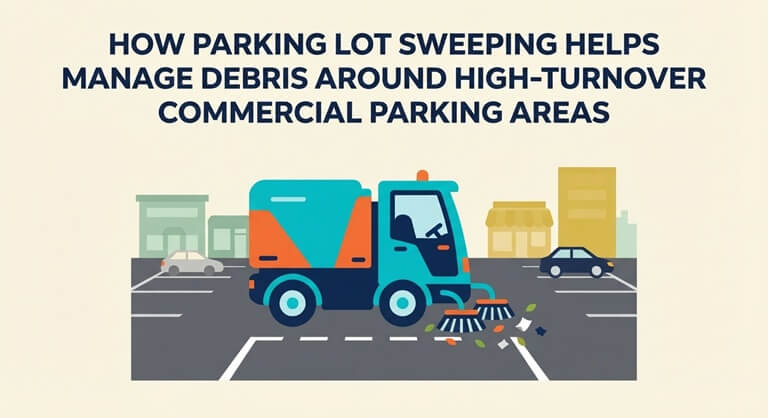
Properties with high vehicle turnover are particularly difficult to keep clean as the worst bits can easily get hidden under parked cars. The main drive may appear clean from the road but there’s a lot of debris that can accumulate around the wheel stops, the curbs, the islands and the parking spaces themselves. Recognising these patterns is key to enabling the manager to plan their cleaning more effectively.
Parking lot sweeping in Los Angeles County can address loose material across suitable paved areas when access and timing are properly considered. Cleaner Streets can help managers evaluate how vehicle activity influences debris movement and cleaning access. Instead of treating the parking area as one uniform surface, managers can identify sections where occupancy repeatedly interferes with maintenance.
Vehicle Turnover Changes Where Debris Accumulates
Even when they’re just pulling in and out of spaces the cars are going to be moving all sorts of loose debris around. The tyres will push dirt, leaves, paper and all the other assorted bits of litter from the open road onto the edges or into the sheltered areas.
Spaces that are frequently occupied can accumulate debris which goes completely unnoticed for days. You may well find a heap of it near the tyres or at the front of the space when the car eventually does leave.
Checking the lot at different times of day can be very informative. You might find problems that are completely masked during the peak hours. A check early in the morning for instance might reveal something that wouldn’t be apparent at any other time of day.
Empty Spaces Provide Important Maintenance Opportunities
An empty parking space allows the cleaning crews access to the pavement which would otherwise be covered. Properties that are always busy should consider when their most spaces will be open for cleaning.
The best time to clean will obviously vary depending on the type of property and how it’s used. An office block, a shopping centre, a restaurant etc will all have very different patterns of occupation and therefore different cleaning requirements.
Cleaner Streets can adapt the best times to suit each individual property rather than using the same schedule across the board. By aligning the cleaning times with normal parking patterns you can actually clean more pavement per visit.
Occupancy Patterns May Change During the Week
Parking conditions can be very different on a weekday versus a weekend. Special events, staff rota, deliveries and the like will all have an impact on which areas are actually in use.
Managers should be looking for these changes prior to instituting a regular cleaning regime. A time that works at the moment may well be completely inappropriate if the level of activity in the property changes.
Wheel Stops Can Collect Hidden Loose Material
Wheel stops break up the open expanse of the parking space and leaves, paper, dirt and all the other light debris that gets moved around by the wind, rain and cars can collect up around them.
These spots can easily be missed when the car’s there. Over time a small pile of debris can become quite obvious once the space is clear.
Property managers should be looking around the wheel stops during their inspections. It’s not just about the open pavement really, it’s about seeing what’s going on in the rest of the lot as well and spotting any debris that will affect the overall appearance of the lot.
Curbs and Islands Naturally Capture Moving Debris
Wind and vehicles don’t tend to distribute the debris very evenly. The loose material will just move until it hits a curb, an island, a wheel stop or some other obstruction.
This is why the centre of a parking lot may appear clean whilst the edges are full of build up. Leaves and rubbish tend to accumulate in the corners where the wind just keeps blowing them.
Parking lot sweeping can be targeted at these common collection points where ever possible. It enables the manager to assess the level of cleanliness across the whole lot rather than just the main lanes.
Landscaped Islands Can Add Seasonal Material
Landscaping can improve the appearance of a parking lot, but the vegetation adjacent to it will also drop leaves, flowers, seeds, dirt and all sorts of other small bits of debris. Wind and rain will in turn take these bits of debris and spread them well beyond the landscaped areas.
New landscaping work can temporarily result in more loose material on the pavement. Mulch, cut plants and loose soil can end up in the parking spaces if the clean up isn’t carried out at the appropriate time.
Scheduling the cleaning after the landscaping work which will create the debris will obviously prevent you having to do the job twice. You can also note which of the islands tend to add the debris and include those in your future cleaning schedules.
Shopping Carts Can Complicate Cleaning Access
Retail parking lots will often have cart returns or strays taking up space. Debris will collect underneath and around them.
Equipment should be moved prior to cleaning commencing. An area that may appear to be quite difficult to get to can in fact be very easy to clean once the movable items in it have been cleared as part of the property routines.
Other temporary items can of course cause the same problem. Signs, cones, pallets and stored materials are all things to bear in mind when working out how much pavement will be open for cleaning.
Litter Often Collects Away From Main Travel Lanes
Light stuff like packaging, receipts, cups and paper can be blown quite some way from where they were dropped. They can be blown right out of the way of the busy areas and end up getting caught in curbs, fences, landscaping or in parked cars.
So where you find the litter may not be where it originated. Managers can simply watch the normal collection points to see where the litter is moving around the site.
Cleaner Streets can clean the areas they can get to, whilst the managers are thinking about where the debris is being added. Identifying these patterns is useful for future planning rather than simply assuming that every litter problem starts where the debris stops.
Weather Can Quickly Change Parking Lot Conditions
Windy days can blow loose debris all over a parking lot in just a few hours. Rain will wash the dirt down to the low spots, dry weather will allow the dust and light debris to be blown much further across the pavement.
Maintenance should be scheduled with these changes in mind. You may well find that cleaning right up until an event which is going to generate a lot of debris isn’t worth the effort as the results won’t last very long.
Watching how the weather affects the lot will tell you which areas are consistently a problem. Any areas that tend to gather debris after a storm or a windy day should be given particular attention when it comes to future cleanings.
Access Planning Can Reduce Unnecessary Disruption
Cleaning a busy parking lot is all about thinking about the customers, the staff, the deliveries and the normal traffic. The aim is to get the cleaning done without in any way disrupting normal operations.
Managers can of course find times when there are fewer cars about and then let everyone know about the cleaning requirements in advance. Some sites may actually do better by cleaning different areas at different times rather than waiting for the whole thing to be empty.
Good planning is absolutely key for properties that are open long hours. Even fairly busy premises will generally have some kind of pattern which can then be used to work out a better cleaning schedule.
A Cleaner Lot Begins With Understanding Parking Behavior
Parking lot sweeping works best when the managers have a real understanding of how cars and people actually use the property. Parking patterns, wheel stops, curbs, islands, the weather, the landscaping and any temporary obstacles will all have an impact on where the debris ends up and whether or not the crew can get to it.
By simply walking the lot on a regular basis, you’ll be able to identify areas that are always covered or that collect debris the quickest. That in turn allows you to build a cleaning schedule that is appropriate to the actual conditions rather than one that treats all areas the same.
Busy car parks will always be generating new debris as a result of daily use. A sensible maintenance plan will be one that looks at the normal accumulation of debris, makes access as easy as possible and identifies the usual trouble spots so that the site remains clean and presentable without in any way interfering with the running of the business.
Popular on OTW Right Now!




About The Author

Gagan Bhangu
Founder of otechworld.com and managing editor. He is a tech geek, web-developer, and blogger. He holds a master's degree in computer applications and making money online since 2015.