
How Artificial Intelligence is Reshaping Retail with Lightweight 3D and AR
The modern digital retail environment requires highly interactive product displays to engage consumers effectively on mobile devices and desktop platforms alike. Traditional two-dimensional photography, while foundational, is rapidly being supplemented by interactive spatial computing. This shift is prompting retailers and technical agencies to automate 3D modeling workflows for online stores in order to meet surging consumer demand for interactivity. Neural4D addresses this industry-wide shift by providing an enterprise-grade artificial intelligence infrastructure that converts standard product images into interactive web-ready geometric models.
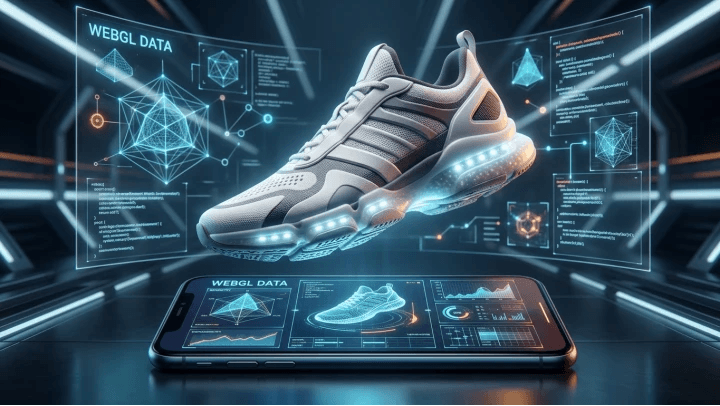
This technological advancement is based on intensive academic research aimed at solving difficult problems involving spatial reconstruction and optimization. The Neural4D system, which has been developed jointly by Nanjing University, DreamTech, Oxford University, and Fudan University, uses advanced computer vision algorithms to guarantee very accurate geometric representations of physical products. Thanks to this solid infrastructure, technical artists and e-commerce managers are now able to create thousands of interactive models without having to carry out the manual sculpting that was necessary before, thus fundamentally changing the economic aspects of digital merchandising.
The Evolution from Flat Imagery to Volumetric Retail
The process of creating digital twins for use in the retail sector goes well beyond merely generating a shape. The virtual product has to respond properly to the changing lighting conditions of the user’s actual environment, particularly in Augmented Reality applications that are seen through a smartphone camera. With traditional photogrammetry methods, the lighting information is usually embedded directly into the texture, which results in inconsistent shadows when the object is placed in a real-world lighting situation using AR. This kind of visual inconsistency disrupts the sense of immersion and reduces buyer confidence.
In order to attain true realism in augmented environments, it is necessary for the surface color to be entirely separated from the original lighting conditions of the source photographs so that the object reacts to its new digital surroundings.
N4D excels in pure Albedo material decoupling. During the generation process, the algorithm detects and eliminates all the baked shadows, ambient occlusion, and specular highlights from the diffuse texture. Once the model has been loaded into a mobile AR viewer, the device’s local lighting engine then creates shadows and reflections according to the real physical environment of the room. The end result is a digital object that appears to be physically present rather than being poorly attached to the camera feed, which greatly enhances the perceived quality of the product and leads to higher conversion rates.
Overcoming Mobile WebGL Performance Constraints
Because online shops cannot afford it if the pages take a long time to load, since delays of just a few milliseconds are directly linked to a loss of sales and a high rate of people leaving the site, geometric assets of a high fidelity generally have very large file sizes, and this causes mobile browsers to lag, use up a lot of battery, or even crash completely. In order to stick to the strict performance limits on e-commerce websites, the geometry has to be greatly optimized before it is delivered to the end user.
N4D makes use of aggressive geometry optimization together with advanced compression methods such as Draco and Meshopt; these specialized algorithms rearrange the polygon data in order to reduce the amount of memory required, which ensures that the 3D model loads almost instantly together with regular text and images on major retail platforms such as Shopify or WooCommerce.
The system also dynamically creates a number of Levels of Detail. This enables the rendering engine to load a highly simplified version of the object when it is small on the screen or far from the virtual camera, thus saving processing power without compromising visual quality. The platform ensures a smooth scrolling experience even on mid-range smartphones using cellular networks by streamlining the vertex data and efficiently compressing the textures.
Material Optical Characteristic Matrix
To provide an accurate physical representation of a product, it is necessary to have distinct material definitions that go beyond simple color mapping. N4D attaches specific Physically Based Rendering maps in order to specify exactly the way virtual light interacts with various parts of the item. Because of this mathematical method, a single model is able to convincingly represent a variety of materials, whatever the lighting conditions, which is a vital aspect when it comes to items such as jewelry, electronics, or complex clothing.
1. Dielectric Surfaces: Non-metallic materials such as plastics, fabrics, and wood are given fairly high roughness values together with zero metallic value. This arrangement ensures that light is scattered correctly over the surface without producing unnatural and intense reflections, thus preserving the soft look of organic or matte materials.
2. Metallic Components: Buckles, zippers, or the casings of electronics—the program assigns high metallic values. It then uses this map to reflect the environment map surrounding the object, giving it a very realistic metallic finish that responds dynamically to movements of the camera and to changes in the angle of light.
3. Transparent and Translucent Elements: Glass, clear plastics, or thin fabrics utilize an opacity channel and subsurface scattering profiles, allowing the background to distort accurately through the material based on its specific index of refraction. This adds immense depth to products like perfume bottles or eyewear.
Collaborative Ecosystems and Asset Distribution
The distribution of a large number of interactive assets needs well-organized distribution channels and dependable community support. Although proprietary retail models are generally hosted directly on highly secure corporate servers, independent creators, smaller vendors, and technical developers usually depend on shared platforms to distribute general assets, swap out optimized printable files, or test new WebGL implementations.
For technical creators who want to widely distribute their optimized work, using a specialized [DIY3D model sharing platform](https://diy3d.ai/) is an excellent way of reaching a wider audience of makers and interactive developers. Such independent repositories are important in standardizing open formats, in sharing the best practices concerning WebGL optimization, and in offering a solid infrastructure for developers who are creating new virtual storefronts. The transfer of technical knowledge on these platforms has a positive effect on the wider e-commerce ecosystem by raising the standard of the assets available and by promoting innovation in browser-based rendering techniques.
The Trajectory of Interactive Commerce
The incorporation of spatial computing into daily retail activities fundamentally alters the way consumers assess products before deciding to buy them. By using automated reconstruction pipelines, companies of all sizes are able to expand their libraries of interactive assets without having to accept proportionally huge increases in production costs or time. The technical foundation offered by N4D shows that it is now highly accessible for technical teams all around the world to produce web-ready, physically accurate geometric data.
Since bandwidth and the processing power of mobile devices are growing exponentially, highly optimized volumetric formats will eventually become the standard that all online merchandising must meet. Consumers around the world will be able to inspect a product from every angle, see its real physical size in the context of a living room, and interactively assess its material characteristics, gaining a level of clarity that has never been seen before. Retailers who take up these intelligent optimization processes early on will gain a clear technical edge, enabling them to offer shopping experiences that combine the convenience of digital shopping with the feel of being able to see the products in person.
Popular on OTW Right Now!




About The Author

Gagan Bhangu
Founder of otechworld.com and managing editor. He is a tech geek, web-developer, and blogger. He holds a master's degree in computer applications and making money online since 2015.