
The Real Trade-Offs of AI Video Generators in 2026
AI video generators have reached a high level of maturity in 2026. Most platforms can now produce visually acceptable videos from text, images, or reference clips. As a result, surface-level comparisons no longer explain why teams succeed or fail with these tools.
Trade-offs define real differences
Each AI video generator excels by trading certain constraints for others. Speed, control, realism, scalability, and ease of use almost never reach the same level. It’s important to understand the trade-offs to know which tool to pick.
This article explores the most prevalent trade-offs that categorize AI video tools as of 2026 and where platforms tend to land on these spectrums.
Trade-Off 1: Speed vs. Creative Control
The primary guarantee of AI video tools is typically speed, and several platforms are associated with fast generation and low-90s initiation.
Fast tools reduce friction. They enable frequent publishing and quick experimentation. However, speed usually comes at the cost of granular control.

Platforms such as Loova prioritize speed through unified workflows. Text-to-video, image-to-video, and editing exist in one environment. This reduces switching time and accelerates output.
In contrast, tools like Runway ML or Kling AI offer deeper creative control. Users can fine-tune style, lighting, and composition. The trade-off is time. Setup and iteration take longer.
Most teams cannot trade speed with perfection on all the assets thus they settle on tools that are fast enough even though they are not fully controllable.
Trade-Off 2: Realism vs. Flexibility
Realism builds trust. Videos with natural movement, stable lighting, and natural interactions are more liked by the viewer.
In order to attain realism, tools are constraining: the movement is required to be physically realistic, the characters are expected to behave in a consistent manner. These limitations lower flexibility.
Mimic motion systems exemplify this trade-off. By transferring movement from reference footage, tools increase realism but reduce spontaneous variation.

Loova integrates mimic motion to improve visual credibility in short-form and product-focused content. The benefit is higher perceived authenticity. The cost is reduced randomness.
A very pliable system allows experimenting more nevertheless, it might result in plastic or synthetic outputs. Teams are required to balance the extent of realism and variety of their work.
Trade-Off 3: All-in-One Convenience vs. Specialized Depth
All-in-one platforms boast simplicity. Fewer tools to manage, reduce sprawl, and overhead.
Loova and similar systems handle generation, motion, and editing within a single flow. Convenience reduces the cost of operations and enables faster creation.
Specialized tools slice deeper into singular responsibilities. Synthesia is the best in avatars presentations, whereas Opus Clip is the best to convert long videos to shorts.
The negative aspect of specialization is the additional friction of links between various tools.
Unified platforms are usually adopted in teams that appreciate rapid functionality. The ones that require a specific type of output normally do well with fragmentation.
Trade-Off 4: Simplicity vs. Scalability
Tools that are user-friendly are aimed at being easy to use and having minimal functionality.
They are fast to implement but difficult to expand. The lack of choice becomes a bottleneck when there is more content.
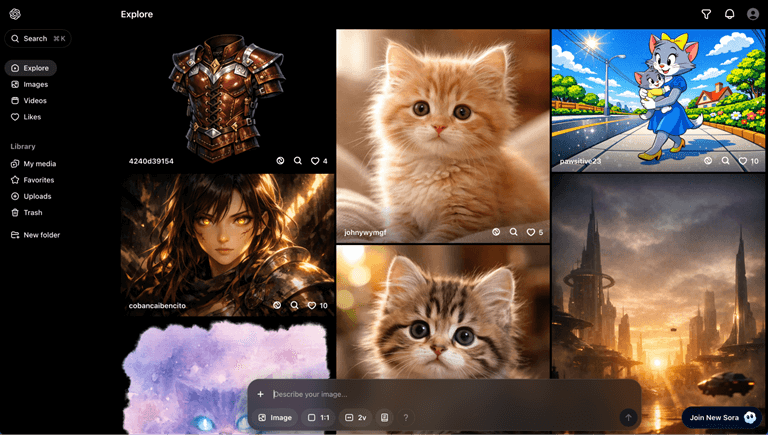
Scale here is traded in enterprise products such as Sora trade.
They need schemes, designs, and automation to scale shipping, which can drive users out of solutions of convenience.
Trade-Off 5: Automation vs. Brand Differentiation
The cost is reduced through automation, AI ad maker tools, AI scripts, edits, and formats.
However, heavy automation will cause every piece of content to look and sound alike.
The introduction of limitations and restrictions makes your brand stand out, but manual tools can reduce the production speed.
Marketers tend to combine semi-automatic processes: AI takes care of bulk work, humans take care of brand voice.
Trade-Off 6: Short-Term Performance vs. Long-Term Assets
Short content requires urgency, and rapid tools do well in fashion.
The long-term assets should be durable; evergreen videos should remain sharp and consistent.
The trend-oriented tools may compromise on the value in the long-term, and structured tools may seem slow on rapid channels.
These needs are segregated by successful teams, which have a discovery-based and a long-term assets-based configuration.
Why Trade-Off Awareness Matters
The majority of dissatisfaction with AI video tools are a result of expectations.
Users would like the tools to do all the things, which they are not able to.
Awareness of trade-offs helps users reach better decisions. Teams choose tools based on constraints, instead of wants.
Less churn happens as a result. Users also develop workflows that are more grounded in reality.
The Direction of AI Video Tools
The world of AI video continues to change. The distinction between categories is imprecise, all-in-one tools become more complex, and special tools can be used more easily.
Despite convergence, trade-offs remain. Physics, time, and attention impose limits. The most effective users design workflows around these limits instead of resisting them.
Conclusion
In 2026, AI video generators will be very powerful, but none of them will be flawless. There are compromises made by each platform. Speed battles are the control ones, realism battles are the flexibility ones, and the convenience ones are the depth ones. Select the compromise that best suits your staff. Knowing trade-offs makes a speculation strategy. With a saturated market, it is better to be clearer than to have more features.
Popular on OTW Right Now!




About The Author

Gagan Bhangu
Founder of otechworld.com and managing editor. He is a tech geek, web-developer, and blogger. He holds a master's degree in computer applications and making money online since 2015.