
The Future of Remote Work: Trends Every Professional Should Know in 2026
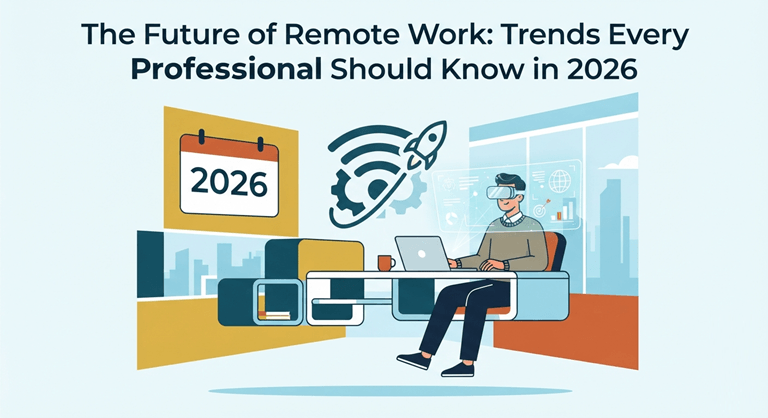
Remote work has transformed the global workplace over the past few years. What started as a temporary solution has now become a long-term strategy for many businesses. In 2026, millions of professionals work from home, coworking spaces, or while traveling, proving that productivity is no longer tied to a traditional office.
The world has become a much more technologically advanced place, making remote work easier than ever before with technology, cloud systems, artificial intelligence (AI), and high-speed internet. Companies are discovering that flexible work arrangements can reduce costs, improve employee satisfaction, and attract top talent from around the world. Top Cybersecurity Tips for Beginners
In this article, we’ll take a look at the greatest remote work trends of the future and how individuals can remain competitive.
What Is Remote Work?
A work arrangement that allows employees to work away from the typical office environment. They no longer have to commute daily, but they can communicate, collaborate, and complete tasks from anywhere using digital tools.
Remote work can be:
- Full-time remote
- Hybrid (office + home)
- Freelance
- Digital nomad lifestyle
Each model offers flexibility while allowing businesses to operate efficiently.
1. Hybrid Work Is Becoming the New Standard
A lot of companies are starting to adopt hybrid working models, where employees can work a specific number of days a week in the office and the remainder of the week at home.
Benefits include:
- Better work-life balance
- Lower commuting costs
- Increased flexibility
- Higher employee satisfaction
- Improved productivity
Hybrid work combines the advantages of office collaboration with the convenience of working from home.
2. Artificial Intelligence Is Changing Daily Work
AI tools are becoming an essential part of remote work.
Professionals use AI for:
- Writing emails
- Creating presentations
- Managing schedules
- Research
- Coding assistance
- Customer support
- Data analysis
AI saves valuable time and helps employees focus on more strategic tasks.
3. Cloud Technology Is Essential
Cloud platforms allow teams to access files from anywhere.
Popular cloud services help businesses:
- Store documents securely
- Collaborate in real time
- Share large files
- Back up important data
- Improve teamwork
Cloud computing has become the backbone of remote businesses.
4. Cybersecurity Is More Important Than Ever
Unprepared businesses face security risks when working from home.
Companies now invest heavily in:
- Multi-factor authentication
- VPN connections
- Password managers
- Employee cybersecurity training
- Secure cloud storage
Protecting company data has become a top priority.
5. Remote Hiring Is Expanding Worldwide
Businesses no longer need to specifically recruit a team of workers in a certain city or nation.
Remote recruitment allows organizations to:
- Access global talent
- Reduce hiring costs
- Build diverse teams
- Fill positions faster
Professionals also benefit from increased job opportunities worldwide.
6. Online Communication Skills Matter More
Successful remote workers communicate clearly through digital platforms.
Important communication skills include:
- Professional emails
- Video meetings
- Team collaboration
- Clear documentation
- Time management
Strong communication reduces misunderstandings and improves teamwork.
7. Digital Collaboration Tools Continue to Improve
Collaboration software is essential for businesses to stay connected.
These tools help with:
- Project management
- File sharing
- Team messaging
- Video conferencing
- Task tracking
Effective collaboration improves productivity regardless of location.
8. Employee Well-Being Is a Priority
Remote work offers flexibility but can also lead to burnout if employees work long hours without breaks. Top Cybersecurity Tips for Beginners
Companies now encourage:
- Flexible schedules
- Mental health support
- Regular breaks
- Virtual team-building activities
- Healthy work-life balance
A happy workforce often performs better.
9. Continuous Learning Is Essential
Technologies evolve very fast, and skills need to be continuously acquired.
Popular skills include:
- Artificial Intelligence
- Data analysis
- Digital marketing
- Programming
- Project management
- Cybersecurity
- Communication
Online courses and certifications help workers stay competitive.
10. Results Matter More Than Office Hours
For many companies, evaluating employees by results is the way to go these days, rather than by the number of hours spent in front of a desk.
Performance is measured by:
- Completed projects
- Quality of work
- Meeting deadlines
- Customer satisfaction
- Team contribution
This approach gives employees greater flexibility while encouraging productivity.
Challenges of Remote Work
Although remote work has many advantages, it also comes with challenges.
Common difficulties include:
- Isolation
- Internet problems
- Time zone differences
- Communication delays
- Maintaining work-life balance
Successful professionals develop routines that help them stay organized and motivated.
Tips for Being a Successful Remote Worker
To succeed while working remotely:
- Create a dedicated workspace.
- Follow a daily schedule.
- Take regular breaks.
- Keep learning new skills.
- Communicate frequently with your team.
- Use productivity tools.
- Avoid distractions during work hours.
Consistency is the key to long-term success.
The Future of Remote Work
Experts believe remote work will continue growing over the next decade. The use of Artificial Intelligence, virtual reality, faster internet, and better collaboration tools will make working remotely even more efficient.
Organizations that embrace a flexible workplace will be able to draw in talented employees and stay competitive in a digital world.
More opportunities for employees to pursue career growth than ever before by adapting to new technologies and furthering their skill sets.
Conclusion
Remote work is no longer a passing fad; it’s a permanent part of the modern workplace. Thanks to technology, businesses and employees can work efficiently from anywhere.
Professionals can navigate the changing landscape of remote working by adopting AI, enhancing their communication abilities, emphasizing cybersecurity, and fostering a healthy work-life balance.
The trend of working remotely is just starting to redefine the workforce, businesses, and world economy, and as we move into the future, 2026 and beyond, there will be new opportunities for those who are willing to embrace the change.
Popular on OTW Right Now!
-
 Reasons Your Website Is More Deserving of Attention (And How to Give it)
-
 The Role of Data Science in Shaping the Future of Technology and Innovation
-
 The Link Gap: Why Your Content is Better Than Your Competitor’s, but They’re Still Outranking You
-
 Best Practices for Secure Enterprise Data Operations Today


About The Author

Gagan Bhangu
Founder of otechworld.com and managing editor. He is a tech geek, web-developer, and blogger. He holds a master's degree in computer applications and making money online since 2015.