
What is Cloud Computing and How Does It Work?
Cloud computing has transformed the way individuals and businesses store data, run applications, and access digital services. Instead of relying on local servers or personal devices, cloud computing allows users to tap into powerful remote infrastructure over the internet—on demand and at scale.
From streaming platforms and online storage to enterprise systems and AI tools, cloud computing powers much of today’s digital world. This guide explains what cloud computing is, how it works, and why it has become a cornerstone of modern technology.
What is Cloud Computing?
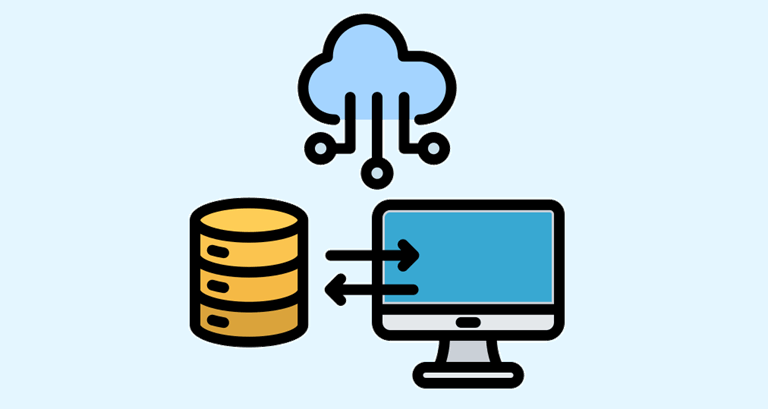
Cloud computing refers to the suitable provision of a wide collection of services through the Internet. These valuable resources contain a diverse range of tools and applications, including servers, storage, networking, software solutions, and databases.
Unlike traditional forms of data storage, such as storing files on a proprietary hard drive or local storage devices, cloud-based storage allows one to store data in a remote database. If the device connects to the web, it can receive data and the software to operate on it.
It is one of the opportunities that can save people and various businesses money. Boost their productivity, improve speed and efficiency, enhance performance, and provide security.
That’s why cloud computing enjoys more benefits than traditional on-premises computing, which is becoming increasingly outdated.
Security insight: Storing data in the cloud shifts some security responsibilities to the provider, but user vigilance remains essential. Should your data ever be exposed in a breach, it can land on the dark web. Yes, the darknet. So,
- Different services, such as data storage, servers, databases, networking, and software, are provided via the Internet to the customer through cloud computing.
- As a consequence, storing important data in cloud storage is more beneficial for those who require more storage space. And also for companies that want to back up important information in some place besides the office.
- In cloud-based storage, data is saved in a remote database, which can be retrieved whenever required.
- Public services apply online charges, while private services host within a customer’s network.
- The importance of cloud security has also expanded within the information technology field.
Understanding Cloud Computing
- Cloud computing refers to accessing information in the cloud or a virtual space. Cloud services allow users to store files and applications on remote servers and later access everything via the Internet. The user does not have to access it at a specific location. Hence, they can work from anywhere.
- It removes all the load of data crunching and processing that goes along with the device you carry around or use for sitting. It also takes all its work to large computer groups thousands of miles away in cyberspace. The Internet transforms into the cloud, making your data and applications accessible on any connected device from anywhere.
- Cloud computing is both public and private. A public cloud is a fee-based service provided over the Internet. However, private cloud services are only accessible to a specified group of users. They are a network infrastructure of hosted services. An alternative is also available. The hybrid form integrates aspects of both the public and private sectors.
Multiple Cloud Service Types
Regardless of the kind of service, cloud computing services provide users with a series of functions including:
- Creating and testing apps
- Backup, Storage, and data retrieval
- Audio and video streaming
- Offering software on demand
- Exploring data
It also appeared that cloud computing is a relatively new service that various companies use. Ranging from large corporations, small businesses, non-profit organizations, government, and even individual customers, etc.
Models of Deployment
There are many different kinds of clouds. The public cloud offers its resources in the internet-based server and storage. Third-party organizations manage the entire hardware, software, and general infrastructure. Accounts are accessible by almost anyone who wants to access the services of the company’s clients.
Private clouds are reserved only for one customer, often one business or organization. The cloud computing service could be hosted in the firm’s data center. A lot of businesses use private network-based cloud computing services.
Different Types of Cloud Computing
It is essential to note that cloud computing is not a single technology like a microchip or a cellphone. Rather, it’s a system comprising three services: SaaS, IaaS, and PaaS.
1. Software-as-a-service (SaaS)
SaaS model refers to licensing a software application to customers. Pay-as-you-go or on-demand licenses are commonly given. There is a system, which is found in Microsoft Office 365.
2. Infrastructure-as-a-service (IaaS)
A method of supplying from all the way down to servers and storage up to the IP-based connectivity in the form of an on-demand service is called IaaS. In this way, clients do not need to buy software or servers because they can access them on an ‘as needed’ basis from an outsourced service provider. Examples of the IaaS systems in popularity are Microsoft Azure and IBM Cloud.
3. Platform-as-a-service (PaaS)
The most complex layer of cloud computing is platform-as-a-service (PaaS). However, there are certain similarities between PaaS and SaaS, with the main one being that it is a platform for developing software delivered over the internet rather than the software itself. It includes the Heroku platforms and Salesforce.com.
Advantages of Cloud Computing
Cloud-based programs offer companies from all industry sectors multiple benefits, enabling them to utilize them on any device through natively provided applications or web browsers. Therefore, it allows users to transfer their files and settings to any other device without limitation.
Cloud computing means more than simply sharing files on various devices. With cloud computing, people can access their emails from any computer and store files using sites like Google Drive and Dropbox.
Cloud computing allows users to back up their songs, files, and photos. The file is instantly available in case of a hard drive crash.
It delivers massive savings potential to a large corporation. In the past, most firms had to set up and pay huge costs for information management technology and infrastructure when cloud computing was not yet an option. Companies can trade expensive server-based structures and IT teams for fast internet connections. Employees simply access the cloud online to do their jobs.
It enables people to preserve storage space on their desktops or laptops. Moreover, it facilitates users to update software as software companies can distribute their products online instead of traditional methods like discs or flash drives. For instance, Adobe’s Creative Cloud allows customers to access applications online via subscription.
It also lets users update their programs by downloading new releases and patches.
Disadvantages of Cloud Computing
Cloud computing offers speed, efficiency, and innovation benefits. However, of course, there is no gain without pain.
The cloud is not very secure, at least where medical records and financial information are involved. On the other hand, regulations continually require cloud computing services to maintain their security and compliance measures. Nevertheless, encryption helps keep important information private; however, once the encryption key is lost, the data disappears.
Cloud computing companies also face natural disasters, internal bugs, and power blackouts. The reach of cloud computing has both advantages and drawbacks. For instance, if a blackout occurs in New Jersey, it can leave users in California unable to access the system. Similarly, if the provider in Georgia experiences a crash, the firm based in Washington might face data loss.
Similarly, both employees and managers have to learn how the technology operates. However, since many people can access and manipulate data from one point, accidental mistakes can migrate from one system to another.
A significant related risk is data exposure beyond the initial breach. Compromised credentials or personal information from cloud services can quickly end up for sale on the darknet (usually via dark web forum posts), where they are exploited for cybercrime.
The Globe of Business
Businesses can utilize cloud computing in various ways. Some users store all of their applications and data in the cloud. In contrast, others combine the cloud and a private server by using certain applications on the cloud and keeping them on private servers.
Regarding providing services, the big players in the corporate computing world include:
- Amazon Web Services (AWS)
- Google Cloud
- IBM Cloud
- Alibaba Cloud
- Microsoft Azure
Amazon Web Services is completely public and follows a pay-as-you-go, outsourced model.
After joining, you can sign in for apps and other services. Clients can continue storing data at their respective locations using Microsoft Azure. At the same time, Alibaba Cloud is a part of the Alibaba Group.
What Is a Cloud Computing Example?
Today, businesses and individuals use numerous cloud computing applications. One such cloud service is streaming platforms for audio/video, where the actual media files are kept elsewhere.
The second example includes data storage platforms like Dropbox, Google Drive, OneDrive, or Box.
What Kinds of Cloud Computing Are the Most Common?
IaaS, PaaS, and SaaS are the main types of cloud computing services:
- IaaS delivers IT infrastructure to end-users over the Internet and is often related to serverless computing.
- PaaS offers software and hardware to the end-users, mainly software developers. With PaaS, users can create, run, and manage their applications without building and maintaining infrastructure.
- SaaS is a software license model that lets users subscribe to external servers to use software without downloading and installing it on the client side.
Is Cloud Computing Secure?
Because cloud computing software and data are stored remotely, data security and platform security concerns arise. Cloud security contains the strategies organizations use to protect digital assets and data stored in the cloud. Such measures may include two-factor authorization (2FA), VPNs, security tokens, data encryption, and firewall services.
Popular on OTW Right Now!


About The Author

Gagan Bhangu
Founder of otechworld.com and managing editor. He is a tech geek, web-developer, and blogger. He holds a master's degree in computer applications and making money online since 2015.