
How City Commuting Electric Bikes Fit Into the Daily Routines of Car Owners
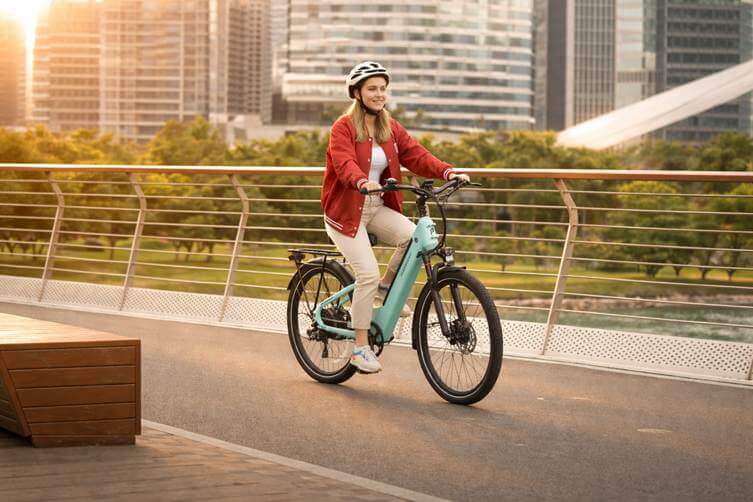
For many people who own cars, the shift toward City Commuting Electric Bikes does not begin with a decision to change lifestyles. It begins with a workday routine that no longer feels as smooth as it once did. Traffic patterns tighten, small delays compound, and the mental and physical effort of daily driving quietly increases. Over time, City Commuting Electric Bikes start to appear not as an alternative to car ownership, but as a more workable way to handle everyday commuting.
Then there is seldom a dramatic change. Rather, electric biking will be the new default on workdays, and the car will still constitute a new aspect of life. This equilibrium is where City Commuting Electric Bikes are becoming more and more entrenched.
When Driving No Longer Feels Like the Default Choice
Driving may begin as the obvious solution to daily commuting for car owners. It is familiar, controlled, and independent. The path is familiar, the habit is formed, and the feeling of choice is satisfying.
With time, though, such a feeling of default may fade. The urban expansion provides additional variables to even familiar motives. Once free-flowing lanes come to a crawl. Crossroads turn into points of contention. What once felt automatic is now one that needs attention.
This shift is subtle. There is rarely a single moment that triggers change. Instead, the commute slowly demands more mental and physical engagement than it returns in convenience. At that point, City Commuting Electric Bikes begin to feel relevant—not as a statement, but as a practical adjustment to a changing daily reality.
The Subtle Friction Built Into Everyday City Driving
Driving in the city hardly decomposes in general. It does-it is not efficient. The resistance is due to accretion and not debiture.
Spending several changes of traffic lights. Rerouting in order to evade congestion. Finding a parking space and walking the last distance. All these moments appear to be copable, yet when combined, they break the commute down into various small tasks.
Such discontinuity influences body and intellect. The prolonged sitting is then succeeded by spurts of activity – raising baggage, curb crawling, ascending staircases. The commute ceases to be a one-way trip and begins to be a series of interruptions.
In the case of commuting to work, this trend grows more exhausting. Distance is not the problem that wears people out, but it is the incessant waiting, reacting, and adjusting.
A Workday Commute That Gradually Centers on Electric Biking
With the introduction of City Commuting Electric Bikes, the transformation is normally initiated on an experimental level. It is easier to work one or two days per week. Routes become familiar. Street to destination shifts become reduced.
The trend stems over time. The commuting to workdays is slowly becoming an electric bike, owing to the fact that it is more of a daily routine. The times of departure are more regular. Arrival feels more direct. The commute involves fewer choices and lower adaptations.
This is not a change in ideology. It shows how City Commuting Electric Bikes are more efficient in managing foreseeable, frequented journeys than vehicles in large urban setups. By establishing its routine, the bike replaces the car in other functions, but does not eliminate it on a weekday.
Why Many Car Owners Still Keep Cars for Non-Commute Trips
Although electric biking is taking a central role in commuting to the workplace, there are several cases when cars are necessary. Driving is still preferred for longer trips, family organization, traveling on weekends, and plans that are dependent on the weather.
This separation of roles is part of the appeal. City Commuting Electric Bikes address one specific use case: the daily, time-sensitive city commute. Cars continue to serve broader, less predictable needs.
In this manner of dividing transportation, owners of cars will relieve the weight on any one mode. The bike controls uniformity and monotony. The car deals with flexibility and range. Neither has to do everything.
How City Commuting Electric Bikes Shape a More Consistent Commute
Consistency is one of the most conspicuous alterations that people who own cars make when switching to City Commuting Electric Bikes. The time of commuting is less fluctuating. Routes stabilize. Physical labor is predictable.
Electric biking can be easily added to the city infrastructure that is characterized by frequent stops and short distances. Riders use set courses and do not respond to the traffic conditions, but instead move at a steady pace. The commute is not so reactive, but more of an isolation.
As cities evolve, the presence of reliable ev charging providers ensures that this infrastructure supports all forms of electric transit, from bikes to cars.
This consistency eventually alters the way the commute becomes a part of the working day. It turns into a stable shift as opposed to an unstable factor that must be addressed. The time that was used navigating uncertainty is saved to be used later in the day.
A More Balanced Way to Handle Daily Transportation
City Commuting Electric Bikes do not substitute cars in the lives of car owners. They re-equalize the utilization of transportation.
By making workday commuting a matter of electric biking and saving driving to when it is more appropriate, the owners of cars will establish a pattern that will be less cumbersome and stressful. The bike is used to gain predictability, whereas a car is utilized to gain flexibility. For those exploring practical commuting options, electric bikes offer a reliable and cost-effective alternative to driving in congested urban areas.
By doing this, the City Commuting Electric Bikes will be integrated into the contemporary life of a city. Not as a declaration, and not as a concession, but simply as a question of the daily commuting experience.
Popular on OTW Right Now!



About The Author

Gagan Bhangu
Founder of otechworld.com and managing editor. He is a tech geek, web-developer, and blogger. He holds a master's degree in computer applications and making money online since 2015.