
How Automation Is Transforming Parcel Management Systems
The spike in package deliveries has led many companies to rethink how they handle inbound and outbound shipments. In the offices, residential areas, colleges, and other places where deliveries are received, businesses are experiencing an influx of deliveries like never before. The older package handling techniques, which used to work quite well,l are now struggling to cope with the demands of increased volumes of deliveries.
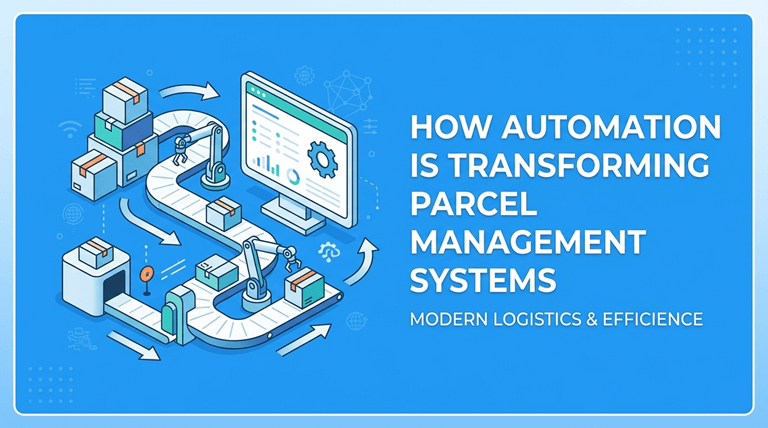
In order to tackle the problems faced by businesses in managing their package deliveries, firms have adopted automation systems to gain better visibility and make the process of package handling easier. Automating their package management processes, businesses are able to receive their packages faster and with greater precision.
With automation systems, business firms are moving from package handling to package delivery management.”
The Growing Complexity of Parcel Management
There have been notable changes in parcel management over the last ten years. Companies are handling more deliveries because of the development of online shopping, hybrid work arrangements, and third-party shippers.
This growth has introduced several operational challenges:
| Parcel Management Challenge | Operational Impact |
| Rising package volumes | Increased processing delays |
| Manual delivery logging | Higher administrative workload |
| Lost or misplaced packages | Reduced accountability |
| Delayed notifications | Employee frustration |
| Limited tracking visibility | Slower issue resolution |
Organizations relying on manual systems often struggle to maintain efficiency as package traffic increases.
Without automation, delivery operations can quickly become disorganized and time-consuming.
Automation Streamlines Parcel Processing
Automated parcel management systems make it easier for many routine processes that are performed manually by administrative or mailroom personnel.
With the help of an automated parcel management software, organizations can manage the receipt, notification of the recipient, and tracking of all deliveries in real-time through computerization.
In other words, organizations no longer need to rely on manual data entry or shipment sorting using Excel sheets; packages may be directly processed by scanning them into the system. The system will then notify the recipient automatically.
Real-Time Tracking Improves Visibility
Real-time package visibility is one of the most significant benefits offered by automation.
With today’s package management systems, both administrators and the recipients are able to keep up with their progress at all stages. Every single movement of the package is registered electronically.
This visibility helps organizations:
- Reduce lost packages
- Improve delivery accountability
- Speed up package retrieval
- Monitor delivery trends
- Resolve disputes more efficiently
Real-time tracking is important because it increases transparency within the organization, especially for those who handle massive amounts of deliveries every day.
Transparency is critical for organizations seeking to handle increasing demand in deliveries effectively.
Faster Notifications Enhance Productivity
For instance, in traditional package handling settings, workers tend to lose precious time consulting with mailroom workers about package deliveries.
In such a scenario, automation helps to reduce inefficiencies by way of instant alerts sent to the recipients. Workers are notified immediately whenever their packages get delivered, enabling them to access the packages without disrupting their workflow.
Such alerts also play an important role in ensuring that no packages go missing in mailrooms or package receiving points.
Automation Reduces Administrative Burdens
Manual package management necessitates extensive participation from staff members. Recording deliveries, arranging parcels, spreadsheet management, and monitoring package collection might take up precious managerial time.
However, automation eases these difficulties through the automation of tasks, including:
- Barcode scanning
- Delivery logging
- Recipient communication
- Pickup confirmation tracking
- Reporting and recordkeeping
As a result, staff members can focus on more strategic operational responsibilities instead of repetitive package management tasks.
This is particularly important for organizations experiencing rapid growth in delivery volume.
Improved Security and Accountability
The security of packages has been an emerging issue for companies dealing with confidential documentation, personal belongings of employees, and valuable shipments.
Advanced automated parcel management systems provide comprehensive digital documentation of each parcel received and dispatched. Tracking systems help to trace the delivery and minimize the likelihood of misdelivery, whereas confirmation of receipt increases accountability.
Alternatively, a company may implement the procedure of controlled pickup, in which the recipient must be identified before receiving the parcel.
| Security Feature | Operational Benefit |
| Digital package logs | Improved tracking accuracy |
| Recipient confirmation | Stronger accountability |
| Timestamped records | Faster dispute resolution |
| Centralized tracking history | Better compliance support |
| Automated audit trails | Reduced security risks |
These capabilities are especially valuable for large organizations where multiple departments receive deliveries daily.
Smarter Data Improves Operational Planning
Aside from its efficiency for everyday operations, automation provides information on organizational performance.
The current technology used in parcel tracking is able to gather data to help companies recognize inefficiencies, observe package flow trends, and make appropriate staffing decisions.
Businesses can track metrics such as:
- Average package processing times
- Delivery volume by department
- Package pickup delays
- Notification response rates
- Delivery accuracy performance
This data enables organizations to make informed operational improvements while preparing for future growth in delivery.
Supporting Hybrid Work Environments
The growing adoption of hybrid and flexible models of employment has made automated parcel management even more vital.
Remote workers who spend some time working from home can still get parcels at their workplace during business hours. An automated system enables the company to organize delivery operations irrespective of when employees are on site.
Such a flexible approach has become crucial for today’s dynamic work environment.
The Future of Parcel Management
With continued increases in the size of packages, automation will become even more prominent in the delivery process.
Organizations have come to realize that manual systems used in managing parcels cannot sustain in environments with high throughput. Automatic systems for parcel management allow organizations to scale and improve the visibility and efficiencies required to meet future demands.
Organizations adopting parcel automation now will be in the position to enhance efficiencies, eliminate friction, and offer a better delivery experience to both customers and staff.
It is not about parcel management; it is about organizational operation efficiency and performance.
Popular on OTW Right Now!




About The Author

Gagan Bhangu
Founder of otechworld.com and managing editor. He is a tech geek, web-developer, and blogger. He holds a master's degree in computer applications and making money online since 2015.