
Why Garage Storage Habits Can Create Pest Problems and What Homeowners Should Change
Garages invariably end up with things that don’t have a designated place in the house. Cardboard boxes, festive decorations, tools, pet supplies, recycling and all manner of unused furniture can gradually fill up the corners and shelves. As more and more items get stored away it becomes increasingly difficult to check the nooks and crannies and that in turn makes it far easier for pests to go undetected.
The problem isn’t just about keeping things in the garage. The way you store things has a direct bearing on whether or not pests can find food, shelter, moisture and a place to hide. It’s far more effective in the long term to have the homeowner understand how the organization of the garage impacts these factors, rather than simply treating each pest sighting as an isolated incident.
A good garage check is all about what you’ve got stored, how you’ve stored it and where the items are positioned in relation to the walls, doors and other entry points. CURA Termite & Pest Control can assist in checking for pests if there are a number of occasions where storage areas or the areas adjacent to them are in need of a more detailed inspection. Simple changes to the way you store your items can go a long way to making it far easier to spot any pest activity in the future.
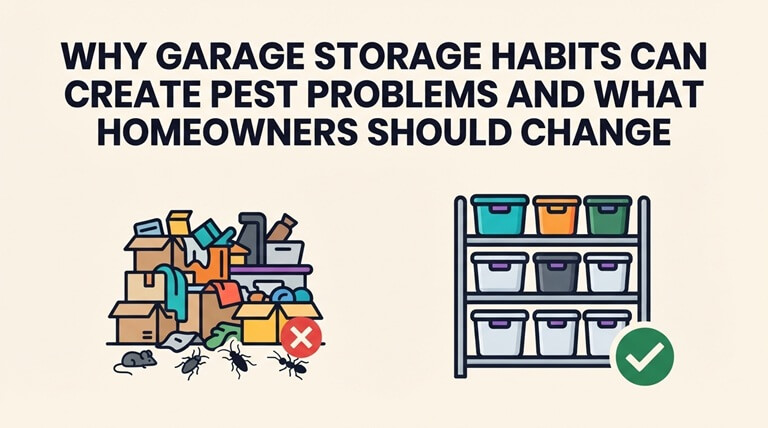
Cardboard Boxes Can Hide Activity for Long Periods
Cardboard is obviously useful for moving and for short term storage but a pile of old boxes is full of seams, folds and dark spots. If they’re all packed together or pushed up against a wall it’s very difficult to see what’s going on behind them.
Stored cardboard is a bigger issue if it’s in a damp part of the garage. Moisture from a small leak, from a wet car or from water seeping in near a door can cause the boxes to deteriorate and make the area much harder to keep clean. Anything inside the boxes can also become a hiding place for pests until you move the container.
You don’t have to clear the whole garage at once. You can simply go through the old boxes, get rid of the excess packaging and move the items you use regularly into better containers. This will help you to see what you actually have. It’s also useful to keep space around the storage areas so that future inspections are easier.
Floor-Level Clutter Creates Protected Hiding Places
When things are strewn about on the garage floor, they create little pockets of shelter which are very rarely disturbed. A bag or two, some unused equipment, a pile of paper and so on can all hide the edges of the walls and floor where you’d otherwise be likely to see signs of infestation.
Putting the stored items on the shelves makes it far easier to check and clean the floor. The object is not to empty the garage at all, simply to have things visible enough to be able to spot droppings, damaged packaging, insect remains and so on.
CURA Termite & Pest Control looks at where the evidence of pests is found when inspecting a garage. It’s far more useful to see activity behind the same group of stored goods than simply to see one pest on the floor. Keeping those areas easily accessible is key to preserving the evidence.
Food and Animal Supplies Need More Careful Storage
Garages will often have pet food, birdseed, grass seed, and all sorts of other stuff in them, which will attract pests. A folded bag or a bag that’s just loosely closed won’t offer the same protection as a properly sealed container. Small spills of these products around the base of shelves can easily go unnoticed.
Checking your stored supplies regularly will go a long way to preventing the problem. Homeowners should be looking for holes in the packaging, material that’s spilled out, odd bits of debris or changes right at the edge of the shelf prior to using any products that have been stored for a while. Cleaning up spills removes an easy food source for the pests.
Pest control Orange County should consider these less obvious food sources rather than focusing only on kitchen sanitation. If activity is concentrated around stored products, correcting the storage condition becomes part of the response. Continued sightings after accessible food has been removed may point toward another source or entry route.
Recycling Can Attract Attention Between Collection Days
Recycling containers can contain scraps from cans, food packaging, jars and so on. Even if they appear to be empty they may still contain a small amount of material. If recycling is left in the garage for a few days it can give off food and smells which will attract vermin.
Rinsing the containers and keeping the recycling as organized as possible will make it much easier to spot any spills. You should also check for any residue underneath the containers, particularly if the bags or bins are in one place for a long period of time.
Watch the floor around the recycling as well. A leaking bag or a spill that’s gone unnoticed can leave material right underneath a bin even after the recycling has been removed. Cleaning the storage area regularly deals with the root of the problem rather than just the container.
Storage Against Walls Can Conceal Entry Points
When shelves, boxes and furniture are up against a wall it’s very difficult to get behind them. Small gaps at doorways, around pipes, at the edge of the wall and so on can remain undetected for months. Pests can make use of these hidden routes without anyone ever realizing how they’ve got in.
Leave some space to be able to inspect around the walls. That way the homeowner can check for any damage, any gaps, any signs of pests or any changes in the area where the utilities enter the garage. Any repairs, of course, need to be such that the vents, wiring, pipes, etc. are all still able to function.
This is particularly useful if you’re seeing pests on one side of the garage for instance. Rather than moving everything around you’d just concentrate on the side where you’re seeing the most evidence.
Pay Attention to the Door Leading Into the House
Attached garages frequently have a door which leads straight into the house. If you find any sign of pests in that area then be very mindful as the issue could well spread into the house.
Don’t let the storage obscure your view of the floor and wall edges right up to the door. That area should be kept clear so you can see any changes as they happen during the day.
Moisture Can Turn Storage Areas Into Larger Problems
Garages can get moisture in a number of ways. Rainwater can get in on the cars, plumbing can leak if there are any water lines in the garage and outside doors can let water in during a storm. Stored goods can also hide dampness and make it difficult to locate.
If you come across a wet cardboard box or a stained floor then don’t just move it to somewhere else. Find out where the moisture is coming from and check the surrounding items for any further issues. If the area is going to remain damp, then you need to be particularly vigilant as it will affect the conditions around the stored goods.
CURA Termite & Pest Control can check for pests whilst the homeowner is sorting out the moisture/maintenance issues in the garage. It’s a much clearer picture of what’s going on if you look at the two issues together rather than just putting the blame on the storage.
Seasonal Decorations Deserve Attention Before Going Indoors
Holiday decorations and all sorts of other seasonal items are likely to be in the garage for most of the year. Boxes that have been sitting there for months can become quiet spots where pests will go undetected. Taking those boxes straight into the house can also be a way of bringing any hidden pest activity inside.
Check the containers prior to bringing them into the house. Look at the outside of the container, the lid, the base, and the shelf that it’s sitting on for any damage, any debris, or anything at all that looks out of the ordinary. That way you can get the items in systematically rather than having to open up a number of dubious boxes inside.
Use the same method when putting your seasonal equipment back into storage. A quick check of the containers prior to putting them back on the shelf gives you the opportunity to pick up on any issues whilst the area is still easy to get to.
Organization Makes Pest Patterns Easier to Recognize
A tidy garage does more than just give you more space to walk around. It enables you to see where the signs of pests are, where the damp is, and whether there’s any activity coming back after you’ve cleaned it. All of that is useful if you’re in the pest control business.
Keep the floor edges visible, make sure you can actually reach the walls and leave plenty of clear space around any supplies you’re going to be checking on regularly. Labeling boxes with dates or grouping like with like will go a long way to helping you find what you’re after without having to go through everything.
Regular checks don’t have to be complicated. Just look behind the storage you can reach, check your packaged supplies, and look for any changes near the doors, and you’ll be able to spot problems before the clutter gets back in again.
Make Storage Support Routine Garage Inspection
Garage storage can be a breeding ground for pests if it blocks your view, hides food and moisture and creates quiet corners that are never going to be seen. Piles of cardboard, clutter on the floor, supplies that are poorly sealed, and walls that are packed full can all make it very difficult to spot the early warning signs.
Good storage is all about making things easy to get to rather than having an empty garage. It enables you to check the wall edges, clean underneath the containers, see what’s in the food storage, and keep an eye on the places where moisture has previously appeared.
A garage that’s easy to see into is far easier to monitor all year round. Thoughtful storage means you’re less likely to have hidden problems and any oddity is much easier to spot before it becomes a major issue.
Popular on OTW Right Now!




About The Author

Gagan Bhangu
Founder of otechworld.com and managing editor. He is a tech geek, web-developer, and blogger. He holds a master's degree in computer applications and making money online since 2015.