
What Is Two-Factor Authentication and Why You Should Always Enable It
Protecting both your personal and financial data has become the most important thing in the digitalized world. Cyber threats are dynamic, and simple passwords are no longer effective. Two-factor authentication (2FA) presents this important, extra constituent of protection.
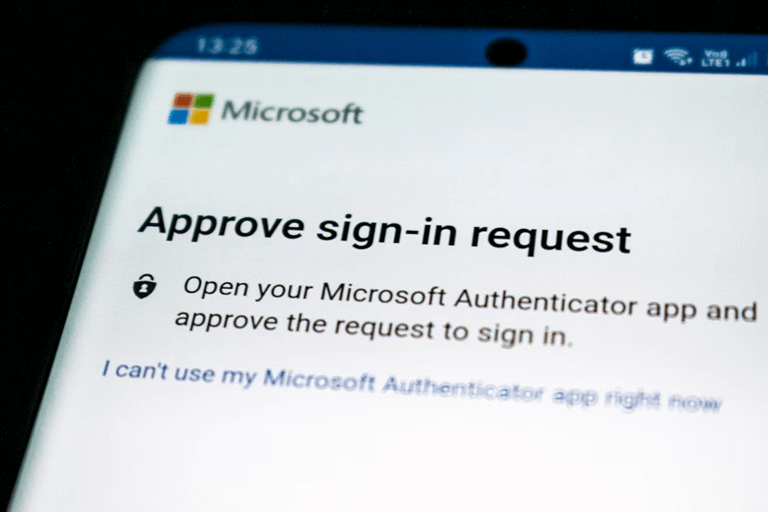
The Basics of Two-Factor Authentication
Two-factor authentication is a security measure whereby a user has to authenticate themselves with two authentication factors to be validated. This will significantly improve the level of security since an intruder would be required to break two different types of evidence, and not just one. It extends security beyond what you know to include what you have or who you are.
As with online accounts, security is vital for cars. If you plan to buy a vehicle, use a VIN decoder to learn about the vehicle’s history, including any accidents, mileage alterations, and title issues. The practice will guarantee full awareness of what you are buying.
Mechanism of 2FA Operation
The framework of 2FA relies upon the requirement of evidence from two separate classifications of credentials. A successful login necessitates the user satisfying both authentication conditions. The initial factor is typically the traditional combination of a username and password.
The second reason format brings in a special, discrete element that is uniquely available to the account owner. This secondary layer acts as an important defense barrier to unauthorized access, even when the primary password has been stolen.
Exploring the Three Authentication Categories
Security experts categorize identification methods into three fundamental factors:
- Knowledge factor (Something you know): This entails the incorporation of things such as a password, personal identification number (PIN) or the proper response to a security query.
- Possession factor (something you have): This is a tangible or digital device, such as a mobile phone that has been sent a one-time code, a physical security gadget (such as a YubiKey), or an encrypted smart card.
- Inherence factor (something you are): This is founded on a unique biological attribute of the user and it comprises of biometric data such as a scanned fingerprint or facial recognition system.
These individual classifications ensure that violation of one factor does not necessarily give one access to the secured resource.
Standard Implementations of 2FA
There are a number of methods that are normally applied to implement the second authentication factor. The choice of the correct method tends to strike a balance between increased security, as well as the convenience to the user. All these approaches offer various degrees of protection against advanced cyberattacks.
- Software token/authenticator applications: This is software that will generate a time-sensitive one-time password (TOTP) that is calculated to change itself on a regular basis say after every 30-60 seconds. The applications are Google Authenticator or Microsoft Authenticator.
- SMS/text message passcodes: The system will send one-time authentication code to the registered cell phone number of the user. While convenient, this technique is vulnerable to “SIM swapping” exploits.
- Hardware security keys: These are specialized physical devices that connect to a computer’s USB port.
Each available implementation presents a compromise between the usability experience and the cryptographic strength offered by the generated security key.
Indispensable Reasons for Implementing 2FA
Two-factor authentication is one of the basic security demands of the new digital age. The benefits vastly outweigh the minimal inconvenience of the extra login step. It is the single most effective way to prevent account takeover.
Protecting Your Online Identity
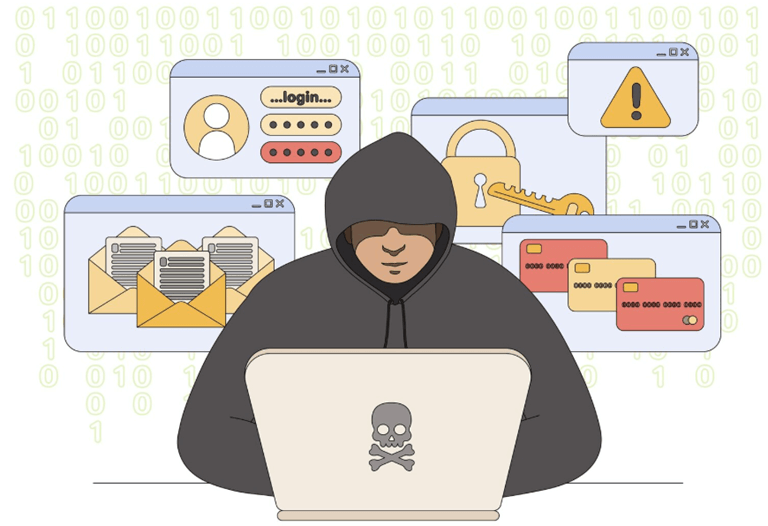
No longer can one use your password and secure sensitive accounts. The extra security measure minimizes the risks of such incidents:
- Reduction of stolen credential impact: Although a malicious actor may obtain your password in a data leakage or a malicious phishing attempt, the second factor will ensure that he/she cannot log into the account successfully.
- Protection against automated invasions: 2FA is a good way to prevent credential stuffing attacks, in which the attackers log in using the previously obtained usernames and passwords to make attempts on various unrelated sites.
- Security for financial resources: Protecting bank interfaces, credit provider portals, and investment accounts using 2FA is absolutely essential to avoid financial losses.
The deployment of 2FA makes your online accounts considerably more difficult for unauthorized individuals to compromise.
Key Locations for 2FA Activation
You must activate 2FA on all services that offer it, placing the highest priority on accounts that contain your most sensitive data:
- Electronic mail accounts: This is usually the primary email service that serves as the recovery mechanism for all other accounts.
- Social networks: Use caution with your personality and do not post unauthorised information in the accounts.
- Cloud storage: Safely store personal media, business files, and confidential files in a cloud storage system like Google Drive or Dropbox.
Raising Your Security Stance
Adopting two-factor authentication provides an immediate and powerful enhancement to your personal cyber defense strategy. It transforms your security from a single potential point of failure to a layered and resilient strategy. The effort involved in setting up this system is a small investment for the substantial assurance and protection it delivers against hostile entities.
Popular on OTW Right Now!


About The Author

Gagan Bhangu
Founder of otechworld.com and managing editor. He is a tech geek, web-developer, and blogger. He holds a master's degree in computer applications and making money online since 2015.