
The Rise of Multi-Model AI Image Platforms: A Practical Approach to Modern Content Creation
Creating visual content has become some kind of daily must for marketers, ecommerce businesses, designers, and content teams. Whether it’s for social media graphics, ad creatives, or anything else, having a steady pipeline of images that can be produced quickly and in good quality is essential for organizations. As AI image technology continues to evolve, a lot of teams begin to explore more flexible creative avenues, workflows that can flex. What I’m saying is it’s not simply a matter of making something and then calling it good.
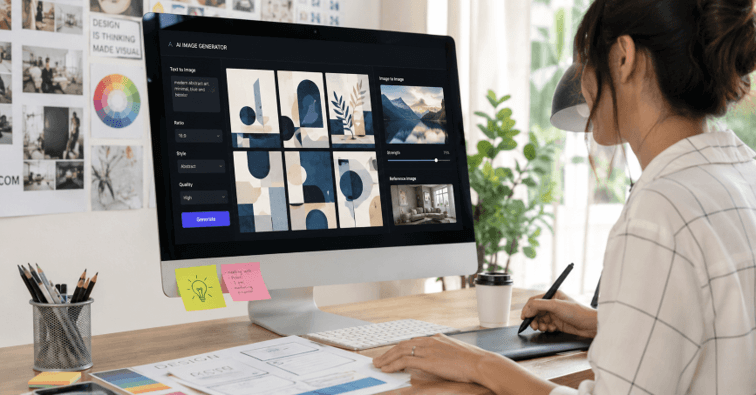
Platforms such as Image 2 help support this shift by bringing multiple AI image generation and editing workflows into one place. In this way, you people have the freedom to play around using different creative techniques, see the results, and then take them back and tweak the imagery to meet the specific requirements of a project, which becomes a kind of cycle of playing around and refining the imagery.
Why Creative Teams Need More Flexible Workflows
Writing content today doesn’t always go in one direction. Just as a marketing campaign requires social media graphics, promotional banners, product visuals, and even ad concepts all in a single moment and not later, this is what it takes to launch a successful marketing campaign. Using a different tool for each small task can be a significant delay. This is where multi-model platforms can help untangle the knots – they enable teams to access multiple creative workflows within a single environment, and that’s convenient, and that’s time saving!
Text-to-Image for Faster Concept Development
The text-to-image generation became a somewhat viable tool for experimenting with ideas quickly. People can take advantage of the system to create visual drafts from simple written descriptions, instead of spending countless hours manually creating them in the first stage concepts. Then those rough visuals get looked over, adjusted, and remixed for a particular campaign or project. It’s kind of like faster iteration without all the crap dealing with trying to get that thing going.
Common Use Cases
- Marketing campaign concepts
- Social media graphics
- Event posters
- Blog illustrations
- Promotional visuals
Improving Existing Images Through Editing
Not all projects start as a clean slate. In most cases, there are already images and videos ready to go that just require some modifications or enhancements, like making them fit better. The image-to-image workflow enables re-editing of existing assets, experimentation with a new style, and even generating alternative takes, all with a preservation of the overall concept. There’s also reference-based editing, which can help teams keep that visual consistency when it comes to different campaigns – instead of having to start from scratch every time.
Supporting E-commerce and Product Visuals
Product imagery plays a crucial role in online sales and engagement, just as it does in grabbing people’s attention to things! Teams can create promotional graphics, product-focused creatives, seasonal campaigns, and even those nitty-gritty marketing bits and pieces with AI-assisted workflows. The concept is that ecommerce groups can create visual content for various channels without having to start from scratch each time; this is, in fact, rather time-saving.
Access to Multiple Creative Workflows
Yes, different image models may be suited to different tasks. Some people build up the concept before they can refine it, others focus on the refinements or the detail, or general visual experimentation.
There’s also a sort of support for various workflows for creating images on Image 2: GPT Images 2.0, Nano Banana 2, Seedream 5 Lit,e and a few other options available. Users don’t need to choose one model for all projects; they can select a workflow that is really appropriate for their creative goals—and that minor decision can have a significant impact on the project’s outcome.
Features That Support Efficient Content Creation
Typical creative teams are typically working under a rather tight deadline, and to be perfectly honest, it’s not always simple to keep everything in motion. Things such as model comparison pages, aspect ratio controls, quality settings, and other little visual refinement tools can truly help them to speed up the production flow. Also, depending on the workflow that you choose, you may find a high-resolution output option if your project requires this level of detail.
On the other hand, credit packs and subscription plans offer greater flexibility for creators and even for teams, particularly when it comes to the content that one wants to deliver in each release.
Conclusion
In today’s digital landscape, AI-generated images are increasingly proving their value in creating content. From text to image notions and image editing, to product visuals, and marketing creatives, creative teams basically have access to way more adaptable workflows than before.
If you have a few options for image generation all in one spot, some service such as Image 2 allows you to walk through ideas, tweak the images, a nd direct tons of creative projects without too much hassle – and without too much wait.
Popular on OTW Right Now!



About The Author

Gagan Bhangu
Founder of otechworld.com and managing editor. He is a tech geek, web-developer, and blogger. He holds a master's degree in computer applications and making money online since 2015.