
Stop Staring at Static Data: How AI Revamps Your Dashboard
For decades, business intelligence was all about the rearview mirror. You would log in, look at a few bar charts that supposedly represented what had happened last month, and then guess. While that was an important historical record, it frequently put leaders in the position of responding to old news rather than identifying fresh openings.
It is an exciting day for the Core App Dashboard experience in transitioning. We are shifting from passive data viewing to active, two-way conversations with our analytics. And by adding artificial intelligence, dashboards are becoming more than a passive display; they’re growing into proactive partners that alert you to potential problems, explain difficult trends in plain language, and even serve up your next best action.
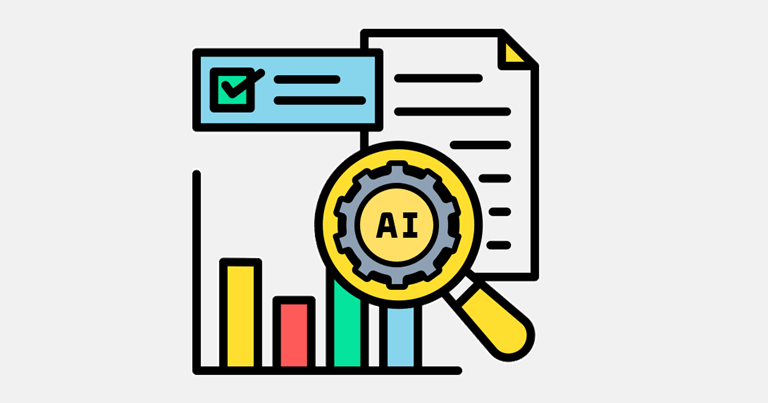
That shift isn’t simply a matter of better images; it’s part of a fundamental change in the way businesses come to understand the information they depend upon. You don’t have to look for answers; the answers find you. This article examines how AI is changing the dashboard experience, and what that means for decision-makers who need to move faster than the market does.
How AI enhances dashboards
Artificial intelligence doesn’t eliminate the need for data; it eliminates the tedious task of interpreting that data manually. Here are five ways in which AI is enhancing the dashboard experience:
- Predictive Analytics: Most dashboards will display your sales from yesterday. AI dashboards review historical trends to predict where sales will be next month, enabling you to adjust inventory or staffing before a crisis.
- Natural Language Processing (NLP): Forget SQL or complicated menus to filter data. In NLP, you just type, “Show me the top performing regions of Q3 this year compared to last year,” and the dashboard creates it for you on-the-fly.
- Adaptive Content: AI learns based on your actions. The dashboard emphasizes cash flow and metrics on risk if you are a CFO. If you are a Marketing Manager, it brings in campaign ROI. The interface adapts to your role and usage pattern.
- Anomaly Detection: The human eye can skip small variations in data. Machine learning algorithms work behind the scenes, automatically flagging outliers, such as a sharp drop in website traffic or spike in operational costs, that you can investigate right away.
- Smart Summaries: Not everyone is a statistician. The tool generates brief text summaries next to charts that describe what the metrics represent and point out the most important takeaways.
The numbers behind the shift
The adoption of AI in analytics is moving quickly, driven by the need for better data integration and automated insights.
| Statistic | Context | Source |
| 75% | Percentage of knowledge workers who now use AI at work. | Microsoft & LinkedIn Work Trend Index (2024) |
| 30% | Business leaders are expected to rely on AIOps for automated insights to drive decisions by 2024. | Gartner |
| 91% | Percentage of survey respondents who say they use generative AI for work. | McKinsey (2024) |
| 10% | The small percentage of analysts utilizing the full potential of augmented analytics highlights a skills gap. | Gartner |
Benefits of AI-powered dashboards
There are unique competitive advantages to be gained by moving to AI-powered analytics. The big change is to move from describing to predicting. You stop asking “what happened?” and start asking “what if?” It gives companies the ability to transition from reactive to proactive management, fixing supply chain problems or customer satisfaction dips before they hit results.
Think of how niche technology increases productivity. SyncGrades, for example, is a unique software program that links instructional activities and official school records. Similarly, AI dashboards close the divide between raw, untidy enterprise data and meaningful strategic action. They help move from static to dynamic interfaces that show the right person, the right data, at the right time.
This, in the long run, makes the dashboard act as a decision enabler rather than a data presenter. Today, the objective is not just to show numbers, but to back the real business decisions that you are taking every day.
Challenges and considerations
Although the technology is strong, there are challenges in adopting AI dashboards.
- Data Readiness: Garbage in, garbage out is the rule for AI. The emphasis should be on collecting, normalizing and quality control of annotation data. Your data is dirty, and it fucks up all your AI insights.
- Transparency and Bias: People need to understand why an AI gave a certain recommendation. Avoiding algorithmic bias and providing you with the means to tell apart human insight and AI suggestions are crucial for trust.
- Data Provenance: You need transparency in where your data is coming from to maintain that attribution and accuracy!
The future of decision-making
An age of the static dashboard is coming to a close. AI is turning these tools into dynamic, smart assistants that don’t just display information but explain it and predict where it will head in the future. By moving from being a report-recipient company to becoming a forecasting company, retailers were able to make quick and intelligent decisions as never before. Whereas you seek to refresh your analytics stack, prioritize transparency, and predictive user-driven tools.
FAQs
Do I have to be a data scientist in order to utilize AI dashboards?
No. One major advantage of AI dashboards is Natural Language Processing (NLP) – that you can ask questions in plain English and get answers without the need for coding.
As a user of AI analytics, can I trust my data won’t be compromised?
Enterprise-grade AI dashboards prioritize security. Find platforms that are underpinned by row-level security, encryption and compliance with standards such as GDPR and SOC.
Could IntrospectAI dashboards replace human analysts?
Not entirely. AI scales data processing and initial analysis, but human judgment is still needed to interpret strategic context and to conclude business decisions.
How is AI trained on data from different places?
AI dashboards excel at unification. CRMs, marketing platforms, and financial software can all be connected at the same time, and the service cleans that data so you ensure one version of the truth.
What are predictive and prescriptive analytics?
Predictive analytics predicts what will happen in the future (e.g., sales will decrease). Prescriptive analytics tells you what to do about it (e.g., run a discount campaign).
Popular on OTW Right Now!

About The Author

Gagan Bhangu
Founder of otechworld.com and managing editor. He is a tech geek, web-developer, and blogger. He holds a master's degree in computer applications and making money online since 2015.