
How AI-Generated 3D Assets Are Changing Visual Content for Social Media
AI 3D for social media content gives creative teams a practical way to turn one product photo, illustration or campaign visual into a reusable 3D asset. Based on this model, they can then render new angles, make carousel images, make short clips, and prepare AR previews without arranging another shoot for each angle.
The first model created is still a source model. It will be useful social content depending on lighting, framing, animation, and editing.
For teams that publish frequently, the main advantage is reuse. One approved visual can support several formats while keeping the product, character, or campaign object consistent.
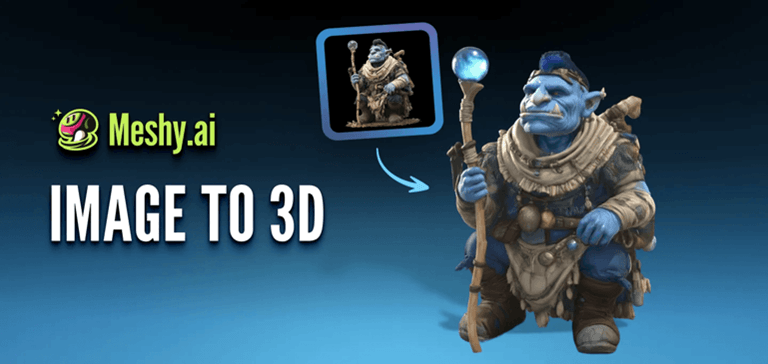
What Happens When You Turn a Photo Into a 3D Model?
The process starts with one image of the product, an illustration of the characteristics, or another image depicting one clear subject.
Image-to-3D system: The visible shape is analysed, and the geometry around that shape is created. It also provides an estimate of the sides, back, and underside that the camera didn’t pick up. The textures are created from the colours and surface information contained in the source image.
According to Meshy, the company’s Image-to-3D workflow can generate a textured model in just a minute, and highly detailed models can reach almost 600,000 faces.
The amount of detail can provide a great visual foundation, but not always; more faces don’t necessarily make an asset more viable for social media. A lightweight model might be easier to animate, render, and load in an AR experience.
The artist is still to visit the reconstructed areas. A correct front view is not necessarily accompanied by a correct rear view, thickness, or distortion of small parts, etc.
Why Social Teams Need More Than Static Product Photos
Static images are still relevant where you want to give more detail about your product, create a branded layout,t or display images in a carousel post. Social teams must also be intentional, have several perspectives, and have enough diversity to not use the same creation each week.
Over 52 million posts were analysed in Buffer’s 2026 social media report, and it revealed that the performance of this format was different across each platform.
Engagement rate increased from 3.31% for Reels to 6.90% for carousels on Instagram. Reels were still more useful for discovery, though, and still had more reach. LinkedIn video posts got a median engagement rate of 9.8%, which is significantly lower than the 21.77% the carousel posts achieved. The median engagement rate for LinkedIn videos was 9.8%, compared to 21.77% for carousels. The share of video on Threads is 5.5,5% while for images it is 4.55%.
All these differences make it necessary to have multiple outputs from a campaign;gn, typically, a social team will require more than one.
A single 3D model can be applied to a rotating 3D clip for the reach, multiple rendered viewpoints for the carousel, and a clean still image for the branded post. The team may make any changes to the presentation, but not to the product or character.
How AI 3D for Social Media Content Fits a Weekly Workflow
A usable workflow starts with a clean source image.
The subject should be clearly visible, distinct from the background, and be photographed in suitable lighting. For products that have to be modeled as real products, more structural information is gained by providing additional views from the side and back.
The team can then follow a simple process:
- Select an approved product photo or campaign image.
- Crop the image around the main subject.
- Remove distracting background elements.
- Generate the initial 3D model.
- Compare the silhouette and proportions with the source image.
- Check the back, sides, and small components.
- Remesh or reduce the polygon count for the intended output.
- Export the model into the production software.
- Add lighting, camera movement, and branded design elements.
- Render several platform-specific versions.
Using Meshy AI, teams can generate a model from an image, inspect it in the browser and export it in formats such as GLB, FBX, OBJ or USDZ.
The quality check should be done prior to animation and editing time. It is easier to correct an out-of-shape silhouette at the model stage than after a number of posts have been rendered.
What One 3D Model Can Produce
A well-prepared model can support several days of content.
The Instagram team may create a carousel of front, side, rear, and close-up images for the team. Slow Camera Move or product rotation for a Reel could be done with a separate vertical clip.
The same asset could also become a short TikTok reveal, a clean Pinterest image, or a product animation for paid social. Many brands also work with a 3D animation studio to transform the same model into platform-specific visuals while maintaining consistent quality and branding across every piece of content.
A realistic weekly output might include:
- One five-to-fifteen-second rotation clip.
- One carousel with several product angles.
- Two or three detailed images.
- One colour or material variation.
- One AR preview for a product page or campaign link.
However, these forms are still in need of creative decisions. All of this is done with a plain model rotating against a default background, which doesn’t really look like complete campaign content.
All the lights must be of the same brand. There needs to be a purposeful camera movement that brings something to light. The text, music, and pacing should be appropriate for the platform upon which it is to be displayed.
Where AI-Generated Quality Breaks Down
Single-image reconstruction requires the system to estimate every surface that the image does not show.
This will lead to predictable issues.
Accessories can be out of place, floating along with the item but not attached. Handles and thin parts may be integrated into other parts of the surrounding geometry. Faces and/or fingers may be lost in detail, and/or fingers may look fused or uneven.
Another area of weakness is text and logos. They can appear fuzzy, misspelled, and/or stretched around the surface. When the product is branded, these data should normally be manually reapplied.
Reflective, transparent, and glossy materials are also troublesome because they cannot be represented by the visible image since there is reflection and background information visible in the image.
Some of these errors are lessened by multi-view references. They are still very handy for shoes, bags, electronics, and all other items that require important information on multiple surfaces.
There is a possibility of different results with repeated generations. If there are multiple attempts, teams should anticipate some of them to be controlled and maintain the version that is most representative of the source work.
What Social Teams Should Look For in an AI 3D Tool
While this is an important criterion, it shouldn’t be the only one used when choosing a generation.
A social workflow is advantageous when the social team is working on the process of generating content. Powerful features such as image input, texture generation, polygon modification, remeshing, popular formats, and preview tools.
An AI 3D model maker that keeps these steps in one workspace can reduce unnecessary file transfers between separate services.
The team should also take into account the destination.
When sharing a file via a browser or via a mobile device, GLB can often be useful as geometry, materials, and textures can all be placed into a single file. If the model is destined to go into an animation program or game engine, then FBX is a good choice. When it comes to AR previews based on Apple, USDZ comes in handy.
The most effective will be the one that will allow the team to keep using it beyond the generation.
How Platform Requirements Affect the Final Asset
The model and the edit are under different strains on each social site.
Instagram carousels are enhanced by sharp angles and close-ups. Reels and TikTok require the viewer to get the idea going straight from the beginning of the video, so a slow start might not capture viewers’ interest before they have a good sense of the product.
Clean compositions can be beneficial if you’re using Pinterest and are trying to get your message across at a quick glance. If a LinkedIn carousel post includes more than just a picture of the model and a photo of the application, it might be a good idea to make it a more explanatory post by including a few angles of the image and the model.
The AR comes with a bunch of other requirements. The model must be scaled, have a small file size, and have good textures. What looks great in the desktopviewer, may not load quickly on a phone.
Before deciding on the number of polygons, the size of the textures to be exported, and the format, the social team should determine where the content will appear.
Where Human Editing Still Matters
In the first step of producing 3D content, using AI reduces the time needed. Human choices are still the final decision in the making of the final visual still.
Geometry cleanup, corrected branding, geometry materials, and lighting are likely to be required for a flagship campaign asset. Before animating character assets, they might need to be rigged to make adjustments. Product models should be closely compared with the real product.
The social editor even regulates the way the asset is displayed.
Placing a simple model at a good camera angle will make it look nice. The worst of all framing arrangements can obscure the best of all details. A short, well-planned piece of animation can convey more information than a complex animation without any obvious direction.
The model generated is an option. The options are chosen by the creative team based on their vision of how the campaign will be successful.
Key Takeaways
After converting to a usable 3D asset, one source photo can be used in a variety of ways for carousels, short videos, multi-angle images, and AR experiments.
The first model should be checked before animation and editing to ensure the model is satisfactory. Silhouette, concealed surfaces, logos, and small surfaces should be taken into consideration.
If the real object is important on the side or rear, multi-view references will help to achieve consistency.
The final format is to be on the platform. Each platform of Instagram, TikTok, LinkedIn, Pinterest, and AR has its own specifications for motion, framing, file size, and detail.
Using AI 3D for Social Media Content in a Real Campaign
AI 3D for social media content is most effective when it is utilized by a team to create a specific campaign,n and then the production is tracked.
Use a product or character that has a well-established and approved brand image. Create the model, fix the visible issues in the model, and then make 1 carousel, 1 short video,o and a few still images.
This small test will give an indication of the amount of clean-up that is required, how fast the team can create variations, and whether the content is in line with the visual style of the brand.
The target is to have a more flexible content library. One shot is used for multiple posts, and the team retains control over the end lighting, moving,g and presentation.
FAQs
Can one photo become a finished social media ad automatically?
The photograph can be used to create an initial 3D model. The model still has to have her photos lit, shot, edited, designed, and branded before they are published.
What type of photo produces the best 3D result?
Sharply focus on one person clearly in your frame, a clear background focus and even lighting. When the sides and back have details, it can be useful to have more angles.
Can AI-generated 3D assets match a real product accurately?
They can give a good approximation of the starting point, but they should be carefully checked for accuracy. There may need to be corrections to Logos, materials, proportions, and hidden surfaces.
Which format should a social team export?
GLB can be used to view in a browser and is suitable for light sharing. FBX is good for animating and for game engine workflows. Apple AR experiences are supported with USDZ.
Does 3D content always perform better than ordinary photos?
The execution, audience, and platform will influence the performance. Carousels on Instagram can yield a higher engagement rate, and Reels can offer more reach. A 3D asset enables both formats to be generated from a single source.
Do social media managers need 3D modelling experience?
For basic generation, you don’t need to be advanced in modelling knowledge. There should be one person on the team who has an understanding of lighting, framing, and quality review. More complicated items may require assistance from a 3D artist.
How many content pieces can one model support?
A simple campaign can produce a rotation clip, several carousel views, detail images, and one AR test from a single model. The specific amount will vary depending on the specific product and creative concept.
Popular on OTW Right Now!

About The Author

Gagan Bhangu
Founder of otechworld.com and managing editor. He is a tech geek, web-developer, and blogger. He holds a master's degree in computer applications and making money online since 2015.