
Scaling Brand Identity Without a Dedicated Illustrator: A Deep Dive into Ouch
Design usually forces a binary choice regarding illustration. You can either employ a bespoke illustrator to create a consistent system of brand, or you live with the disjointed appearance of mixed stock holdings. Tailor-made work consumes time and budgets. Stock assets tend to create a Frankenstein kind of UI where the landing page does not align with the onboarding process.
Ouch by Icons8 fills this particular hole. It is not a repository of typical images, but resembles a collection of standard styles constructed in support of the whole-user experience. The question that confronts product teams and marketers is a blank and simple one: Does an off-the-shelf library really have the potential to support the unique brand identity, or is the only way to a high-end appearance custom work?
The Architecture of Consistency
Most stock sites fail at scale because of style fragmentation. You come to an ideal hero image, and then there is no similar icon to the 404 page or other error messages, and a failed payment page.
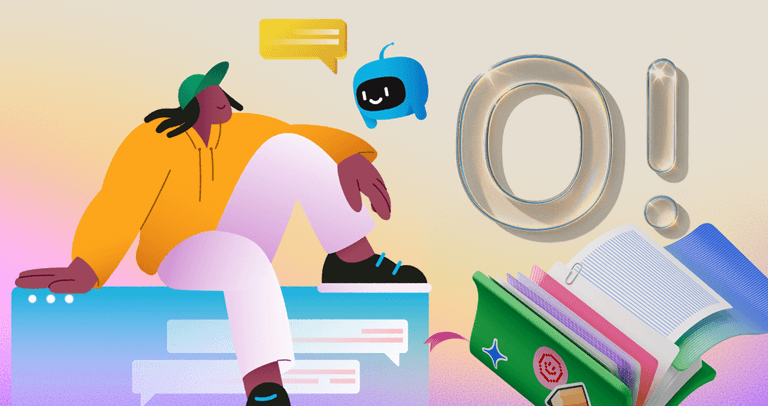
Ouch is able to overcome this by grouping its 101+ illustration styles into a full pack. These are not just random collections. They are constructed based on the UX flows. Choose one of the styles, such as a “Surrealism” appearance or a “Simple Line” graphics, and you have holdings that encompass digital interactions as far as checking in goes, and checking out.
The designers can make the library look more like a design system than a clipart bin. Be loyal to one style family. You could fill a 50 page web site and a mobile application, and the visual language will not fall into the ground.
Workflow Scenarios
These claims are best tested in the real-world production environment. We can consider two different applications of the various team structures.
Scenario 1: The SaaS Product Overhaul
A small product team does the redesign of a B2B analytics dashboard. They possess UI designers and developers and lack an in-house illustrator. The objective: abandon the dull, data-intensive screens in favor of something interesting without losing their professional quality.
The design lead selects a specific 3D style from Ouch’s collection to add depth to the flat UI.
- Selection: The team has made a choice in favor of the matte 3D style that fits their soft color scheme.
- Implementation: In the case of empty states, they download the 3D assets. Interaction is desired by the developers, and hence, the PNGs are skipped. Based on the library, they use the FBX models or animated Lottie versions of the JSON.
- Adaptation: The screen “No Results Found” should have a certain metaphor. The designer locates an applicable scene, but he must change the composition. They can rearrange the 3D elements using the Mega Creator tool to adapt the vertical rhythm of the mobile view.
- Deployment: Developers implement the Lottie files. The dashboard is high-end and tailor-made. There is light and texture continuity of all three 3D elements, which sustains the illusion of custom work.
Scenario 2: The High-Volume Content Engine
The social media manager of a lifestyle brand should have three or four images to be posted daily on Instagram and LinkedIn. Speed is the priority. There are rigid brand rules as to the use of colors.
- Sourcing: The manager goes through the categories of people and objects. They must have a visual of what is meant by remote work.
- Deconstruction: They make use of the object-level search of the library instead of taking a pre-built scene that appears generic. Ouch assets can be tagged vector graphics that have been decomposed into tagged objects.
- Customization: They open the selected vector on Mega Creator. The colors of the brand are teal and coral. They recolor the elements of the clothing and the background with only a few clicks to match the specific hex codes. They will replace the laptop of the character with a tablet to suit their demographic audience.
- Export: They save the last image as a high-resolution PNG. The duration of the process is less than fifteen minutes. Large publishing frequency does not violate brand rules.
A Narrative Walkthrough: The Agency Pitch
Javi is a freelance web designer who is looking at a deadline. One of the fintech startups is interested in a pitch deck that will appear credible but contemporary, and they have an hour to do it.
He clicks the Pichon desktop application. It makes Ouch a part of his working process, and thus, he does not even open a browser. He narrows down to illustrations on Business and Technology. His eyes are attracted to a clean, flat style of vectors.
He sketches a secure transaction illustration with Pichon himself onto his canvas. It is a working metaphor, butit seems excessively complicated. He needs something simpler. Sometimes you don’t need a full scene of a person working; you just need a specific object, like a laptop or scissors clipart to denote a ‘cut’ function. He searches for a simplified shield icon in the same style, drags it in, and scales it up as a background watermark.
The blue is too dark. He then clicks the link to edit the asset, changes the blue to the navy of the client and re-exports it as an SVG. This is to keep it sharp on the 4K projector. The deck is done. It looks cohesive. He has 15 minutes to spare.
Market Comparison
Ouch offers a strong system, but it operates in a crowded market. Here is how it stacks up against common alternatives.
Ouch vs. unDraw
unDraw is the startup standard that is open-source. It is also free and allows one to customize colors. But that is also its weakness. It is ubiquitous due to its lack of cost and effortlessness. UnDraw is used to announce a bootstrapped startup. Ouch has much more in terms of stylistic variety (101+ styles to the one aesthetic of unDraw), giving the company more brand differentiation.
Ouch vs. Freepik
Freepik possesses a huge amount of assets, probably more so than Ouch. But Freepik collects thousands of various artists. It is also typical that when you find a matching illustration to your part of the site, which is the hero section, you have found a 404 page because various people drew them with varying brush settings. Ouch is more focused on styles and full coverage of UX, mitigating this issue of inconsistency, than Freepik is with a scattershot approach.
Ouch vs. Blush
The nearest competitor in terms of customization is Blush. Both allow mixing and matching illustration parts. Ouch has a broader range of file formats. It serves the motion design and the development of Lottie, Rive, and 3D model support (FBX). Blush is mainly concentrated on the composition of PNG/SVG.
Limitations and When This Tool is Not the Best Choice
Ouch is flexible, but it isn’t a magic bullet for every scenario.
Projects requiring highly specific, unusual visual metaphors, like “a cyberpunk octopus fixing a vintage toaster,”-will struggle here. You can combine objects in Mega Creator, but there is a limit to how much you can manipulate existing vectors before they look disjointed.
Merchandise and print-on-demand businesses need to be careful. You cannot simply download a Pro asset and place it on a t-shirt line. The licensing requires a specific conversation, as it differs from standard web/app usage.
The “Free” tier is generous but requires link attribution. Professional commercial projects where a footer link to Icons8 is unacceptable must use paid plans to unlock non-attributed use and SVG/Vector formats.
Practical Tips for Best Results
Treat the library like a toolkit rather than a gallery to get the most out of it.
- Commit to a Style ID: Pick one style and note its name or ID when starting a project. Do not mix “3D Fluffy” with “Flat Geometric.” The eye catches these inconsistencies immediately.
- Get the Vector Formats: Paid plans should always download the SVG or PDF. This lets you remove unnecessary background elements or isolate specific characters using your own vector software if Mega Creator doesn’t offer the exact granular control needed.
- Use the Animation Files: Mobile app builders should use the Lottie and Rive integrations. They add polish to onboarding flows and success screens with minimal file size impact compared to GIFs.
- Check the 3D Models: Those familiar with 3D tools should download the FBX files. They open up a world of lighting and texture customization that 2D vectors cannot match.
Ouch proves that off-the-shelf libraries can support a coherent brand system. The key is a library built with UX flows in mind. It bridges the gap between the generic “stock” look and the prohibitive cost of custom art, making it a viable operational tool for serious design teams.
Popular on OTW Right Now!



About The Author

Gagan Bhangu
Founder of otechworld.com and managing editor. He is a tech geek, web-developer, and blogger. He holds a master's degree in computer applications and making money online since 2015.