
How Supplier Management Tools are Critical to Scaling DoD Compliance
Why DoD Compliance Is Now a Supply Chain Problem
Traditionally, DoD compliance used to mean securing internal systems and passing periodic audits. That approach is no longer enough. Today, DoD compliance requirements extend far beyond your organization, reaching every supplier and subcontractor that handles sensitive government information. Whether you are managing supply chain compliance at a prime contractor or responsible for flow-down requirements as a subcontractor, this issue is a critical priority for your organization.
It’s no longer enough to protect your own environment. If your suppliers handle Controlled Unclassified Information (CUI) – sensitive government data that isn’t classified – they must meet the same cybersecurity standards. This change is driven by three key frameworks:
- CMMC (Cybersecurity Maturity Model Certification), which requires organizations to demonstrate verified cybersecurity practices;
- NIST SP 800-171, which defines the security controls needed to protect CUI; and
- DFARS 252.204-7012, which requires contractors to flow applicable cybersecurity requirements down to subcontractors and suppliers.
In practice, this means organizations are expected to manage not only their own compliance, but also supplier compliance across the broader defense supply chain. If a vendor fails to meet requirements, it can expose the organization to increased security, operational, and compliance risks.
This has become increasingly important as supplier networks grow more vulnerable. According to the recent Supply Chain Risk Report by Sphera, cyber-related incidents in supplier networks increased by 62%, reinforcing the need for stronger, continuously enforced compliance across high-risk suppliers and subcontractors.
Just as importantly, compliance is no longer based on trust or assumptions. Auditors expect proof. Organizations must maintain documented evidence that suppliers meet required standards, along with processes for continuous monitoring, risk assessment, and updates.
In this new reality, gaps in supplier compliance can impact the security and audit readiness of the entire organization.
Understanding DoD Contractor Compliance: What It Actually Requires
At a high level, DoD cybersecurity requirements are structured around interconnected regulations, security standards, and assessment frameworks. Each serves a distinct role in protecting sensitive information and strengthening cybersecurity across the defense supply chain.
The most commonly referenced components include:
NIST SP 800-171 defines the security controls organizations must implement to protect controlled unclassified data. It outlines what safeguards should be in place, from limiting access to authorized users to monitoring systems and responding to incidents.
DFARS 252.204-7012 (Defense Federal Acquisition Regulation Supplement) turns these requirements into contractual obligations. It ensures that defense contractors not only comply internally, but also pass those cybersecurity obligations to all subcontractors and suppliers. In other words, protection must extend across the entire supply chain.
CMMC (Cybersecurity Maturity Model Certification) adds verification and accountability. Instead of relying on self-assessment, it requires organizations to demonstrate that security practices are actually implemented, documented, and, at higher levels, independently assessed through audits.
Together, these frameworks create a clear expectation: companies are expected to secure their own systems, ensure suppliers meet appropriate cybersecurity requirements, and maintain evidence of compliance.
In practice, this translates into a few essential requirements:
- Identify suppliers that handle sensitive data
- Collect and manage supplier security and compliance documentation
- Assess suppliers and continuously monitor supplier cyber risk
- Enforce compliance requirements across subcontractors
- Maintain audit-ready documentation and evidence of compliance
Compliance is not a one-time effort. It requires ongoing validation, updates, and visibility into supplier status over time. The problem is that it’s hard to meet these expectations using the approach most organizations still rely on – manual processes.
The Core Challenge: Supplier Data Is Fragmented
While DoD compliance challenges have grown, critical supplier data is often still scattered across spreadsheets, emails, and shared drives. What worked before breaks down in the face of today’s complex compliance environment
Despite digital transformation, many organizations still rely on spreadsheets or SharePoint sites for supplier management. These tools lack the structure needed for DoD contractor compliance, leading to limited visibility into suppliers and unclear insight into who handles controlled unclassified information. This lack of control is a major issue in the supply chain function. Fewer than 8% of companies report having full control over their supply chain risks.
Compliance enforcement is often inconsistent. Suppliers are evaluated using different criteria, and fragmented data makes it difficult to maintain a single source of truth or track DFARS flow-down requirements across subcontractors.
Manual processes further increase risk. Without automation or continuous monitoring, organizations struggle to track changes, manage supplier risk, and maintain audit-ready documentation, making compliance difficult to prove and sustain over time.
Ultimately, these fragmented processes don’t scale. As inconsistencies multiply, and compliance becomes harder to maintain. In the context of DoD contractor requirements, incomplete or outdated supplier data can lead to compliance gaps and increased audit risk.
How Supplier Relationship Management Tools Solve DoD Supplier Compliance Challenges
To meet the growing DoD contractor compliance demands, organizations are adopting supplier management software solutions that replace fragmented manual processes with structured, scalable systems.
At their core, these tools centralize supplier data, bringing certifications, cybersecurity documentation, risk profiles, and performance information into a single source of truth. This improves visibility across procurement, compliance, and security teams.
Beyond data centralization, such solutions help further strengthen compliance by standardizing processes. Organizations can define consistent requirements aligned with frameworks like NIST SP 800-171, DFARS, and CMMC, ensuring consistent evaluation across all vendors. Teams handling the control side of that work rather than the supplier side usually pair this with NIST compliance software that tracks the controls themselves and keeps the evidence current between assessments.
Another key advantage is automation and continuous monitoring. Unlike manual processes, which rely on periodic reviews, supplier performance management solutions and supplier management automation tools provide real-time tracking of supplier compliance risk. This includes tracking expiring certifications, identifying emerging threats, and flagging potential compliance gaps early.
Equally important is audit readiness. A structured supplier management app maintains detailed records of supplier data, assessments, and updates. This makes it significantly easier to demonstrate compliance during audits, where documentation and traceability are critical.
Overall, these platforms transform supplier compliance from a manual, reactive process into a centralized, automated, and continuously monitored system.
Step-by-Step: Achieving DoD Compliance with Supplier Management Software Solutions
Strong defense contractor compliance requires more than basic cybersecurity controls. It demands a structured, auditable, and continuously monitored supplier lifecycle. Choosing the right solution is key to turning compliance requirements into manageable workflows.
However, selecting a suitable supplier quality management app isn’t simple. Organizations must balance compliance requirements, integration complexity, and long-term scalability. For those already using a CRM, such as Salesforce, extending the platform with a native Salesforce supplier management app is often the most effective path. It avoids the risks of introducing disconnected systems that create silos or fragmented compliance processes, ensuring a single source of truth with stronger audit readiness.
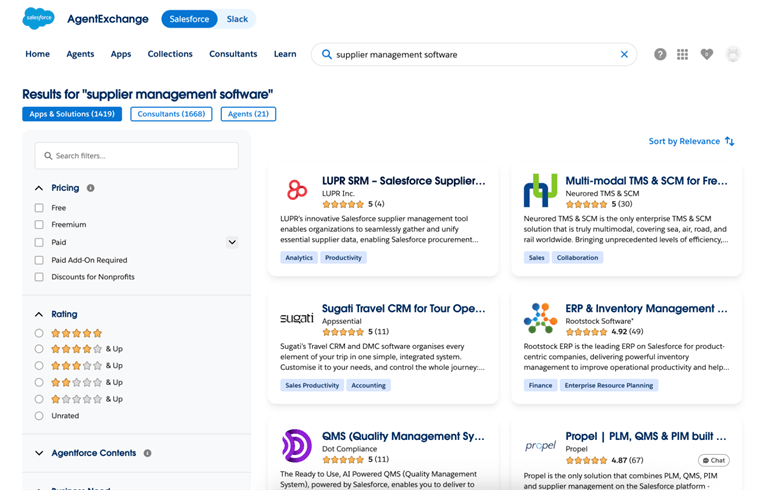
When looking to extend Salesforce with additional functionality, companies typically start with the official Salesforce marketplace for pre-built applications, AgentExchange (AppExchange). It offers ready-to-deploy solutions that integrate directly into the Salesforce ecosystem, reducing implementation and adoption effort.
After reviewing available AppExchange options, one supplier relationship management software solution appeared first in the list. LUPR is a native Salesforce application, designed to help organizations manage supplier compliance, performance, and risk in one place. It provides a structured way to centralize supplier data, track certifications and compliance requirements, and monitor supplier performance over time.
Below is the set of steps organizations can follow to achieve the highest level of DoD compliance, along with examples of how modern supplier relationship management tools like LUPR can support each step.
1. Identify all suppliers handling controlled unclassified data
Start by gaining full visibility into your supplier network and understanding where sensitive data is accessed.
- Map your full supply chain
- Identify which suppliers access Controlled Unclassified Information (CUI)
- Categorize suppliers based on risk and business criticality
LUPR supports this with a unified supplier database and structured profiles, providing clear visibility into supplier roles, data access, and criticality in one place.
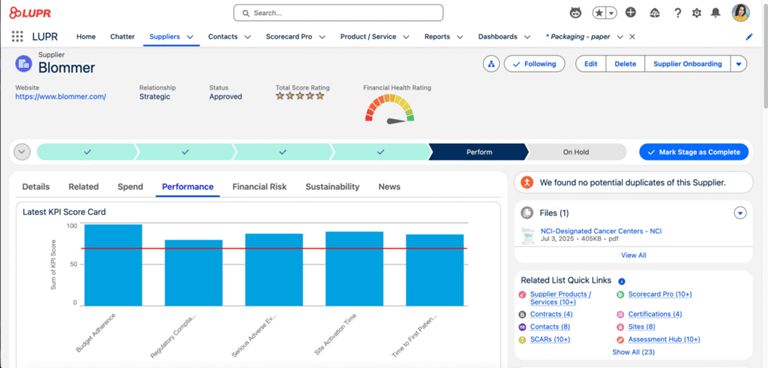
Also, the platform enables risk-based segmentation through supplier categorization and risk indicators, helping teams focus on critical vendors.
2. Define clear supplier compliance requirements
Establish consistent cybersecurity expectations across all suppliers.
- Align requirements with CMMC, NIST SP 800-171, and DFARS
- Standardize required documentation such as certifications, policies, and evidence of controls
The tool enables organizations to define standardized compliance fields, supplier records, performance metrics, and dashboards through a configurable data model, helping ensure suppliers are evaluated using consistent baseline standards.
3. Collect, centralize, and automate supplier security data
Gather and organize supplier compliance information in a structured way.
- Collect certifications, security questionnaires, and risk assessments
- Store everything in a centralized supplier relationship management software platform
- Automate onboarding, updates, and recertification workflows
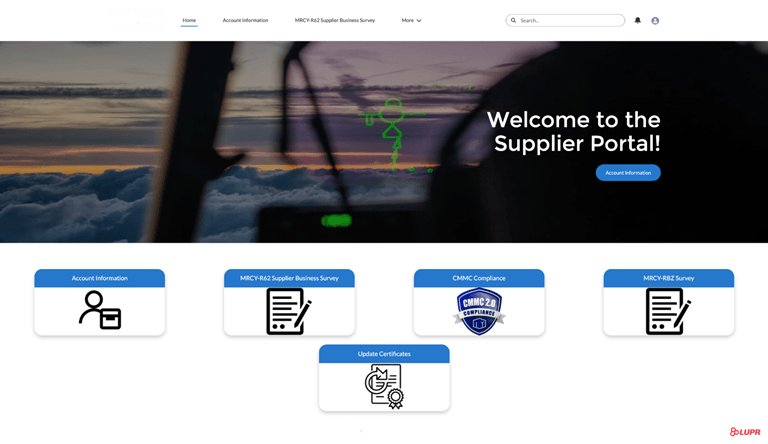
The supplier portal solves the problem of direct document submission, while automated workflows handle updates and recertifications. This ensures data remains current, centralized, and consistent within a single source of truth, while automation streamlines processes, triggers alerts, and improves operational efficiency.
4. Assess and continuously monitor supplier compliance
Move from static evaluations to ongoing visibility into supplier risk and compliance status.
- Score suppliers based on compliance and risk exposure
- Track certification validity and security maturity
- Monitor changes, incidents, and emerging risks in real time
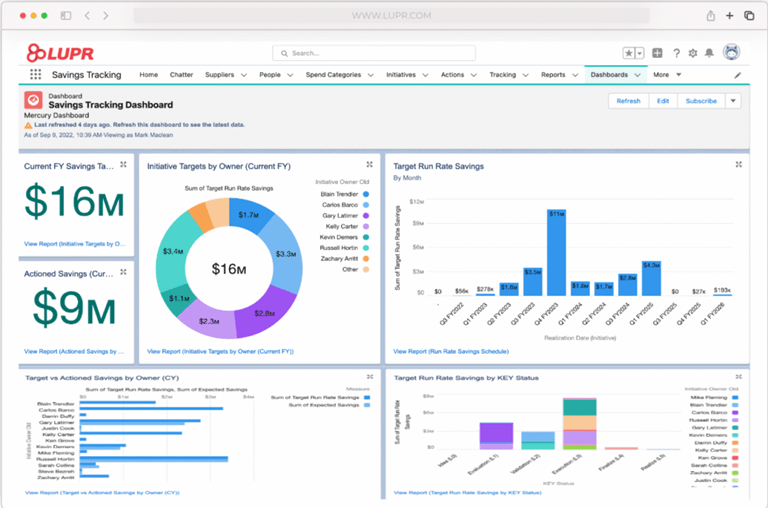
Built-in scorecards and performance tracking support consistent, data-driven assessments and highlight compliance gaps.
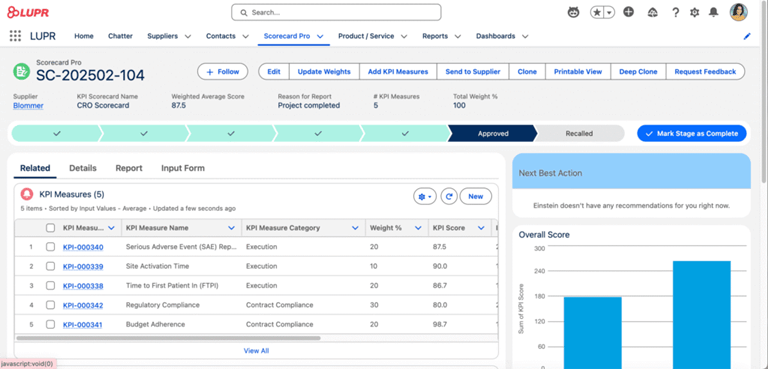
Certification expirations are automatically flagged in advance, triggering recertification workflows that help prevent compliance gaps or operational disruptions, while real-time dashboards and alerts continuously update as supplier data changes to provide clear visibility into compliance status and risk and enable faster, more informed decision-making.
5. Enforce DFARS flow-down requirements
Ensure cybersecurity obligations extend across the entire supply chain.
- Require subcontractors to comply with DFARS requirements
- Embed compliance clauses into contracts
- Track supplier acknowledgment and adherence
The solution enables tracking of compliance status and documentation across suppliers, providing visibility into how requirements are enforced throughout the supply chain and ensuring compliance is consistently maintained beyond the organization.
6. Ensure audit-ready compliance integrated into operations
Ensure all compliance activities are properly recorded and traceable.
- Store supplier assessments, approvals, and communications
- Maintain full history and version control
- Integrate with procurement, onboarding, and performance processes
- Embed compliance into daily operations
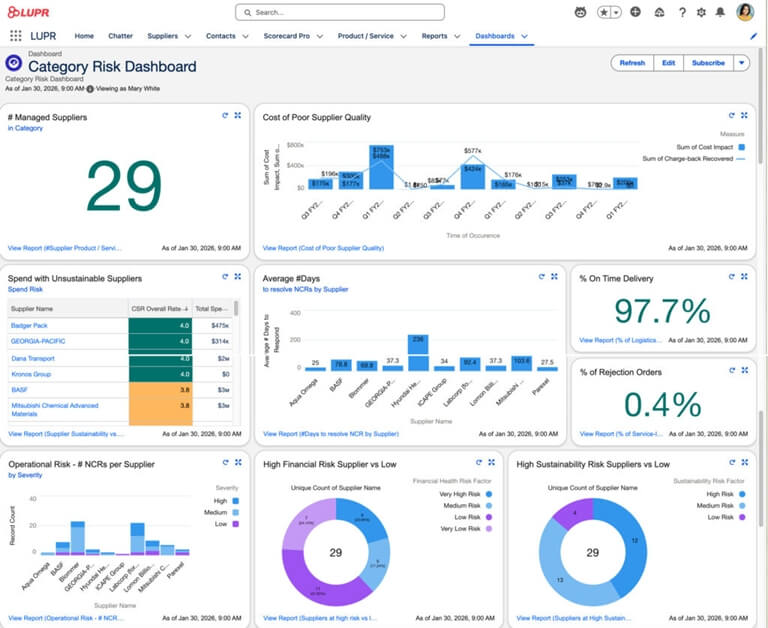
LUPR centralizes all records and maintains logs of historical data, enabling audit readiness through structured documentation and easy reporting. As a Salesforce-native solution, it also integrates directly into existing workflows, allowing teams to manage suppliers without switching systems and making compliance an embedded, continuous process rather than a reactive task.
7. Enable supplier collaboration and accountability
Create structured communication channels with suppliers.
- Allow suppliers to submit data and update certifications
- Track responsiveness and completeness
- Enable direct communication between internal teams and suppliers
The Supplier Community and integrations support direct collaboration between organizations and suppliers, creating a shared accountability model that improves transparency and supplier engagement. In addition, Salesforce Chatter allows stakeholders to collaborate directly on supplier records by sharing updates, commenting on activities, and maintaining real-time visibility within the platform.
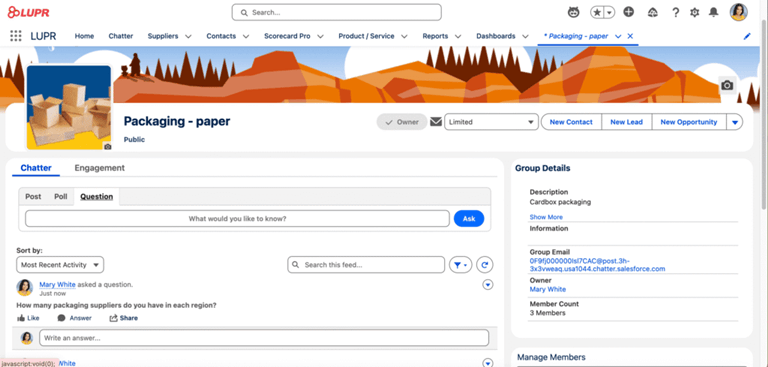
LUPR provides a structured process where suppliers submit required data and certifications, while organizations track, validate internally, and manage this information in a centralized system. This enables teams to monitor progress more effectively, complete compliance processes more efficiently, and generate structured reports that can support DoD audit requirements. However, the platform serves as a management and tracking solution only and does not assess, validate, or grant any form of security clearance or official compliance certification itself.
| From Manual Supplier Compliance to Structured DoD Readiness | ||
| Compliance Area | Manual Approach | With Supplier Management Platform (e.g., LUPR) |
| Supplier data | Scattered spreadsheets, emails, and files | Centralized supplier database |
| Risk visibility | Manual, periodic, and subjective reviews | Continuous risk scoring and segmentation |
| Compliance tracking | One-time assessments performed during periodic reviews | Continuous, automated monitoring of certifications and compliance status |
| Audit documentation | Disconnected files, which are hard to trace | Centralized, version-controlled, audit-ready documentation |
| Supplier communication | Email-based coordination with limited structure or tracking | Structured supplier portal with defined workflows |
Conclusion: Turning Supplier Management Into a DoD Compliance Advantage
DoD compliance has become a supply chain challenge, requiring organizations to secure not only internal systems but also ensure all suppliers meet standards like NIST SP 800-171, DFARS 252.204-7012, and CMMC through verifiable controls and audits.
This change is not surprising. According to PwC, 85% of respondents stated that compliance requirements have become more complex over the past three years, making the regulatory obligations more demanding across industries.
In practice, supplier compliance is difficult to achieve with fragmented tools like spreadsheets and emails, which lead to inconsistent supplier visibility, weak monitoring, and limited audit readiness, especially as supplier networks expand.
Supplier management tools solve this by centralizing data, standardizing compliance workflows, and enabling continuous, automated monitoring of risk and certifications. Within platforms like Salesforce, these solutions further reduce fragmentation and improve adoption by keeping all supplier-related processes in one system. Salesforce SRM tools such as LUPR demonstrate how this approach can be implemented in practice, combining compliance management, supplier data, and performance tracking within a single environment.
Ultimately, DoD compliance becomes a continuous, structured process that evolves alongside the supplier network rather than a set of disconnected tasks managed in isolation.
Popular on OTW Right Now!



About The Author

Gagan Bhangu
Founder of otechworld.com and managing editor. He is a tech geek, web-developer, and blogger. He holds a master's degree in computer applications and making money online since 2015.