
How Smart LED Displays Are Revolutionizing Trade Show Booths in 2026
Looks nothing like the rows of static banners and pop-up stands of the past. Today, the most successful brands are those that treat their exhibition space as a digital experience.
With the growing attention spans, we have seen shorter attention spans that are necessitating the high-impact, smart technology as not a luxury but a must-have. This change has taken the smart LED displays because they have turned ordinary booths into interactive centers that attract people and hold them.
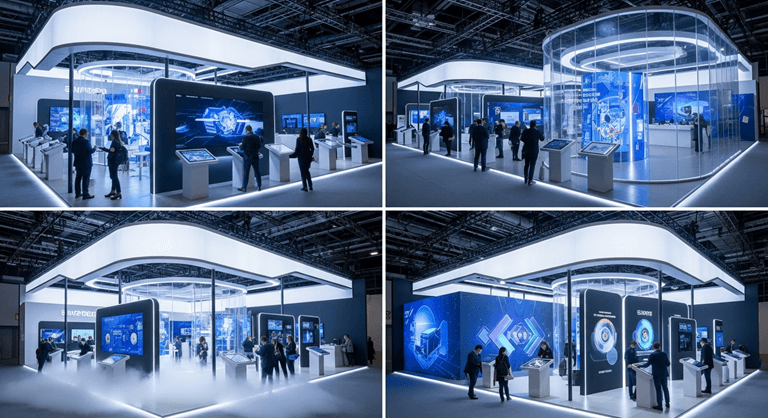
In such a busy world, it is not possible to remain relevant by merely having the simplest forms of signage. Tourists have acquired a new requirement to see richness, movement, and customization. The main tool that assists businesses in living up to those expectations is the Smart LEDs.
The Shift Toward “Phygital” Experiences
The terminology of 2026 among event planners is phygital, the combination of physical and digital space. The gap between these two worlds is provided by Smart LED displays. The modern smart LEDs are part of the architecture of the boot,h unlike the traditional monitors.
There are no more screens on a wall; they are the wall. Such displays have sensors and artificial intelligence software, which enables the content to be altered depending on who is standing in front of them.
As an example, when a group of people gathers around a display, the screen can launch a more elaborate product demonstration or change to a high-energy brand video. This degree of responsiveness makes the booth alive and responsive towards the needs of the visitor.
Interactivity and Real-Time Data
Another large factor why smart LEDs are taking over trade shows is the fact that it offers interactive touch-points. Days of printing paper brochures and putting them in a trashcan of the hotel have long gone. Visitors may now operate massive touchscreens to:
- Search online collections and email parameters to oneself in real-time.
- Engage in gamified brand experiences using live leaderboards.
- Experience 3D product models that can be very large and are not easily transportable to the show floor.
Moreover, these displays act as data collection tools. In 2026, exhibitors use built-in analytics to see which content people watched the longest or which interactive buttons were clicked most often. This allows companies to adjust their messaging in real-time, even during the middle of a three-day event.
Versatility in Booth Design and Environment
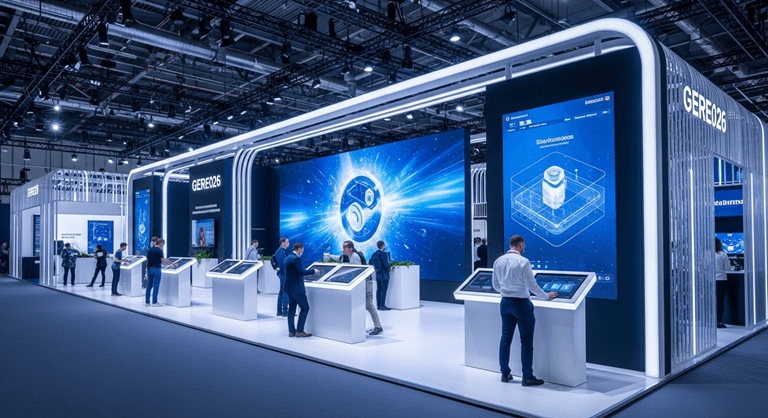
LED has become physically flexible to new levels. The future of 2026 envisions curved LED panels enveloping corners, transparent screens, and screens where visitors can view goods behind the digital overlay, and even an LED floor that reacts to visitors’ footsteps. There is a greater deal of creativity in the layout of the booths.
Although high-tech screens are the highlight of the show, the physical structure is the backbone of a good display. Even the most progressive computer installations usually lie within or directly adjacent to the conventional branding components. Where large spaces are needed (and the event is outdoor or a large indoor setup that necessitates a defined footprint), brands tend to combine their tech with a high-quality custom canopy.
Companies like Tent Depot offer durable, custom-printed canopy tents that provide a professional, protected space for these expensive LED installations. A strong and branded tent would be a guarantee that the digital equipment becomes resistant to the elements and its presence is clearly perceived as the same brand image, just at a distance. After establishing the physical perimeter using an excellent tent or frame, the smart LEDs can take action to give it the “wow” experience that halts people in their steps.
Sustainability and Efficiency
The other key factor that will lead to the use of smart LEDs in 2026 is the sustainability push in the industry. Conventional trade show resources such as giant vinyl banners, foam board signs and thousands of printed flyers usually end up being discarded after one use.
A much more eco-friendly option is provided by smart LEDs. One high-resolution display might substitute dozens of real signs. Whenever there is a shift in the brand message or a new product is introduced, the exhibitor needs only update an electronic file rather than print new content.
Moreover, the recent generation of LED panels is much more energy-efficient than the previous generation of LED panels, as they consume less energy and produce significantly larger brightness and color accuracy.
Smarter Storytelling through Motion
Having a human body implies that a human being is programmed to observe motion. A large poster in a crowded hall can pass unnoticed, but one can not overlook a dynamic and high-definition LED wall. Smart LEDs can also be used to tell a spatial story with the help of the whole booth to make a visitor have a journey.
With the coordination of different screens, a brand can produce a smooth narrative of visual images that unfold from one side of the booth to the other. In 2026, this often includes:
- Holographic-type images: The appearance of depth, without the use of 3D glasses.
- Social Media Integration: Live feeds that display what people are saying about the brand online, which can be posted by visitors, encouraging them to post their pictures about the brand.
- Live streaming: This will allow the booth to reach a global audience or an expert who is at a distance and chime in on the screen to respond to the intricate questions.
Overcoming the Noise
It is not the question of being noticed but being remembered; that is the challenge of 2026. The smart LED displays will assist in the issue of the sea of sameness. A business can achieve the right mood through the strategic use of light, color, and motion, which have the ability to align the brand identity.
It can be a leisurely nature-themed loop of an active wellness brand or a time-sensitive, neon-light show of a tech start-up; the LED technology preconditions a more meaningful discussion.
Employees working in such booths can more easily approach visitors due to the fact that the displays do the first job of explaining what and why the product is. That is how the human team is left to work on the how of relationship building and lead closing.
Looking Toward the Future of Exhibits
The penetration of smart technology will continue to increase as we move further in 2026 and even beyond. We are already witnessing the emergence of 5 G-enabled booths where you can stream high-definition content lag-free and get updates on cloud-based content.
The booth in trade shows has changed to become something to stand on in the past into a high-powered machine that runs on data. To those who intend to organize their next major event, it would be advisable to strike the right balance between digital technological gadgets and trusted physical hardware. Investing in the right technology and a reliable provider like Display Solution today is the best way to ensure your brand isn’t left in the shadows of the trade show floor tomorrow.
Popular on OTW Right Now!
About The Author

Gagan Bhangu
Founder of otechworld.com and managing editor. He is a tech geek, web-developer, and blogger. He holds a master's degree in computer applications and making money online since 2015.