
How Next-Gen Sensors are Powering Autonomous Home Vacuums
For the better part of two decades, the innovation curve in consumer floor care was remarkably flat. Manufacturers competed almost exclusively on a single, brute-force metric: suction power. Marketing materials were dominated by claims of higher Pascals (Pa) or Air Watts (AW), achieved simply by dropping larger, louder motors into plastic chassis. However, there is a physical limit to how much suction a battery-operated device can generate before it becomes incredibly inefficient or impractically loud.
Now the hardware paradigm has changed. The new age of personal service technology is no longer about the brute force of the engine, but the power of silicon, the complexity of sensor grids, and the science of fluid management. We are seeing the application of technologies from autonomous vehicles and commercial fluid handling systems making their way into the home.
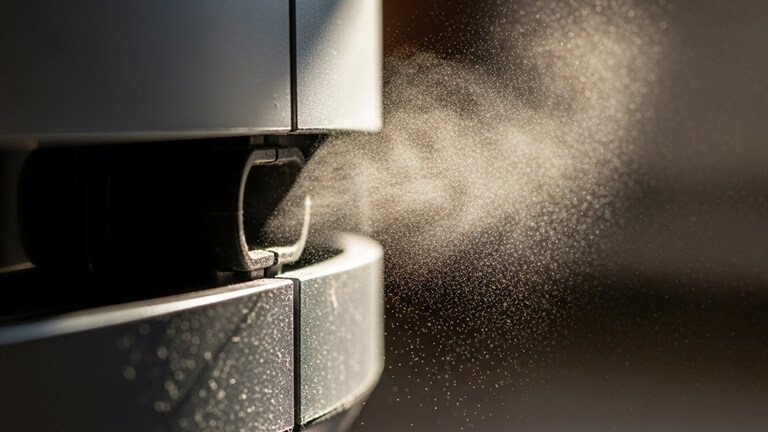
For the techie and hardware hackers, the cleaning tool suite of the future – divided between daily droid helpers and fluid extractors – is an interesting case study in edge computing and mechanical design. Let’s take a peek at the tech behind the innovation.
The Navigation Stack: Edge Computing Meets Floor Care
The biggest breakthrough in consumer robots is the move from “bump-and-go” to geospatial intelligence. A decade ago, a robot vacuum used mechanical bumpers and basic infrared sensors to detect drops, causing them to bounce around in a pinball-like manner.
Today, the brains behind the best robot vacuum and mop systems rival the navigation stacks found in early autonomous drones. The primary driver of this spatial awareness is LiDAR (Light Detection and Ranging). A spinning turret on top of the device fires rapid laser pulses across the room, measuring the time of flight (ToF) for the light to bounce back. This generates a highly accurate, 360-degree millimeter-level 2D map of the environment in real-time, allowing the device’s onboard processor to execute SLAM (Simultaneous Localization and Mapping) algorithms.
However, LiDAR is only able to map the macro-environment, such as walls, furniture, and doors. The real magic is in micro-obstacle avoidance. Today’s droids increasingly come equipped with forward-facing RGB cameras and 3D structured-light scanners, backed by special Neural Processing Units (NPUs). These on-board AI engines are trained with millions of images to identify and categorise specific risks in the home environment – ranging from misplaced USBs and socks to dog poo.
Once the droid detects an object, the NPU locally processes and recognises the object (ensuring privacy), and dynamically re-plans its route to avoid it while continuing the cleaning cycle. This is why they can act as “set-and-forget” robots.
The Engineering of Advanced Fluid Extraction
While the robotic droid handles the computational heavy lifting of navigation and daily maintenance, the other half of the modern cleaning equation relies on complex mechanical engineering and fluid dynamics.
The union of high-speed electric motors and water is never a good idea. Conventional vacuum cleaners employ a “flow-through” motor, with the air sucked in to cool the armature of the electric motor. This system is doomed to an electrical disaster if water is introduced.
The modern wet-dry vacuum cleaner bypasses this limitation through a brilliant piece of engineering known as a bypass motor system. In these devices, the working air (which carries the dirt and liquid) is strictly segregated from the cooling air. The motor is sealed in a separate compartment and cooled by an independent fan.
But how does the machine remove the liquid from the air before it gets to the vacuum turbine? It has a tiny centrifugal separator. When the air/dirty-water/solid-debris mixture is drawn into the device, it enters a rapidly spinning cylindrical chamber. The principles of centrifugal force come into play: the denser water and solids are flung towards the outer chamber walls and fall into a sealed dirty-water tank, while the less dense clean air is sucked up through the chamber and expelled from the machine.
This enables the machine to both apply clean water onto a high-speed rotating brush roll, sweep the spill, and extract the dirty-water slurry, all in one forward pass. Additionally, the incorporation of smart dirt sensors, which may use infrared light to determine the opacity of the water being sucked out, allows the onboard microcontroller in the machine to intelligently vary the power of the vacuum pump and the flow of water being supplied in response to the spill.
The Future of Domestic Hardware
It’s time to say goodbye to the analog vacuum cleaner. The humble appliance has turned into a piece of equipment that combines LiDAR, edge AI, structured light sensors, and centrifugal fluid mechanics.
Through the lens of the technology involved, it is now possible to see why the solution to the future, tech-savvy home is a dual approach, involving both an autonomous robot cleaning system for computational, routine maintenance, and a clever wet/dry bypass system for fluid extraction. It’s not just about cleaning anymore; it’s about using the right engineering.
Popular on OTW Right Now!
-
 What to Do After a Scam: Investigation Steps and Professional Recovery Solution
-
 Elevate Your Celebration with a Party Bus in Newport Beach
-
 Robotic Laser Welding Cell Safety: Class 4 Guarding, Interlocks, Viewing Windows & LSO Requirements
-
 90° vs. 54° FOV: Antigravity A1 Vision Goggles vs. DJI Goggles N3



About The Author

Gagan Bhangu
Founder of otechworld.com and managing editor. He is a tech geek, web-developer, and blogger. He holds a master's degree in computer applications and making money online since 2015.