
How IT Asset Management Software Is Changing the Way Businesses Manage Technology
Somewhere in almost every growing company, there is a drawer nobody wants to open. Inside it sits a nest of charging cables, a docking station built for a laptop model that got discontinued three years ago, and a keyboard that might still work. Multiply that drawer by every floor, every remote hire, and every office in every city, and the picture gets clearer. Hardware is delivered in a time faster than can be logged, and people’s roles change, and the paper trail evaporates.
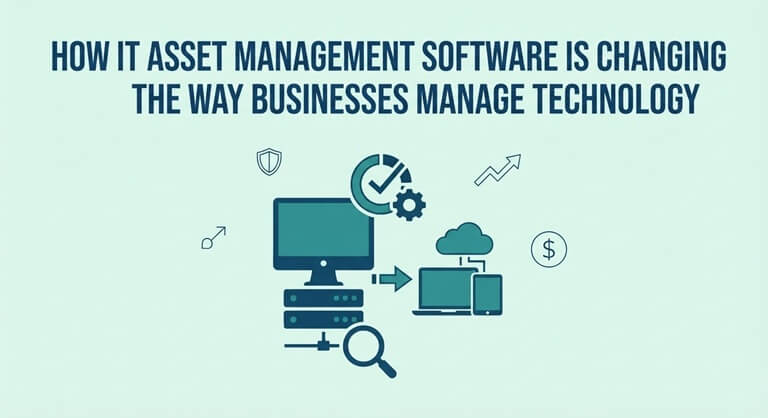
A spreadsheet was for a long time the standard solution, and, yes, a spreadsheet will suffice for a time. Then the company recruits 40 people during a single quarter, in a second city, and it turns into fiction without anyone noticing. Two managers had two different counts, and the simple question “Where did that MacBook go?” ends up with the shrug and the soft memory of a salesman.
It’s there that software has stepped in. Over the last few years, asset tracking capabilities have improved dramatically, making asset tracking more like routine bookkeeping. The transformation isn’t about slick dashboards; it’s about having knowledge of what you have, where it’s at, and what happens to it next.
The Quiet Cost of Not Knowing What You Own
Such a discussion is not the most popular one for finance teams, as the money is lost where no one suspects. The costs of devices that disappear then reappear on the floor continue to accrue depreciation, warranty, and support contract costs. In the meantime, procurement has ordered more monitors as the request queue shows it’s short, and a dozen perfectly good monitors are boxed in a storage room.
The bad news is, none of this is due to negligence. It is derived from scale. After about 200 devices, human memory becomes a flawed tool, and as people join, leave, or change jobs, gaps in the system grow even bigger. Tools like Workwize asset management software attack that problem by keeping one register that everyone writes to, instead of five partial versions that disagree.
From Spreadsheets to Systems of Record
What it is that these platforms really log, that’s the interesting part. At the very lowest level, a list of inventory can tell you that “There is a laptop and someone probably owns it. A sound system connects the physical object to the software installed on it, the warranties that accompany it, the contract that the money came from, and the person who is accountable for it now.
That distinction has a greater meaning than it’s worth. NIST made the same point in its IT asset management practice guide, noting that a physical tracking system can tell you where a computer sits but cannot answer what operating system it runs or whether it is exposed to the latest threat. When you keep everything in one place, you can find answers to questions that used to take a week of email in a search box.
Automation That Removes the Busywork
Survey all IT managers and find out what sucks up their week and, almost invariably, it is not the interesting technical work. It is onboarding, offboarding, chasing returns, and confirming shipment. A new employee arrives in a new country on his first day, and you have to provide him with a machine; you have to find one, set it up, ship it, and then forget about it 2 years later when the warranty expires.
Modern platforms can automate most of that sequence. Equipment is assigned during onboarding, tracked on the move, marked for refresh before it starts to fail, and unassigned when an employee leaves. The system reminds people to renew before the actual date, so that the renewal dates are never a surprise. The advantages are not only faster, but fewer things are dropped in the weeks when people are all busy.
Standards, Security, and the Audit Nobody Schedules
Compliance also tends to get ignored until it cannot be ignored. The international standard for this discipline, ISO/IEC 19770-1, lays out 27 process areas covering how assets are tracked and governed, and it deliberately uses a tiered approach so a smaller company can adopt the parts that fit without swallowing the whole thing at once.
Security is on board. Attackers don’t care if the laptop was not patched and are perfectly happy to walk through an unpatched device. An unpatched device is an unknown device, and the attacker is fine either to walk through a forgotten laptop or to move on to the next one. Now, when each endpoint is included in one list, and its patch status is included, there’s no more guessing, and there’s no more risk.
What Better Visibility Buys a Business
Good data can make budget meetings better. Rather than debating the length of time a laptop will last, leadership can examine real failure patterns among hundreds of laptops and establish a refresh cycle that is as long as the average failure period. Equipment that still has a few more years left is reused, not thrown out a few years down the road, reducing expenditures and extending the equipment’s useful life.
Discipline around resources shows up everywhere else too. The scrappy operational habits that helped a small consumer brand grow from a few hundred thousand in sales into an eight figure business are the same habits that keep a technology estate from sprawling: track what you have, know your numbers, and make decisions from evidence rather than instinct.
Of this, nothing makes asset management a fun topic. What it does do is eliminate one of the constant low-level hindrances that the business is facing; the one that never shows up as an expense line, but as wasted hours, redundant buys, and clumsy silences when someone asks a seemingly simple question.
It doesn’t have to be the companies with the largest IT budgets—some of them are doing a great job. They concluded that it wasn’t enough to guess; they needed a strong track record. Technology takes over, people move on, and the drawers get filled. The difference is that everybody doesn’t know what’s in it.
Popular on OTW Right Now!



About The Author

Gagan Bhangu
Founder of otechworld.com and managing editor. He is a tech geek, web-developer, and blogger. He holds a master's degree in computer applications and making money online since 2015.