
How Emotions Complicate Money Choices
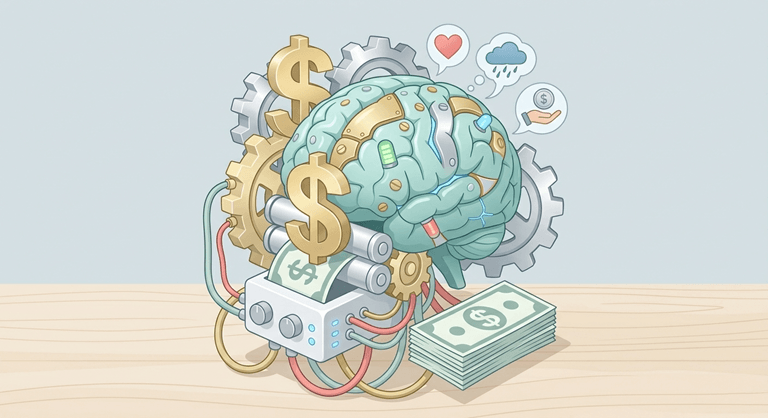
Money decisions look logical from the outside. Compare the numbers, weigh the options, pick the smartest move. But that is not how people actually live. Money is tied to safety, identity, family history, status, guilt, fear, comfort, and hope. That is why seemingly simple financial choices can feel surprisingly intense.
Questions like ” What is a financial hardship loan often come up in moments when stress is already high. In those moments, logic is still present, but emotion is usually loud. People are not just evaluating terms. They are trying to protect themselves, preserve dignity, avoid shame, or create relief. That emotional pressure can complicate even sensible decisions.
This doesn’t make financial decisions any less important. And it makes them more realistic. If you’re aware of the role of emotions, you can develop strategies to minimise their influence in the moment. Knowledge doesn’t take away emotion, but it can prevent emotion from taking over all the time.
Emotion makes urgency feel like wisdom
A big reason why emotions make it harder to make financial decisions is that they invoke urgency. Fear tells you to do it now. Excitement says it will be gone soon. Guilt says you should cover it up or fix it ASAP so no one notices. Relief says your purchase is a good idea because you deserve it. These feelings are not without meaning, but they aren’t necessarily reliable.
This is where neutral information helps. Broad resources on credit and debt from the FTC can help people slow down and understand their options in clearer terms. Their page on free credit reports also supports better decisions by replacing assumptions with facts.
Past experiences shape present choices
Money is often not just a present-day affair. Growing up poor, having parents who fought, having parents who were poor, and even having it easy can influence one’s response today. Someone who grew up poor may splurge on a special purchase when they have money because it helps them feel like they’re no longer poor. A person who has felt financial shame may be reluctant to have a checking account because that feeling is too much to bear.
This is part of the reason why feelings can get in the way of making good decisions. But what people know can be less important than what they have experienced.
Status and identity play a bigger role than people admit
A lot of spending and saving is about how we want to appear. Consumption can be a display of savvy, generosity, good taste, maturity, or success. Saving can be prudent or parsimonious. Borrowing can be savvy or shameful based on a person’s narrative.
These identity components can make money matters more complex. It might not be about the product. It may be about acceptance or self-esteem. When you realise that it makes more sense why reason isn’t always right.
Strong feelings narrow attention
The second issue is that emotion focuses attention. Under stress, you’re more likely to think about the emotion you wish to alter. This can create impulsive behaviour as short-term gain is more powerful than long-term pain. We can overlook interest rates, future cash flows, or even better options, because the current feeling is so strong.
That’s why taking a break is important. A delay can help broaden your perspective. After the initial decision, your brain is free to consider the pros and cons, rather than react.
Automation can reduce emotional friction.
A great way to cope with emotional decision-making is to take some decisions out of the moment. Set and forget savings, automatic payments, recurring transfers, and budget caps can be helpful because they minimise the opportunities for emotion to play a role. You do not have to rely on your stressed-out self to make all your decisions.
This does not address all problems, but it is helpful. It makes it easier to do things right.
Objective voices are valuable when emotions are strong
The best way to make money decisions is to use someone who is less aroused than you are. Your friend, financial advisor, or counselor can be your sounding board when your thoughts are too emotionally activated. This is particularly true of bigger decisions, as emotion tends to personalise decisions with significant consequences.
Asking for help is not an admission of failure. It’s an acknowledgement that financial decisions are better made with the help of others.
Positive emotions can help to
Emotions can help and hinder.r Gratitude, patience,nce and concern for the self can help with decision making. They broaden rather than constrict your focus. They enable you to delay and safeguard long-term goals, and appreciate the positives you already have.
It is not to get rid of emotion. It is to better understand which emotions are helping and which are driving you to look for short-term solutions.
Better money choices start with emotional awareness
Why is money a sticky business? Because money is important to life’s core. Security, value, acceptance, autonomy, and optimism are there when money is involved. Denying this just makes them more prevalent.
It’s better to anticipate emotion, recognise it, a nd factor it in. Take time for big decisions. Automate what you can. Ask others if necessary. Enlist the help of gratitude and patience. Then emotions stop being concealed and start to be wise.
Popular on OTW Right Now!




About The Author

Gagan Bhangu
Founder of otechworld.com and managing editor. He is a tech geek, web-developer, and blogger. He holds a master's degree in computer applications and making money online since 2015.