
From Prompt to Prototype: How AI Tools Are Speeding Up Creative Workflows
Creatives are just that – creative. But sometimes they struggle with bringing all of the imaginative ideas they have in their heads to life. Whether this challenge is due to time-consuming manual tasks, technical barriers, or iterative design cycles, this transition process is sometimes slow and laborious. Artificial intelligence (AI) can be a powerful resource for creatives across various industries to have in their toolbelt, enabling them to transform their abstract ideas into visual prototypes with speed and efficiency.
Bridging Concept and Visualization
AI models like large language models, generative adversarial networks, and diffusion models interpret natural language prompts or inputs and translate them into intricate visual outputs. AI’s “education” is similar to that of a student learning from examples their teacher provides and then being able to create their own original work based on that understanding. AI learns by being exposed to vast amounts of datasets and identifying patterns within them to generate content. The more data it has, the more it learns. For example, a text-to-image model like Midjourney is “trained” on millions of image-text pairs where it builds an understanding of how different objects and styles relate to each other. Or a music generation AI such as Aimi or Suno AI learn from thousands of musical compositions, understanding harmony, rhythm, and melody to compose new pieces. This assist from AI allows creatives to focus on what they’re best at – ideation and refinement – rather than manual execution. Faster workflows means a happier creative and happier clients (plus room for more).
Coding

Writing computer code, especially for creating user interfaces (UI), usually takes a lot of time and requires special skills. It can be a slow process to build even simple digital tools. AI-assisted code generation can help those without enough experience, or pros pressed for time, write parts of the code just from simple descriptions in plain language. AI can take your idea to a working app or website for you just by providing a description of what you want the code to do. For fast UI prototyping, AI can quickly create first drafts of how an app or website will look. This means designers can see their ideas rapidly without needing to manually draw or code every element. Productivity? Increased. Software release cycles? Accelerated. Coding errors? Reduced. While AI does point out mistakes and suggest ways to code better, it’s always a good idea to double check it.
Video Generation
In the past, taking things from a script to a screen in minutes would be unheard of. The complexity and resource intensity of video production – everything from scripting and shooting to editing and animation – are great prohibitors. But not with AI. AI is making video generation more accessible, letting specialists in marketing, entertainment, and education save time and resources, boost video engagement, and scale production without sacrificing quality. Professionals are increasingly turning to Coursiv to bridge the skills gap by mastering high-demand AI tools through guided, micro-learning paths that fit into a busy workday.
Platforms like RunwayML and Synthesia are becoming increasingly popular among content creators as they offer text-to-video generation, allowing users to create video clips from just text prompts. There are so many elements to consider when making a video – props, backgrounds, character movements, scene compositions – all of which are very time-consuming. An AI studio platform can help streamline the creation of these assets, or video building blocks, by quickly building up scenes without starting from scratch every time. Just provide the AI with a script. With a script, AI can also assist with integrated audio. AI tools can now generate voiceovers and compose background music, seamlessly creating and adding both spoken words and music to your videos.
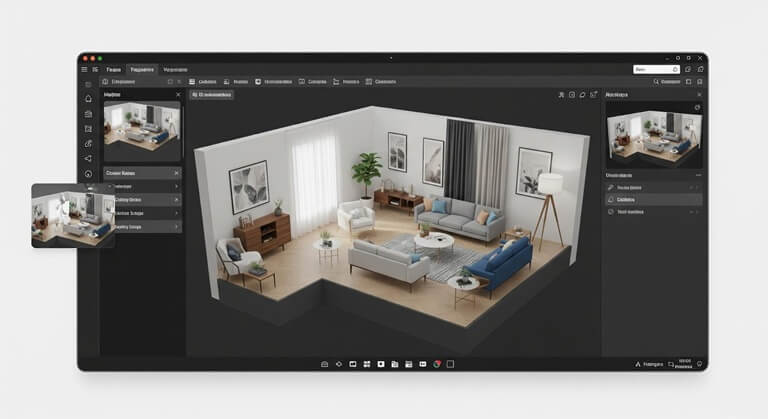
AI is revolutionizing the interior design industry for more reasons than none. Not only does AI speed up the design process and reduce the need for expensive physical mock-ups, but it enhances the client communication and their overall experience. It’s difficult for clients to visualize their spaces when all they are provided with are 2D plans or theoretical concepts. This lack of assurance often leads to expensive and time-consuming 3D rendering. However, AI interior design tools simplify the work of both parties involved. AI tools like Planner 5D can transform a basic sketch or floor-plan into a photorealistic rendering of an interior space with different styles, furniture, and lighting. The technology gives designers creative freedom when exploring various styles as it can apply various design aesthetics to a room with a single click. It can also aid real estate agents in making their properties more appealing without physical staging by virtually furnishing and decorating empty spaces.
While some approach AI with caution due to ethical implications, copyright concerns, potential job displacement, or the fear of replacing human creativity, its benefits for creatives are undeniably powerful. With unprecedented speed, enhanced accessibility for non-experts, increased creative output, and rapid experimentation, AI tools are here to stay within the creative realm. They will continue to evolve and empower human creativity for years to come.
Popular on OTW Right Now!
-
 RI Mining’s New Mining App Is Released: BTC and XRP Holders Can Easily Start a Stable Income of $25,000 Per Day
-
 How Technology Enhances Senior Safety at Home and Beyond
-
 Deciding Between Whole Life and Term Insurance: Tips for 2025 & Beyond
-
 Top Programmatic AdTech Companies: 5 Reputable Providers to Know




About The Author

Gagan Bhangu
Founder of otechworld.com and managing editor. He is a tech geek, web-developer, and blogger. He holds a master's degree in computer applications and making money online since 2015.