
How AI Market Analysis Tools Improve Price Forecast Accuracy
Artificial intelligence is transforming how analysts and traders study financial markets. This article explores how AI-driven market analysis tools help improve price forecast accuracy by processing large amounts of data and identifying patterns that humans might miss.
The Growing Role of AI in Market Forecasting
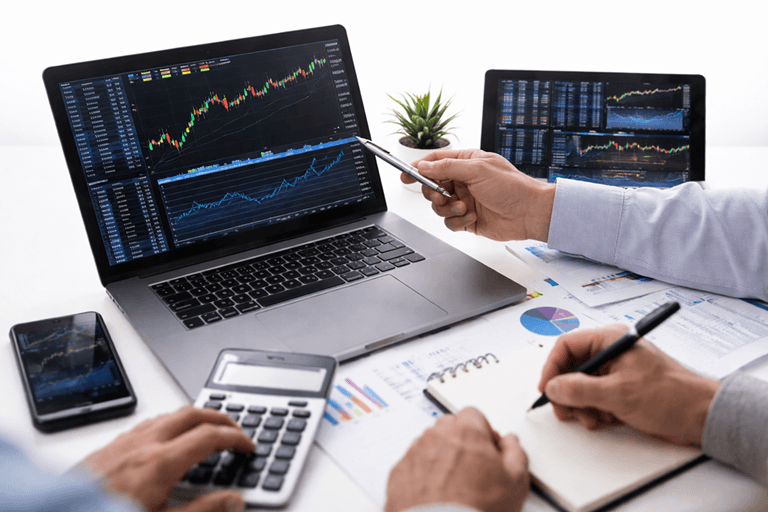
There are massive volumes of data generated on financial markets every second. Since price is very sensitive to new information, analysts may find it hard to monitor all the issues that influence the market. The AI analysis tools are beneficial as they can process a significant amount of data quickly and reveal patterns to enhance the quality of predictions.
One area where this technology has become especially useful is in commodities research. Analysts increasingly rely on AI systems when building a silver price forecast because these tools can analyze historical price movements, economic indicators, and market sentiment at the same time. By combining multiple data sources, AI models can detect subtle relationships between variables that may influence price direction.
Contrary to the conventional analysis techniques, which mostly rely on manualization of information, the AI tools keep updating the models of the information as it is being fed. This dynamic learning enables them to respond to the changing market conditions and make more credible predictions.
How Machine Learning Improves Market Analysis
One of the technologies that has enabled the modern AI market analysis tools is machine learning. The algorithms are tailored to detect patterns in massive data sets and enhance their forecasts with the continual increase in the amount of information processed by them.
Machine learning models may be used in financial markets:
- Historical price data.
- Macroeconomic indicators.
- Interest rate changes.
- Trading volume and liquidity.
- News and market sentiment.
When these factors are analyzed jointly, the algorithm is capable of establishing which variables influence price movements the most.
As an example, a machine learning algorithm that analyzes the commodity markets may find out that certain economic indicators always come before price growth or fall. When the patterns are identified by the system, it can use it in further forecasts.
One of the factors that makes machine learning tools indispensable to analysts and traders is the capacity to keep on improving the predictions.
The Power of Big Data in Financial Forecasting
The capability of AI market analysis tools to work with big data is also a plus. In the financial markets, there are an incredible number of variables, including economic reports, and central bank policies are among them, but geopolitical events and social media sentiment are not the least.
Conventional forecasting applications can also base their efforts on a small number of indicators due to the time-intensive nature of manually developing an analysis of a large amount of data. This limitation is eliminated by AI tools that are capable of assessing thousands of variables at the same time.
Big data analysis allows AI systems to:
Detect early market signals.
Find relationships in dissimilar markets.
Quantify sentiment by news outlets and social media.
Real-time economic analysis across the world.
Indicatively, an AI system may find out that currency market, inflation expectation, and industrial demand changes tend to affect commodity prices jointly. The understanding of these relationships helps analysts to construct more effective models of forecasting.
Natural Language Processing and Market Sentiment
Besides the numerical data, the financial markets are highly sensitive to news reports, policy announcements, and the mood of investors. Natural language processing is also known as NLP; it allows AI applications to process written data, news stories, research papers, and social media.
NLP algorithms organize the high amount of text and impose a positive, negative, or neutral tone on the information. The ability to identify changes in market expectations before they are reflected in the price movement is how AI systems can determine sentiment trends over thousands of sources.
An example is that when the news coverage of financial news becomes more positive regarding a certain industry or commodity, the AI model can detect the change in sentiment and include it in its prediction.
This is important in enabling the analysts to know not only what the market is doing but also why the market might be taking a certain direction.
Real Time Data Processing and Faster Insights
One of the benefits of AI market analysis tools is speed. Financial markets are fast in responding to information, and sluggishness in analysis may decrease the accuracy of the forecasted outcome.
AI systems can handle real-time feeds of data on a number of streams. These sources may include:
- Market price feeds
- Economic calendars
- Corporate announcements
- Government reports
- Global news updates
Since AI tools can analyze this data in real-time, they are able to bring forecasts up to date in a significantly shorter timeframe than more traditional approaches to analysis.
The real-time processing would be of great use, especially in times of market volatility when prices fluctuate very fast. Models powered by AI are capable of updating their predictions instantly when new data becomes available, ensuring that analysts keep pace with market changes.
Conclusion
The tools of AI market analysis are transforming the analysts and forecasting mechanism on price changes. These technologies can be used to find patterns that enhance the accuracy of forecasts by using machine learning, big data analysis, sentiment tracking, and real-time data processing.
Human expertise is also necessary to make sense of market developments, and AI gives the computer the capabilities required to compute the intricate financial systems. These capabilities are combined with each other to assist investors and analysts in their decision-making in an environment that is increasingly data-driven.
Popular on OTW Right Now!
-
 Your AI Agents Are Only as Smart as Your Business Data
-
 AI Receptionists for HVAC and Electrical Contractors: Costs, Call Volumes, and Setup
-
 Can AI Agents Run SEO Alone? A Practical Guide to Safe Automation
-
The Internet Side Hustle Is Getting an AI Co-Pilot: What Changes When One Person Has a Digital Team?



About The Author

Gagan Bhangu
Founder of otechworld.com and managing editor. He is a tech geek, web-developer, and blogger. He holds a master's degree in computer applications and making money online since 2015.