
Yubashiri Sword vs Sandai Kitetsu Sword: Comparing Two of Zoro’s Legendary Blades
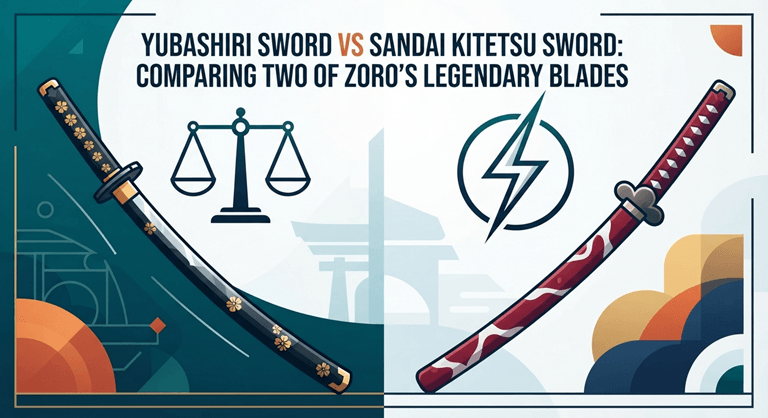
One Piece has given the world some of the most memorable weapons in anime history, and many of them belong to a single character: Roronoa Zoro, the sword-wielding first mate of the Straw Hat Pirates. Over the course of the series, Zoro has carried a rotating collection of blades, but two names consistently come up among fans for very different reasons — the Yubashiri Sword and the Sandai Kitetsu Sword. One represents loyalty and legacy, the other represents danger and destiny. This post takes a closer look at both blades, their history within the story, and what makes each one so significant to Zoro’s journey.
The Role of Swords in Zoro’s Story
Before going all the way down to the nitty-gritty of One Piece swords, it is important to first comprehend the significance of swords. Zoro is not merely a swordsman, but his very purpose and destiny as a person is connected to his blades; to become the greatest swordsman in the world. Each one he’s used has its own story, and many have been based on actual or legendary Japanese sword classifications that have appeared throughout this series, such as Wazamono, Ryo Wazamono, O Wazamono, and Saijo O Wazamono grade blades. Both of these sets, the Yubashiri and Sandai Kitetsu, are classified into these categories, and the level and reputation of each of these sets provides us with valuable insights into their significance in the story.
The Yubashiri Sword: A Blade of Quiet Loyalty
The Yubashiri Sword is an important sword in Zoro’s childhood arsenal. It was given to him by Koushirou, the master of his dojo, who had been his mentor in childhood and the one who taught him the ways of sword fighting and discipline as well as home. Considered a Ryo Wazamono (literally “prominent sword” and a grade under the highest) sword, the Yubashiri wasn’t the most ostentatious one Zoro wielded, but it was a good choice for many of his earliest and formative encounters.
The Yubashiri isn’t about sheer strength; it’s about a heart. It is a place where Zoro originated before the East Blue Saga spread out on the more dangerous and wider Grand Line. But the Yubashiri died during Zoro’s battle with Mr. 1 in Alabasta, as the sword broke due to its clashing with a man whose body was made of living metal. The fall of its destruction marked the end of the “beginner era” of Zoro, and the arrival of a much more sinister substitute.
The Sandai Kitetsu Sword: A Blade with a Curse
The Yubashiri is a comfort and loyalty, while the Sandai Kitetsu is a risk. This sword is, of course, from the legendary Kitetsu family, the blades of which are said to have been cursed. The legend told within the story is that any sword made under the Kitetsu name is known to cause misfortune, injury, or even death to those who wield it, and many warriors don’t even want to carry a sword of such a bad reputation.
“Sandai” in Sandai Kitetsu means “third generation” and represents the third generation of being manufactured using the Kitetsu name, after the First Kitetsu and Shodai Kitetsu. Although cursed, Zoro nonetheless finds himself in extreme circumstances and accepts the Sandai Kitetsu in order to inflict harm upon himself, thus bringing his destiny upon himself. This is one of Zoro’s most important characteristics: He will do anything and take any risk necessary to get stronger.
The Sandai Kitetsu is classified as an O Wazamono grade sword, and is much stronger than the Yubashiri, making it a tense sword to have in battle as it is cursed. This blade is frequently cited as a first sign of Zoro’s god-like attitude: that of taking risks rather than avoiding them to gain greatness.
Comparing the Two Swords
| Feature | Yubashiri Sword | Sandai Kitetsu Sword |
| Origin | Gift from Koushirou | Cursed Kitetsu lineage |
| Grade | Ryo Wazamono | O Wazamono |
| Symbolism | Loyalty, home, mentorship | Risk, fate, fearlessness |
| Fate in Story | Destroyed by Mr. 1 | Continues to serve Zoro |
| Fan Appeal | Sentimental early-arc blade | Dramatic, high-stakes weapon |
Both swords have been used at some time in Zoro’s adventures, but they are two different stages of his development. The Yubashiri is a simpler time, of his training days. The Sandai Kitetsu is a more dangerous, high-stakes battle Zoro willingly plays into to keep up with the increasingly powerful opponents he encounters along the Grand Line.
Why These Swords Matter to Fans
The Yubashiri and Sandai Kitetsu, like the rest of the iconic anime weapons, have an appeal beyond their in-story stats. Each blade is a portrayal of a certain state of Zoro’s soul. The Yubashiri evokes memories of Zoro’s time as a humble slave, whereas the Sandai Kitetsu is a reminder of the reckless and selfless determination that is a constant part of Zoro’s warrior spirit. This is one of the reasons that such replica swords, collectible figures, and fan art for these two swords continue to be popular among One Piece fans years after the story arcs ended.
The selection between the Yubashiri and the Sandai Kitetsu may reflect individual preferences among collectors: some may prefer the quiet loyalty and solid beginnings of the Yubashiri, while others are more likely to be into bold risk-taking and the curses of the legend.
Final Thoughts
The Yubashiri Sword and Sandai Kitetsu Sword may both belong to the same swordsman, but they tell very different stories about growth, sacrifice, and fearlessness. From the emotional appeal of a childhood treasure to the thrill of an enchanted sword that brings about dramatic suspense, both types add to the sense of ambition and determination that makes Zoro — and One Piece, as a whole — so captivating.
Popular on OTW Right Now!




About The Author

Christie
I am a content writer with a passion for creating informative, engaging, and easy-to-understand content. I enjoy researching a wide range of topics and sharing insights that help readers learn, make informed decisions, and stay updated on subjects that matter to them.