
How AI Is Changing Visual Content for Social Media
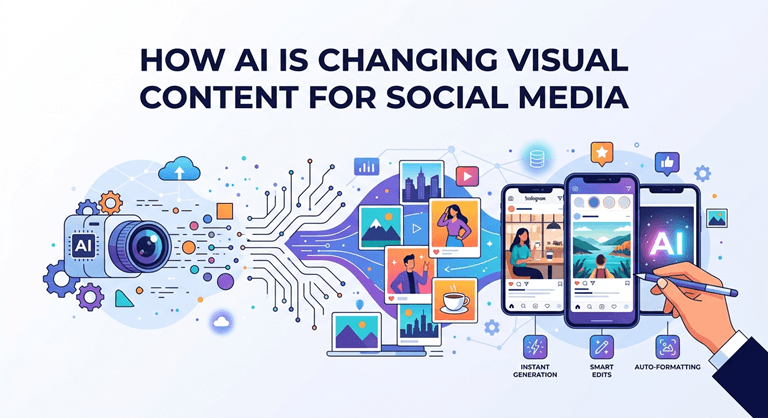
Scroll through any feed for a minute, and you’ll notice something: the brands that grab your attention rarely do it with words alone. A snappy graphic, a looping video, a beautifully composed product shot—it’s visuals that catch your eye before you even read the caption. And right now, AI is revolutionizing the production of those, and there are ways in which most viewers would never expect it. Thee time it used to take a designer half a day is now moments and sometimes no more than a sentence of instruction. That’s creating opportunities for small businesses, one-person creatives, and marketing teams of all shapes and sizes. But what is really going on and why it is important whether or not you are in the marketing field.
Why Visuals Carry So Much Weight Online
Our brains can see and understand something that is visually presented in milliseconds, which is much quicker than it takes our brain to process a text. Which is why a good photo or a short clip will stop the thumb short when a paragraph won’t. The problem has always been that most creators know that they need to understand the importance of visual content, but it is never easy. It’s hard to come up with new ideas every day!
This is where AI comes in. This helps to make content creation easier, even in the absence of time.
Creating Visuals Faster Than Ever
The primary benefit of using AI to create visuals is the speed at which it is accomplished. Now, AI has been integrated into tools such as Canva and Adobe Photoshop, creating layouts, retouching photos, suggesting design changes, and removing backgrounds, among other things, at a single click. Rather than dabble in each and every pixel, the focus can be on the message.
Writing copy gets easier, too. If you need to create Instagram captions for a new product photo, AI can scan the image, factor in your brand voice, and offer a handful of starter ideas. You do get to write the final words, and you do add your own personality, but you’re never before a blank screen.
A few tasks AI handles especially well:
- Cleaning up and enhancing photos
- Removing or swapping backgrounds
- Resizing designs for different platforms
- Drafting caption options based on an image
- Suggesting color palettes that match your brand
Turning Ideas Into Images on the Fly
And with generative AI apps such as MidJourney, the user can input a description of a scene and receive a completed image a few seconds later–a major leap forward for anyone who previously had to find stock photos or hire a professional photographer for an expensive shoot.
Imagine that your small bakery is running a summer campaign. The owner enters summer cookie promo pastel colors sunny picnic vibe,e and is presented with four or five, right-off-the-wall options. No photos, no props, no renting a studio! They then select their favourite and drop it into Canva, add their logo, and they’re posting before lunch.
The same thing is done at a larger scale by bigger brands. They’ll create dozens of styles before settling on one direction, and test which ones are working best for them before investing in a nice one. Much quicker and more cost-effective than the old trial-and-error approach.
Bringing Still Photos to Life
When you have a great photo, it will grab attention. A wonderful photo, with a little bit of motion, can hold it. The fact is, short videos always have a better impact than static posts, and platforms have taken it into account. Instagram, TikTok, LinkedIn,n and YouTube all force video and moving images over static photos and text. In fact, according to a 2025 report, 91% of businesses use video as a marketing tool—and 96% of marketers say it has helped audiences better understand what they sell.
Several apps now offer turn photo into video AI features that can animate images with a couple of taps. The AI adds a zoom, a soft parallax effect, floating text, or syncs your image to a trending audio clip. The result? One amazing sunset photo can end up being published in a 15-second reel before the blogger has even had a cup of coffee.
Impact Across Industries
Visuals aren’t only being modified and disseminated by marketing agencies. AI-generated images can be used by small businesses to create product images without a designer’s assistance. AI helps influencers make better decisions about their content calendars, determine optimal posting times, and boost engagement. Larger firms try out various versions of advertisements and analyze the results of their ads to choose which ones are successful.
Not only are sectors that don’t usually get the spotlight joining in, but others are too. AI tools help real estate agents create virtual tours and improve listing photos.AI tools assist real estate agents in creating virtual tours and improving listing photos. Schools & universities create interactive infographics from dry information. A local fitness studio can get a week’s worth of promotional videos from the one video shot on a cell phone by the fitness trainer. Tools like InVideo Agent take this further by letting one person generate videos from text prompts or media inputs in minutes, without any editing background or production setup. A full creative department is no longer necessary; one individual with the right AI tool can handle it on a Wednesday afternoon.
It’s all about the idea that AI enhances visual creation, which serves as the common thread. A design degree, a studio, and a six-figure budget are not required to produce professional content.
The Bottom Line
AI is NOT taking the place of creativity; it’s freeing up time for it. It can automate the monotonous, repetitive aspect of content creation and allow people to concentrate on what truly needs a human touch: the idea, the voice, and the story. People who know their audience and have a message of value, even online, are the best content creators. AI simply facilitates getting it in front of them quicker.
The further gap is closing as these tools continue to get better. Whether you’re a business, a creator, or any individual who has something to share, transforming ideas into well-crafted content is easier than ever before.
Popular on OTW Right Now!

About The Author

Gagan Bhangu
Founder of otechworld.com and managing editor. He is a tech geek, web-developer, and blogger. He holds a master's degree in computer applications and making money online since 2015.