
From Order to Kitchen: Why Connected Restaurant Systems Reduce Friction
A restaurant order passes through several handoffs before food reaches the guest. With each handoff, there is an opportunity for delays, transcription errors, unclear modifiers, or requests being overlooked. By using connected systems, those interruptions are reduced since the details of the order are passed directly from the guest’s communication to the point-of-sale records and then to the kitchen’s workflows. The outcome is a process that staff can keep an eye on, guests can place their trust in, and managers can improve upon using clearer operational data. This improvement starts with what takes place before the order reaches the cooking line.
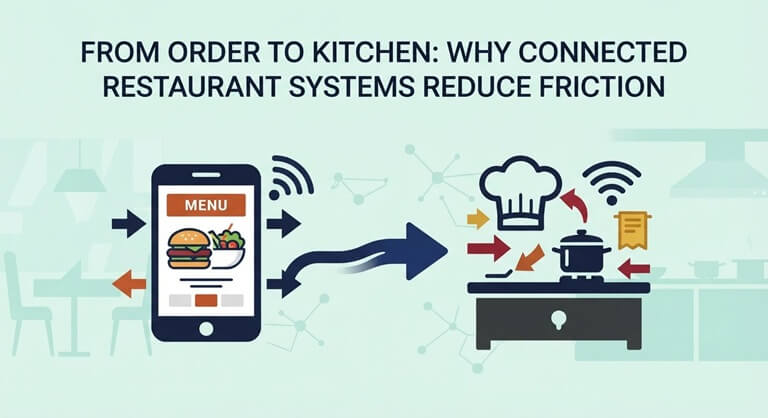
Phone orders often create the first break in service. A staff member must hear the request, interpret modifiers, check availability, repeat details, and enter everything into the point-of-sale system. A direct connection, such as Toast POS integration for restaurant orders, moves captured items, modifiers, and pickup times into Toast, reducing duplicate entry and giving the kitchen one readable order record.
The Cost of Manual Handoffs
During the busy times, manual order entry increases the amount of work. The staff have to alternate between taking calls, remembering the details, typing up the tickets, and assisting guests within the restaurant.
The impact of that interruption goes beyond just the speed. A missed modifier can result in a remake, and an incorrect pickup time can confuse the counter. The time spent on each correction could have been used for food preparation or for providing in-person service.
By linking the systems together, the breaks are reduced since structured order data is entered into the point-of-sale record. Employees then spend less time retyping the information and more time dealing with the exceptions that need human judgment.
Real-Time Information Reaches the Kitchen
A connected restaurant system gives the kitchen access to the same order details captured during the guest conversation. The ticket includes the selected items, requested changes, and pickup timing for accurate food preparation.
It is important to maintain this consistency since the kitchen staff bases their work on the order record rather than receiving only part of the message from one member to another. When the instructions are clear, they reduce the number of unnecessary questions and enable the cooks to prepare the right meal the first time.
The process also enhances the coordination between the front of house and the back of house; as soon as an order is received by Toast the staff are able to keep track of its status, manage guest expectations and spot any delays before the guest arrives.
Phone Coverage Protects Service Capacity
The phone lines at the restaurant have to compete with all the other things that are going on during service; if the phone is ringing, it will draw an employee away from a guest, the register, or a preparation task.
An AI phone assistant takes over incoming calls, picks up the spoken instructions naturally, and passes the information on to Toast. It also answers questions when the normal team is busy or not available, thus ensuring that callers do not have to wait for a particular employee to be free.
The way that coverage is handled affects the use of labor, since employees can concentrate on providing hospitality within the restaurant while the phone channel keeps on dealing with orders and inquiries.
Data Connects Calls With Operations
Instead, a connected system keeps a record of each guest interaction and does not regard each call as a separate event. The call transcripts display the questions that the guests asked, the orders they placed, and the points at which confusion arose.
By comparing the calls with the orders, covers, and inquiries, managers can assess how well the phone channel is performing. The information obtained in this way allows them to spot recurring questions, frequent changes, and the times when staff require more assistance.
The records also enable operators to get a better understanding of service problems; for example, if callers keep asking about items that are not available or about when they will be collected, the managers can make changes to the information, staffing, or communication regarding the menu.
Better Connections Require Clear Workflows
The need for established restaurant procedures is not eliminated by technology; teams still require accurate menus, up-to-date information regarding the availability of items, clear rules on modifiers, and agreed procedures for handling unusual requests.
Managers must test the entire process before depending on automation when providing service; as a practical example, this involves reviewing a call from the moment it is received through to the taking of the order, the entry of the order into the system, kitchen preparation, the customer picking up their order, and any necessary staff intervention.
The review ought to include exceptions as well; for example, cases involving large orders, items that are unavailable, questions about allergies, refund requests and reservations should have clear routing arrangements so that the system will know when to bring in an employee.
Conclusion
By linking together the various restaurant systems, friction is reduced since duplicate entries are eliminated and guest information remains consistent across all service channels. The greatest benefits are seen when phone calls, the Toast records, and the kitchen processes all follow a single established route. Restaurant operators should draw up that route, test typical orders as well as any exceptions, and then examine the call and order data following the launch. In this way, integration becomes an operational tool that enables the teams to ensure accuracy, manage labor, and provide guests with quicker responses without having to introduce another manual handoff.
Popular on OTW Right Now!

About The Author

Gagan Bhangu
Founder of otechworld.com and managing editor. He is a tech geek, web-developer, and blogger. He holds a master's degree in computer applications and making money online since 2015.