
Best Practices For Shipping Different Types Of Shoes
Shipping shoes might look simple at first—put them in a box and send them out—but anyone who has dealt with returns, damaged soles, crushed sneakers, or scuffed leather knows it’s not that easy. Each type of shoe will be packaged and handled differently and require a different type of protection to ensure that the shoes arrive at the customer in perfect condition.
From a small business owner to an eCommerce brand to an individual shipping shoes to a friend or customer, knowing how to pack and ship shoes properly can save you money, decrease returns, nd increase the satisfaction of your customer.
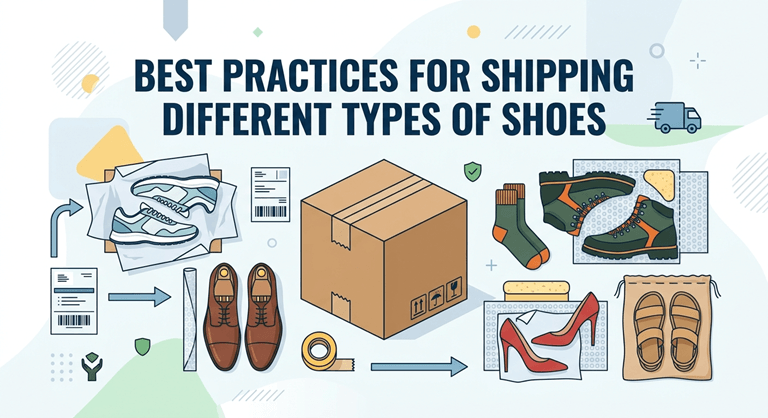
We’ll walk you through the best practices for sending an assortment of footwear—and know which types of shoe boxes will keep all those pairs safe, whether they’re sneakers, high heels, or boots!
1. Understand the Type of Shoes You’re Shipping
The first step is simple but often overlooked: not all shoes ship the same way.
- Sneakers and sports shoes: Lightweight but bulky, often made of mesh or fabric that can deform if crushed.
- Leather shoes and formal footwea: Require protection from scratches, bending, and moisture.
- High heels: Delicate structure, easily broken heels, or scuffed surfaces.
- Boots: Heavy, tall, and need support to avoid collapsing or creasing.
- Kids’ shoes: Small, but still need cushioning to avoid shifting inside the box.
Knowing the type of shoe is important in determining the amount of cushioning, box strength, and sealing protection that you’ll need.
2. Always Use a Strong Outer Shipping Box
The worst error made when shipping shoes is to pack them in a poor manner. Boxes are stacked, dropped,d and compressed during shipping. Shoes may appear sturdy, but they are not.
A strong corrugated box is essential for protection. Many brands now prefer using durable packaging like custom corrugated mailer boxes because they provide:
- High resistance to crushing
- Better stacking strength
- Protection against moisture and rough handling
- A professional unboxing experience
Double-wall corrugated boxes are frequently the better choice with heavier products such as boots, luxury shoes, and more.
3. Use Proper Internal Cushioning
Shoes can move around inside even if the outer box is sturdy, which can cause damage.
Here’s how to prevent that:
- Tissue paper wrapping: Ideal for preventing scratches on leather or polished surfaces.
- Bubble wrap: Best for fragile shoes like heels or designer footwear.
- Air pillows or kraft paper: Great for filling empty space in the box.
- Shoe stuffing (paper inserts): Helps maintain the original shape of the shoe.
Do not have shoes to move around in the box, as movement is damaged in transit.
4. Keep Shoes in Their Original Shape
One of the most common shipping problems is deformation. Shoes can be very loose, particularly soft shoes such as suede or fabrics.
To prevent this:
- Stuff paper into each shoe or use shoe trees!
- Don’t stack shoes on top of one another.
- For multiple pairs, use cardboard dividers between pairs.
This is particularly true for high-quality brands, where aesthetics play as much of a role as defense.
5. Protect Against Moisture and Dust
Predictability of the shipping route is uncertain. The packages can go through humid locations, rain, or dusty warehouses.
To protect shoes:
- Put shoes in dust bags or plastic for protection.
- Line with waterproof material in the box.
- Put silica gel packets in to remove moisture.e
Leather shoes, particularly, are extremely vulnerable to moisture, and it can cause stains or stiffening.
6. Choose the Right Box Size
If the box is too large, shoes will be able to slip around, and if the box is too small, shoes will be able to be damaged.
The ideal shoe shipping box should:
- Fit the shoes snugly with minimal empty space
- Allow room for cushioning materials
- Avoid squeezing or bending the footwear
Custom sizing additionally enhances effectiveness and decreases shipping expenses by minimizing dimensional weight charges.
7. Labeling and Handling Instructions
Clearly labeled shipping can minimize transportation mishandling.
You can include:
- “Fragile” stickers for delicate footwear
- “This side up” markings
- Brand handling instructions for premium shoes
For international shipping, make sure that you follow the rules of the respective carriers or airlines to prevent shipping delays.
8. Enhance Branding with Custom Packaging
Protection is not the only reason for shipping shoes; it’s a branding opportunity too. Unboxing is a significant aspect of customer satisfaction and repeat business.
Many brands use custom mailer boxes with a logo to:
- Reinforce brand identity
- Create a premium unboxing experience
- Improve customer perception
- Stand out in a competitive market
With a thoughtful design, a box can make a delivery memorable and shareable, while leaving a positive impression on the customer.
9. Consider Weight and Shipping Cost Optimization
Packed shoes can get heavy, particularly boots, or if you pack more than one pair of shoes. Many shipping companies calculate shipping according to weight and dimensions
To optimize:
- Use lightweight yet strong packaging materials.
- Avoid overpacking with unnecessary filler.
- Choose appropriately sized boxes.
- Compare courier rates for bulk shipments.
Efficient packaging not only protects shoes but also reduces overall shipping expenses.
10. Test Your Packaging Before Bulk Shipping
Before scaling your shipping process, always test your packaging setup.
Try:
- Drop tests from different heights.
- Simulated long-distance shipping conditions.
- Checking for movement inside the box after sealing.
In testing, if the shoe breaks or otherwise arrives in a damaged condition, adjust cushioning or box strength prior to shipping to real customers.
Final Thoughts
Shipping shoes properly is a combination of protection, presentation, and practicality. Whether it’s sneakers or high-end heels, every type of shoe needs careful wrapping to bring it safely to its destination in pristine condition.
Using strong boxes, proper cushioning, moisture protection, and smart branding elements like custom corrugated mailer boxes and custom mailer boxes with logo can significantly improve both product safety and customer experience.
With a bit of creativity and attention to detail, shoe shipping can be a part of your brand story.
Popular on OTW Right Now!




About The Author

Gagan Bhangu
Founder of otechworld.com and managing editor. He is a tech geek, web-developer, and blogger. He holds a master's degree in computer applications and making money online since 2015.