
Are Disposable Soup Containers Safe for Hot Soups? A Health-Safety Investigation
Hot soups are a newer addition to the take-home option since they are convenient and nutritious as well as befitting the busy lifestyle in contact. Cafes and food delivery restaurants depend on practical packaging that helps them to keep the meal warm without compromising on quality. The disposable soup containers have become extremely popular because of the convenience, durability, and ease of transportation they offer. But consumers are becoming more and more interested in whether such containers can withstand high temperatures. It is crucial to be informed about material and manufacturing norms that underlie these products when making decisions.
Knowing Materials Used
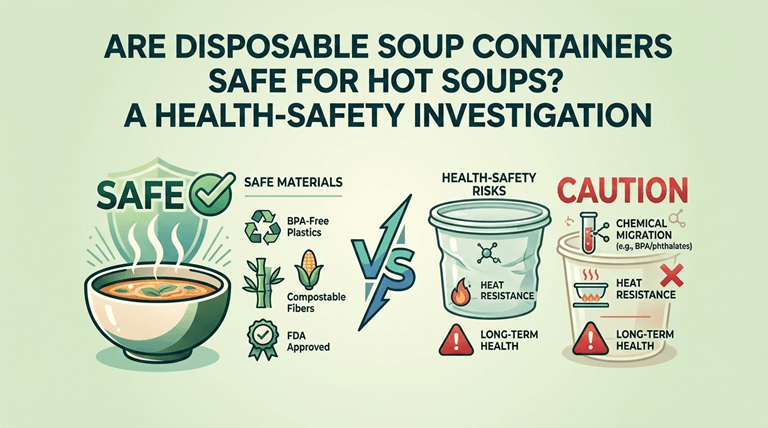
The majority of the soup containers are made of food-grade polypropylene paper or purpose-made plastic that is capable of withstanding high temperatures. High-quality paper containers often have an inner lining that ensures leakproofness but maintains structural integrity. Polypropylene containers of high quality are designed in such a manner that they do not soften when in contact with hot liquids. Before being used commercially, reputable manufacturers do a lot of testing to guarantee that their products comply with national and international food safety standards.
Chemical Stability and Heat Resistance
The potential for chemicals to migrate into food is one of the greatest issues with hot food packaging. Research by the scientific community suggests that when used within their intended temperature span, appropriately certified food-grade containers are developed to reduce this risk. The issues can be obtained only when utilizing low-quality containers or products that are designed to be used for cold foods and boiling liquids. Using certified packaging from certified suppliers greatly minimizes the possible health risks while making food safe to be consumed.
The significance of food safety standards
In most countries, there are stringent laws on materials that come into direct contact with food by the government authorities. Before their products can be approved, manufacturers have to adhere to hygiene requirements in migration tests and quality assurance processes. These requirements are a test of the capabilities of packaging against real-life storage and serving environments. Companies acquiring certified containers not only show heightened responsibility for consumer safety on their part but also safeguard their own reputations in a competitive food service environment.
Performance During Transportation
Hot soup packaging should be able to withstand more than just high temperatures. STP Vibration—Containers also have the movement stacking vibration and a long delivery time. Proper containers are able to hold their shape and avoid leakage and loss of heat during transportation. Secure lids are also rather instrumental since they reduce contamination possibilities and eliminate spills. Stable packaging enhances customer satisfaction since food is packaged in an attractive manner, which is fresh and ready to be eaten without making the table messy.
Environmental Considerations
A lot of contemporary soup containers are sustainable designs. Manufacturers are shifting to more recyclable plastics that use responsibly sourced paper that is recyclable and better manufacturing techniques that achieve environmental impact reduction. Other containers can be recycled in accordance with waste management facilities in the area where other containers can be used, or they can be made with renewable materials. By supplying businesses with environmentally responsible packaging options, it is possible to promote sustainability objectives without decreasing food safety or performance.
Business and consumer tips
It is always essential that restaurants ensure that their containers are rated to be used under hot food conditions. It is more certain when purchasing items from known suppliers, who have recognized food safety certifications regarding the quality of their products. People are advised not to heat up the takeaway containers unless the manufacturer mentions that they can be put in the microwave. Through the intended usage recommendations, not only does it preserve the integrity of the packages, but it also preserves the safety of the food consumed in the dining session.
Final Thoughts
Scientific evidence and industry standards are available to indicate that the certified food-grade containers of soups can be used to provide hot soups safely, provided that the containers are properly used. They are a reliable option in the current food business due to their capacity to withstand heat, prevent leakages, and be able to satisfy the strict tests. The bottom line of safety is choosing quality products from reliable suppliers instead of the cheapest products. With packaging technology ever strengthening, consumers can look forward to even healthier, more robust, and greener packages that will allow them to enjoy hot meals on the move.
Popular on OTW Right Now!




About The Author

Gagan Bhangu
Founder of otechworld.com and managing editor. He is a tech geek, web-developer, and blogger. He holds a master's degree in computer applications and making money online since 2015.