
How Deep Can an Underwater Scooter Go?
When you start looking for an underwater scooter, often called a Diver Propulsion Vehicle (DPV), the first spec you’ll likely check is the depth rating. But what does that number actually mean for your next trip to the beach?
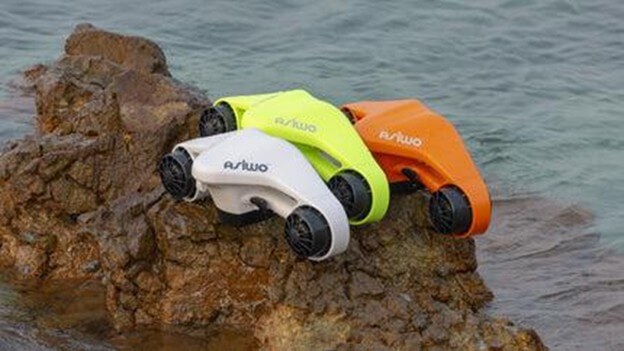
Whether you are a casual user or a professional diver, there are limits to how deep you should take your diving gear and yourself. In this blog, we explore how deep you can dive with each product and help you choose the correct dive gear for your next dive!
Typical Depth Ranges: Which One Do You Need?
Not all underwater scooters are built for the same pressure. Most models on the market fall into three general categories:
- Recreational Scooters (10m – 30m): These scooters are ideal for family fun vacations, snorkeling trips for novices, or pleasure seekers. Suitable for touring open, sunlit reefs or encountering marine animals like sea turtles in shallow waters.
- Mid-Range Models (30m – 50m): Suitable for the Watersports Enthusiast & the Freediver, these scooters have tighter seals & increased use of heavier-duty materials, ideal for riders who venture into the intermediate depth range.
- Professional DPVs (50m+): For the serious scuba divers and technical underwater explorers. These are heavy-duty units that have been designed and built to be nearly “crush-proof” for the serious diver. While these DPVs are relatively expensive and heavier, they offer superior performance for the serious diver.
What Determines the Depth Range of an Underwater Scooter?
A depth rating is not just a random number; it is a reflection of the device’s structural engineering. While two scooters might look identical on the surface, their internal “armor” determines how they handle the mounting pressure of the deep.
Housing Rigidity
As you descend, the pressure will challenge the housing equally from all sides, pushing in gently, or not so gently, depending on depth. At 30 meters, the pressure is four times that at the surface. To combat this, the housings should be made using reinforced plastic or hard-wearing alloys. If a housing is too flexible, it will allow water to ingress, as minute amounts of deformation will allow water to penetrate past the seals.
The Precision of the Sealing System
The main barrier is the O-ring – a rubber gasket. For devices operating deep underwater, a single O-ring seal is insufficient in most cases. The top-of-the-line water scooters use a “Double O-ring” system: the first ring handles the major portion of blocking water, while the second is ready to prevent moisture if the pressure gets very high.
Magnetic vs. Mechanical Triggers
Mechanical buttons that are made the traditional way have to have a shaft hole in the body. That is a natural point where leaks can happen. Now, a lot of depth scooters come with magnetic induction switches. Riders can start/use the motor without breaking the scooter’s housing since the electric signal is transferred through the solid wall, so the main source of leakage is eliminated.
Dynamic Shaft Sealing
The rotating shaft that moves the motor to the propeller is the hardest part to make sure it doesn’t get flooded. There have to be very accurately made “dynamic seals” that don’t let the water in when they rotate at thousands of revolutions per minute under very high pressure – these are among the main features that differentiate tools for professional divers from those for leisure divers.
Depth Rating vs. Real-World Use
One of the biggest mistakes new users make is treating the depth rating as a target rather than a limit.
Lab Tests vs. The Ocean
Manufacturers test scooters in controlled tanks. In the real ocean, you have waves, salt, and temperature changes—all of which put extra stress on the seals.
The Safety Buffer
Suppose a scooter is rated to be used up to a maximum depth of 20 meters. The best idea is to use it at 10 or 15 meters. Remaining a little above the limit will give the machine “breathing room” and prevent the deterioration of the seals for a longer time.
Visibility Matters
Keep in mind that, as you dive down, the sunlight that penetrates the water will become less and less. Even if you have a scooter that is going to 40 meters, very often most of the beautiful fish and really good views will be in the top 10-meter range.
How to Choose the Right Depth for Your Activity
You don’t always need the deepest-rated scooter. It’s about matching the tool to the task:
- Snorkeling: A 10m-rated scooter is perfectly adequate. Most of your time will be spent on the surface or just a few meters down.
- Freediving: You will need something around the 30m mark. It will not only help you dive deep with the assurance of your gadget, but also, you will be able to get back to the surface faster.
- Scuba Diving: Level your sights to 40m or more. As scuba dives are longer and deeper, you require a motor that can withstand the continuous pressure of diving.
How the ASIWO Manta Performs at Depth
So, besides the numbers on the depth ratings chart, the more important question is what do these depths mean in real life, while the device is underwater. The ASIWO Manta underwater scooter is rated for a maximum depth of around 40 meters, which is already well beyond what most snorkeling or casual exploration requires. Normally, you would at most swim around the top 510 meters of water, so this extra depth is a feature that mainly provides safety rather than being something you would go after.
In fact, within the above-mentioned range, features such as control and stability will be more important factors to consider rather than pushing the limits of depth. Being a nice, light piece of equipment, the Manta does a great job in the water in helping you keep your pace with minimal effort. When it comes to snorkeling and mellow underwater activities, this type of impact is much more helpful than just possessing the ability to go deeper.
What Happens If You Push Too Far?
Depth exceeding happens not in phases but at once. Exceeding the depth limit rarely occurs gradually and cumulatively, but rather all at once – if you take a shallow-water scooter too deep:
- Seal Failure: The pressure squeezes the rubber seals until they fail, causing a “micro-leak.
- Short Circuits: Once salt water touches the battery or motor, the electronics will most likely be fried instantly
- Button Jam: On occasion, the pressure is so great that the “ON” button is held down so that the scooter no longer stops when the button is released.
Safe Riding Guidelines
So that your Underwater Adventures always stay fun and safe, follow these simple rules:
- Respect the Spec: If the manual says 20 meters, don’t try for 21.
- Check Your Seals: Before every trip, ensure that the seals are clean and are not covered with sand or hair. At depth, even one grain of sand will cause a leak.
- Rinse After Use: Always rinse your scooter with fresh water after a salty dive. Over time, the salt crystals can act as sandpaper against the seals.
Conclusion
10 to 50 meters might be the official answer, but the “real” answer is as deep as it was deemed safe to build the slides. Best bets for average vacationers are lightweight, recreational models. It’s not too fiddly for the average vacationer, and it protects against dangers at the depths where the best sights are. By respecting the limits of your gear, you’ll make sure your underwater scooter remains a trusty companion for many summers to come.
Popular on OTW Right Now!




About The Author

Gagan Bhangu
Founder of otechworld.com and managing editor. He is a tech geek, web-developer, and blogger. He holds a master's degree in computer applications and making money online since 2015.