
Creative Ways to Use a Drone With Camera
A drone with a camera can do far more than capture a quick overhead shot. It can add movement to personal films, help document events, improve property photography, and give you a safer view of hard-to-reach spaces. The key is to fly with a purpose instead of sending the drone up without a plan. When you match each flight to a specific goal, your footage becomes more useful, more cinematic, and more consistent. Aerial filming works especially well for travel, outdoor activities, family milestones, creative projects, and practical visual checks around land or buildings. Whether you want stronger storytelling or a better angle on everyday scenes, a camera drone opens up perspectives that handheld shooting simply cannot deliver from the ground.
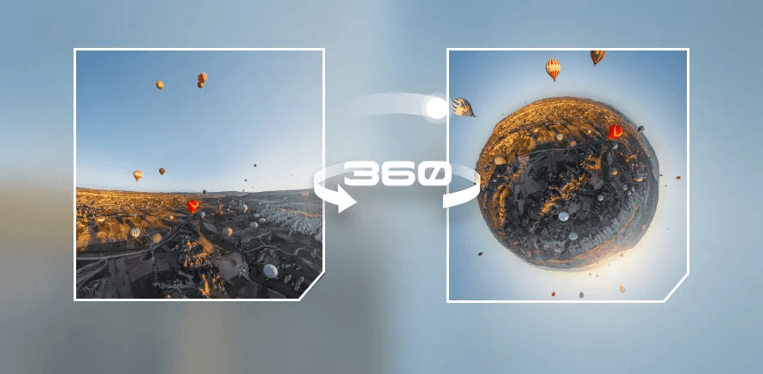
Tell Better Stories With Aerial Video
Add Drone Footage to Events and Personal Stories
Drone footage is best used to provide context or feeling for a story. An aerial opening shot can quickly establish the location of a wedding, family and child’s reunion, child’s birthday, or travel video, and it helps round out the edit. A wide pullback over a beach, park, cabin, or venue gives viewers a sense of scale that ground footage cannot match. You can also use drones with cameras to capture key transitions, such as guests arriving, a couple walking outdoors, or a family gathering in the backyard. These shots don’t have to be difficult. Avoid complex and erratic flight; it tends to look less refined than more aggressive flying. Stick to moments that lend themselves to your sense of perspective, then use aerial pieces to add to the story—not detract from it.
Create Smooth Reveals, Tracking Shots, and Transitions
One of the best types of drone footage includes controlled movement. A reveal shot begins behind a tree, roofline, or hill, then moves upward or down to reveal the subject. This is a quick way to add drama, but not in an overdone way. Tracking shots are helpful when following walkers, cyclists, cars using private roads, or boats at a distance, and can be useful to create energy in motion. Drones also help join shots in post-production. An easy forward transition into a subject, close-up shot, and making it appear seamless. This applies to upward lifts, pullbacks, and orbit moves. Move slowly and avoid having too many movements in a single shot. Avoid a combination of many movements – move slowly and keep the footage clean if you can.
Put Your Camera Drone to Practical Use
Photograph Property, Buildings, and Outdoor Spaces
A camera drone is a practical option for showing the full layout of a building. Aerial photos show size, access points, landscaping, parking, and the relationship between the structures of a home, rental space, event venue, farm, or commercial building. A straight-on elevated angle is a good shot for displaying the front of a building, and a higher top-down angle can capture pathways, fencing, patios, and surrounding land. This means that drone photos are helpful for project updates, progress reports and listings. Seasonal changes can also be captured, as well as before and after renovations, or outdoor improvements through time. Ideally, take photos in the soft light of morning or late afternoon, with the lines level with the building and the property well framed within the larger context.
Check Hard-to-Reach Areas From a Safer Viewpoint
Drones can also be used to inspect hard-to-reach areas that are difficult to access or hazardous to walk. Rather than going on the roof or climbing gutters, upper walls, chimneys, or tree lines to check for problems, a stable aerial view can identify visible issues from a safer distance. This is helpful for regular maintenance, storm response and overall building awareness. It can also assist with the evaluation of fencing, drainage paths, and big areas of outside space without walking every area. The aim is not to supplant a professional inspection if required, but to make early visual checks easier and more efficient. Move slowly and maintain a good distance from buildings, and try to use intentional shots to be able to look at it afterward and see what you missed in the show.
Get More Creative With Every Drone Flight
Plan Light, Angles, Routes, and Camera Movements
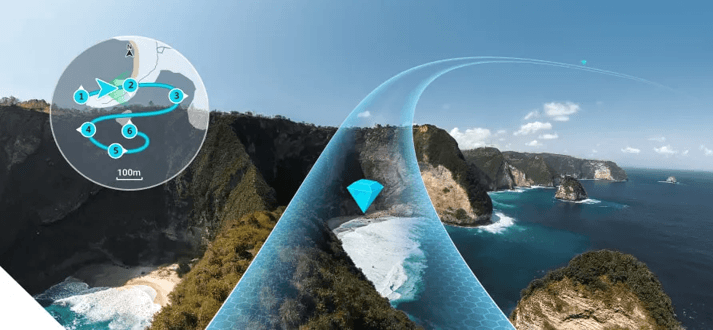
When drone footage is good, it begins before the drone rotates and begins climbing. First, determine what you want the shot to convey: location, movement, scale, or detail. Then, select the hour of the day. Landscapes and buildings are more dimensional with early and late light, as is the contrast and the longer shadows created. Then plan your path and determine where the drone will begin, go, and end. This helps to conserve the battery and stop random flying. Consider the camera shot as well! Just a slight tilt up can show layout; a level horizon gives a more immersive feeling when traveling or for scenic shots. Lastly, correlate one movement to one idea, such as rising, tracking, orbiting, or pulling back. The best and most effective shots are typically the simplest ones.
Try Creative Aerial Filming With Antigravity A1
Antigravity A1 can create an immersive viewing experience with its Vision Flight Goggles, which let you shoot from the viewer’s perspective. The goggles feature a Micro-OLED screen with 2560 × 2560 effective resolution per eye, a 72 Hz refresh rate, and a 90° diagonal field of view per eye to deliver a more engaging live view. The pancake-type optical display system helps to maintain compactness and IPD adjustment (59-72 mm), and diopter adjustment (+2.00 D to -5.00 D) enhances the viewing comfort. The Go Pro goggles will also allow panoramic video viewing, a see-through feature, and external display in real-time for sharing the flight view. They have 30GB of inbuilt storage and support recording on INSV and can last for up to 2.5 hours on battery.
Conclusion
When each flight has a clear purpose, a drone with a camera is much more valuable. You can use it for more impactful personal storytelling, event recording, presentation of property from a more useful angle, or for an outdoor inspection from a safer position. The difference: Intentional planning: subject, the route, the light, the movement before takeoff. This results in cleaner footage and more practical results, whether you are shooting for fun, family, or a project. It’s the little things that can make the greatest difference, such as the time of day or a slow reveal. Next time you fly, do more than the typical overhead shot, and get creative with the footage you make using your drone to get useful information.
Popular on OTW Right Now!

About The Author

Gagan Bhangu
Founder of otechworld.com and managing editor. He is a tech geek, web-developer, and blogger. He holds a master's degree in computer applications and making money online since 2015.