
Can a Portable Power Station Run a Fridge Overnight?
Yes, a portable power station can run a fridge overnight if the unit has enough battery capacity, sufficient AC output, and enough surge power to handle compressor startup. In most refrigerators, no power is used continuously, and overnight use is often more convenient than most would believe. The key is to match the fridge’s energy consumption with the power station’s output, not just the large wattage listed on the box. Inverter losses, room temperature, door open and close frequency, and whether the refrigerator is already cold before backup start are also to be considered. When it comes to being able to chill food safely overnight, a simple calculation of how long the runtimes will be and what the proper power station specifications are will make it much more obvious what the answer is for your setup.

How Much Power Does a Fridge Use Overnight?
Running Watts, Startup Compressor Startup Surge
There are two different power figures to consider for your fridge when making a backup plan: startup watts and start-up surge. Running watts represent the power used when the compressor is running, while start-up surge is the surge during start-up. Many standard refrigerators run around 100 to 250 watts during startup, but startup can briefly jump much higher. A portable power station must support both numbers, especially surge power, or the fridge may fail to start even if the battery is large enough. That is why it is important to do a label, manual, and Start-up check. Start-up compatibility is as important as total battery capacity and anticipated energy consumption for overnight operation.
Fridge Size, Efficiency, and Cooling Cycles
Refrigerator size, age, insulation, and compressor efficiency are also significant factors in overnight refrigerator use. Older models tend to consume more energy and run for a longer time, whereas a compact refrigerator is more energy efficient. Also, refrigerators do not operate continuously, but on and off, and actual overnight use is determined by total energy during several hours of operation, not by the watts used during continued operation. If the fridge door remains shut overnight, the energy required may be surprisingly low in a moderate room-temperature environment if the fridge is well cooled. An excess of unfrozen items in the freezer, excess warm food in the kitchen, or frequent door openings before bed can affect run times. This will help to significantly lower the power consumption of the battery if the fridge is pre-chilled and only opened at night.
How to Calculate Portable Power Station Runtime
Calculate Runtime Using Watts and Watt-Hours
The most basic way to calculate how long a fridge will run while off the grid is to divide its usable battery capacity (in watt-hours) by its average power consumption. For example, if a refrigerator averages 120 watts over 24 hours and the power station provides 1,000 Wh, the estimated runtime is about 8.3 hours. For a fridge that consumes 80 watts, the battery would only last about 12.5 hours. This approach is most effective for decreasing energy consumption based on an average consumption rather than the compressor’s peak running watts. This is an average that can be estimated from the refrigerator’s daily kWh consumption, or from actual kWh usage by using a plug-in power meter. When calculating for overnight backup with realistic averages, the result will be much more accurate than a guess based on the nameplate wattage.
Allow for Inverter Losses and Real-World Conditions
Always consider inverter losses and actual operating conditions in runtime calculations. A portable power station transforms stored direct current (DC) battery electricity to alternating current (AC) electricity to power the refrigerator, which is an inefficient process. The usable output is less than what the battery claims. Other factors such as temperature, battery aging, extension-cord losses, and multiple compressor starts also reduce available run time. To err on the side of caution, many people reduce the listed watt-hour capacity by approximately 10 to 15 percent before doing the calculations. Then add the margin for warmer rooms or heavy use of fridges. If your estimate indicates that you will only need very little power for the night, move up another size. A buffer matters more than a theoretical number.
How to Choose a Power Station for Overnight Use
Check Battery Capacity, AC Output, and Surge Power
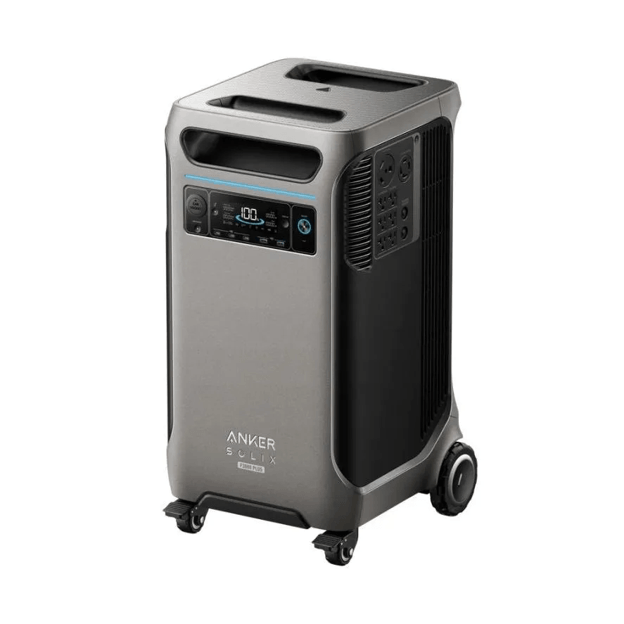
When choosing a backup power source for the fridge, consider the battery capacity first, and then make sure the AC output and surge rating are reliable to start the compressor during a power outage. The bigger the size, the more capacity to power longer nights, warmer rooms, or extra small loads. For those who need a powerful power station, the Anker SOLIX F3800 Plus Portable Power Station provides 3,840Wh capacity and 6,000W AC output power with dual-voltage 120V and 240V support. This is significantly more than a refrigerator requires for start-up, and can increase up to 26.9kWh if more backup is needed. It also features EV-grade LFP batteries that are built for 10 years of use and Wi-Fi and Bluetooth connectivity for power management.
Consider Expandable Storage and Solar Recharging
When you need more than one night of backup, flexible storage and recharging matter. A portable power station that can use extra batteries provides power for longer periods without replacing the unit. Solar input also comes in handy when it’s possible to recharge during the day, particularly for frequent blackouts or off-grid applications. The Anker SOLIX F3800 Plus comes with dual 11-165V MPPT controllers to charge from the solar source at up to 3,200W, replenishing energy rapidly throughout the day. It can also be readily used with 240V gas generators with a 6,000W bypass for extended power outages. Multiple recharge pathways make backup power to an overnight refrigerator more reliable, particularly if power outages last beyond the first morning.
Conclusion
When the fridge battery is sized appropriately, the answer is often yes for a portable power station, which can power a fridge overnight. First, determine the consumption during startup (the start-up surge) and the estimated consumption during the night. Next, compare that number with the power station’s usable watt-hours, but not its headline capacity. Allow for inverter losses and a reasonable safety margin so the refrigerator stays cold until morning. For increased backup capabilities, select the unit that has sufficient surge power, battery capacity for your appliance, and has the flexibility to be recharged in different locations. If set up properly, a portable power station can effectively keep refrigerated food cold, prevent spoilage, and be ready in the event of a power outage at home.
Popular on OTW Right Now!




About The Author

Gagan Bhangu
Founder of otechworld.com and managing editor. He is a tech geek, web-developer, and blogger. He holds a master's degree in computer applications and making money online since 2015.