
Architecting Scalable Streaming Infrastructure: The Enterprise Blueprint for OTT Platform Development Services
The global digital media ecosystem has undergone a structural transformation. What began as a transition from traditional cable systems to standalone mobile video apps has matured into an enterprise-grade, multi-device streaming economy. Today, broadcasters, media conglomerates, telecom operators, and niche content owners across North America, Europe, and the Middle East operate in an environment where consumer expectations are uncompromising. Audiences demand broadcast-quality visual rendering up to 4K HDR, sub-second video startup times, and uninterrupted Adaptive Bitrate (ABR) playback across a highly fragmented device footprint.
However, operating a scalable streaming business requires far more than transcoding video files and embedding a basic HTML5 web player. Delivering high-bitrate video streams to hundreds of thousands of concurrent users across connected TVs, streaming sticks, gaming consoles, and mobile handsets demands a deeply resilient cloud, edge, and client-side architecture.
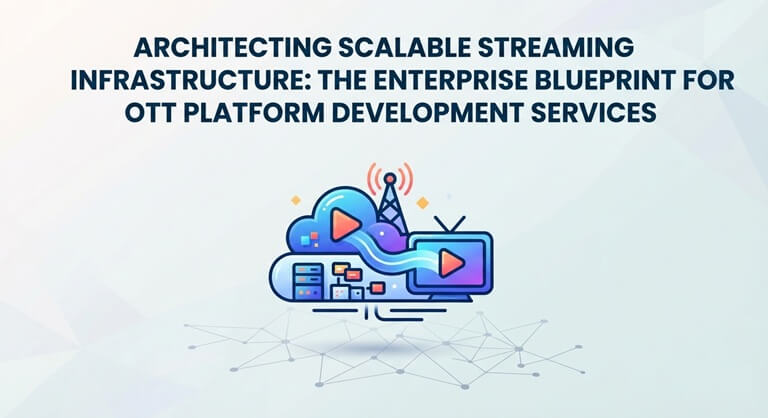
For media enterprises aiming to launch, secure, and monetize digital video assets, partnering with specialized OTT platform development services is a critical strategic decision. This guide breaks down the core software architectures, security standards, monetization engines, and selection benchmarks required to deploy a production-ready streaming service.
┌────────────────────────────────────────────────────────────────────────┐
│ ENTERPRISE OTT SYSTEM ARCHITECTURE │
├────────────────────────────────────────────────────────────────────────┤
│ [ Ingestion & Encoding ] ──> Dynamic ABR Transcoding (HLS / DASH) │
│ │ │
│ [ Security & Compliance ] ──> Multi-DRM (Widevine / FairPlay) │
│ │ │
│ [ Orchestration Engine ] ──> Video CMS & Metadata Management │
│ │ │
│ [ Monetization Gateway ] ──> Unified Billing (SVOD / AVOD / FAST) │
│ │ │
│ [ Global Edge Delivery ] ──> Multi-CDN Mesh + Server-Side Insertion │
└────────────────────────────────────────────────────────────────────────┘
1. The Core Architecture: What Specialized OTT Development Delivers
Engineering an Over-The-Top (OTT) video infrastructure requires domain-specific expertise that generalized software development agencies rarely possess. Video software engineering sits at the intersection of low-latency networking protocols, hardware-level content protection, high-throughput cloud ingestion, and cross-platform client runtime optimization.
Comprehensive OTT platform development services build and maintain five foundational technical pillars:
2. Automated Media Ingestion and Dynamic Encoding Pipelines
Raw mezzanine video files or live SDI/NDI broadcast feeds are computationally heavy assets. Enterprise engineering teams construct automated cloud ingestion pipelines that perform automated Quality Control (QC) checks, extract embedded closed captions, and transcode raw video into dynamic Adaptive Bitrate (ABR) ladders using modern codecs like HEVC (H.265) and AV1. Encapsulated inside HLS and MPEG-DASH containers, these streams ensure that whether a viewer is on a high-speed fiber connection or a fluctuating mobile network, the video player dynamically adjusts bitrates without triggering buffering stalls.
3. Studio-Grade Multi-DRM Security
Major content licensors and Hollywood studios strictly mandate hardware-level Digital Rights Management (DRM) before granting broadcasting rights. Professional OTT developers integrate a unified Multi-DRM framework combining:
- Apple FairPlay: Secures native playback across Apple TV (tvOS), Safari, iOS, and macOS.
- Google Widevine Modular: Encrypts video streams across Android TV, Google Chrome, and Android devices.
- Microsoft PlayReady: Protects Windows environments, Xbox consoles, and legacy connected platforms.
Pairing Multi-DRM with dynamic forensic watermarkingwhich overlays subtle, user-specific tracking identifiers directly onto target video framesallows security teams to identify and neutralize unauthorized restreaming sources in real time.
4. Dedicated Video CMS & Asset Orchestration
Standard web-oriented Content Management Systems cannot support the complex hierarchical taxonomies required for video streaming. A custom-built Video Content Management System (Video CMS) handles deep metadata structures, season/episode relationships, multi-language audio tracks, closed captions (CEA-608/708), localized thumbnail art, and geo-fenced publishing schedules across target client applications.
5. Multi-CDN Edge Delivery and Traffic Balancing
Relying on a single Content Delivery Network (CDN) introduces a single point of failure during high-concurrency events such as live sports tournaments or breaking news broadcasts. Enterprise OTT engineering deploys multi-CDN switching meshes. These edge routing engines measure viewer latency, packet loss, and regional ISP congestion in real time, switching traffic dynamically to the optimal regional edge node without interrupting active playback sessions.
6. Native Cross-Platform Client SDKs
Maintaining feature parity across fragmented operating systems is a primary engineering challenge. Professional development services build native, performance-optimized Client SDKs across:
- Smart TVs: Samsung Tizen, LG webOS, Vizio SmartCast, Android TV/Google TV.
- Streaming Media Players: Apple TV, Roku (BrightScript/SceneGraph), Amazon Fire TV.
- Mobile & Desktop Web: iOS, Android, cross-browser HTML5 players (Video.js, hls.js, Shaka Player).
7. Monetization Engineering: Hybrid Models for Revenue Scale
A resilient technical architecture must be paired with flexible commercial monetization mechanisms. Leading streaming platforms deploy hybrid revenue models to optimize Average Revenue Per User (ARPU) across different audience segments:
| Monetization Framework | Core Focus | Key Technical Requirement |
| SVOD (Subscription VOD) | Recurring subscription tiers, low churn, high long-term value. | Multi-currency billing gateways, automated recurring tokenization, real-time entitlement validation. |
| TVOD (Transactional VOD) | Pay-per-view rentals, early window movie access, live passes. | Micro-transaction processing, time-windowed entitlement logic inside the Video CMS. |
| AVOD & FAST (Ad-Supported) | Free ad-supported linear channels, programmatic ad yield. | Server-Side Ad Insertion (SSAI), VAST 4.2 / VPAID support, SCTE-35 marker parsing. |
8. The Engineering Advantage of Server-Side Ad Insertion (SSAI)
Legacy Client-Side Ad Insertion (CSAI) pauses the video stream on the end-user’s device to request an advertisement from a third-party ad server. This approach creates noticeable buffering delays, increases drop-off rates, and is vulnerable to client-side ad-blocking software.
Modern OTT platform development services implement Server-Side Ad Insertion (SSAI). With SSAI, targeted video advertisements are stitched directly into the primary HLS/DASH video manifest at the cloud server level before the stream reaches the client device. This creates a broadcast-quality, continuous playback experience that bypasses ad blockers completely while maximizing ad fill rates.
9. Bespoke Engineering vs. White-Label Platforms
When evaluating OTT engineering options, business leaders face a key decision: commission a fully custom software architecture or deploy via a pre-engineered white-label platform framework.
┌────────────────────────────────────────────────────────┐
│ STRATEGIC DECISION MATRIX │
├────────────────────────────────────────────────────────┤
│ CUSTOM BESPOKE ENGINEERING │
│ ✔ Complete ownership of source code & core IP │
│ ✔ Fully customized UI/UX and native player engines │
│ ✖ Higher initial capital expenditure │
│ ✖ Longer initial development timeline (6–9 months) │
├────────────────────────────────────────────────────────┤
│ MANAGED WHITE-LABEL PLATFORM │
│ ✔ Accelerated market entry (weeks instead of months) │
│ ✔ Pre-certified multi-device client applications │
│ ✖ Ongoing SaaS licensing or revenue-share costs │
│ ✖ Feature customization bound by vendor roadmap │
└────────────────────────────────────────────────────────┘
- Custom Bespoke Engineering: Designed for tier-one broadcasters and large enterprise networks requiring unique UI/UX designs, custom recommendation algorithms, or deep integration into complex legacy back-office systems (e.g., custom CRMs, proprietary billing engines). Custom builds provide complete ownership of source code and technical intellectual property.
- White-Label Platform Frameworks: Suited for mid-market content owners and niche publishers seeking rapid market entry with lower initial capital expenditure. Pre-built white-label frameworks offer pre-certified native client apps across major TV app stores, automated maintenance, and predictable operational costs.
10. Key Benchmarks for Evaluating OTT Development Partners
To ensure your digital transformation initiative executes cleanly without accumulating technical debt, apply these enterprise benchmarks when selecting an OTT engineering firm:
- Demonstrated Multi-Device Native Capabilities: Confirm that the partner develops native client applications for all major TV operating systems (Tizen, webOS, tvOS, Android TV, Roku) rather than wrapping basic web-views, which degrade UI responsiveness.
- Strict API-First Architecture: Ensure the underlying backend provides fully documented RESTful APIs and GraphQL endpoints, allowing seamless integration with existing enterprise data lakes, marketing automation suites, and identity providers.
- Proven High-Concurrency Resilience: Request verified historical performance data demonstrating how the vendor’s infrastructure maintains sub-second startup times and zero-downtime failover during major live event concurrency spikes.
- Complete Data Ownership & Privacy Compliance: Verify that software contracts explicitly grant you 100% ownership of subscriber data, viewing analytics, user credentials, and video metadata, while complying with regional data regulations (such as GDPR or regional GCC data residency frameworks).
Conclusion & Strategic Roadmap
Building a successful streaming platform requires balancing cloud video engineering with disciplined commercial operational management. By partnering with experienced OTT platform development services, media organizations can deploy resilient, secure, and high-throughput video delivery systems that drive long-term business value.
To move your video initiative from strategy to execution:
- Audit Your Technical Requirements: Define your video catalog volume, target live concurrency projections, and required device application coverage.
- Define Your Commercial Structure: Align your content acquisition overhead with realistic subscription (SVOD), transactional (TVOD), or ad-supported (AVOD/FAST) monetization models.
- Engage Proven Video Engineers: Consult with established technical providers such as ARYtech or specialized streaming platform providers like Vodistryt o design, secure, and scale your digital streaming business.
Popular on OTW Right Now!

About The Author

Gagan Bhangu
Founder of otechworld.com and managing editor. He is a tech geek, web-developer, and blogger. He holds a master's degree in computer applications and making money online since 2015.