
AI Song Generation in 2026: What These Tools Actually Do for Non-Musicians
Music used to be one of the last creative fields where you needed years of training, expensive gear, or a collaborator before you could produce anything finished. The barrier is noticeably going away. With AI music software that enables users without musical backgrounds to take an idea and transform it into a complete, mixed composition — including the music and vocals — a new class of software has emerged that lets users realize their musical vision without the need for an instrument.
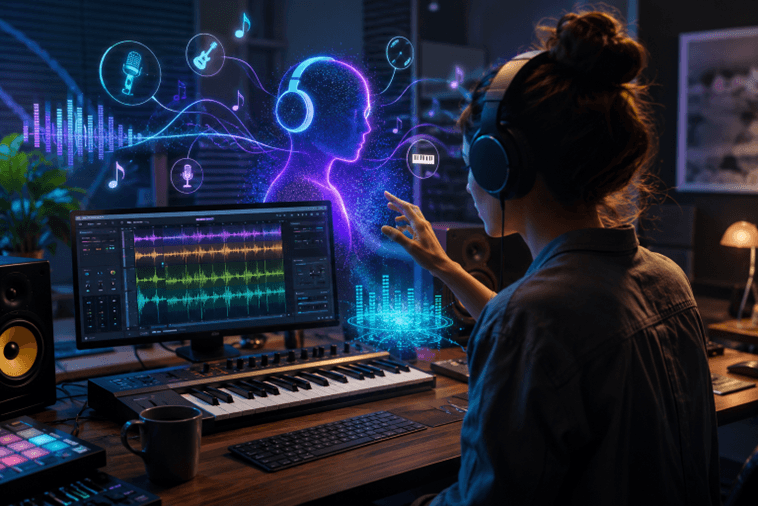
For anyone in tech, marketing, content, etc., it’s important to understand the capabilities and limitations of this generation of tools, as the typical use cases are much broader than first realized.
From text to a finished track
The primary workflow is simple enough. You enter an emotion, genre, mood, or theme, or even a complete set of lyrics, and the model composes a song on your behalf. Better tools aren’t a novelty; it’s a workspace: you can iterate on lyrics, compare versions, adjust the style, and keep the takes you like.
A good example of this approach is GoAISong, an AI song generator that lets you start from an idea, your own lyrics, a short story, or even audio you already own, and work it into a finished, downloadable track. It focuses on creating an artifact that could be used for something else, not a one-off demo — can play it back and save it, and play the different versions, can export it.
Where it’s genuinely useful
A few patterns have emerged for where AI-generated music earns its place:
- Content and videocreators who require original theme music that is optimized for a particular video instead of the standard stock music looping.
- Businesses and marketers who are creating a jingle, ad, or social clip without having enough money for a studio session.
- Personal projects — birthday songs, wedding tracks, gifts — where the sentiment matters more than chart-ready production.
- Prototyping for musicians who want to listen to a recording before putting a lot of effort into it.
What to keep in mind
These tools are not magic, but they’re immensely powerful. Quality is still dictated greatly by the prompt as well as the lyrics that are fed in by you — if the input is ambiguous, the song can be forgettable. It also will depend on the coverage offered as a licence term; depending on the platforms you use, the coverage may vary widely—if you want to use a track commercially, make sure you realise what rights are actually offered and if a licence certificate is offered. That said, the technology has advanced at a rapid pace, but its main use is as a starting point, or a piece for human consumption, where it succeeds at “finishing” the product, which is where the “finished” music is actually meant to be used.
The bigger shift
What’s cool is not necessarily any one thing — it’s the fact that making music is a problem of software. AI music tools have democratized “I have an idea for a song” just as design tools did for creating graphics for non-designers, and they’ll push that idea a step further. Those who build, make, and create would welcome that to have in their back pocket.
If you’ve never tried it, the lowest-risk way is to start with a free tier, feed it a clear idea, and see how close the first result gets.
Popular on OTW Right Now!


About The Author

Gagan Bhangu
Founder of otechworld.com and managing editor. He is a tech geek, web-developer, and blogger. He holds a master's degree in computer applications and making money online since 2015.