
A Practical Semrush One Tutorial for Managing SEO More Efficiently
**This post is sponsored by Semrush. When you purchase through links in this article, we may earn an affiliate commission from Semrush.**
SEO has become strangely complicated over the past few years.
| SEO Challenge | Traditional Workflow | Using Semrush One |
| Keyword Research | Multiple disconnected tools | Unified keyword research with access to a 27.5B keyword database |
| AI Search Visibility | Difficult to measure | AI Visibility Toolkit with Visibility Score and AI Share of Voice |
| Competitor Analysis | Manual tracking and spreadsheets | Real-time competitor insights in one dashboard |
| Backlink Monitoring | Limited or outdated databases | Access to a 43T backlink index |
| Site Audits | Separate technical tools required | Integrated site audit and performance tracking |
What used to feel relatively straightforward now involves tracking search intent changes, monitoring AI-generated search visibility, analyzing competitors, fixing technical issues, researching keywords, and constantly adjusting content strategies. For many marketers, bloggers, and business owners, the hardest part is no longer finding tools. It is figuring out which tools are actually useful.
That is where many people start getting frustrated.
Most SEO platforms promise massive feature lists, endless reports, and advanced analytics, but once you log in, the experience can quickly become overwhelming. You spend more time jumping between dashboards than actually improving your content or growing your traffic.
That is one reason Semrush One Solution has been getting more attention lately. Instead of focusing only on individual SEO tasks, it helps organize multiple parts of the workflow into one practical system. It does not magically solve everything overnight, but it does make the process feel more manageable.
This tutorial focuses on how someone can realistically use Semrush One to improve their workflow without getting buried in unnecessary complexity.
The first thing worth understanding is that no SEO tool should completely replace strategy or critical thinking. Many tools are honestly overrated because they focus more on impressive features than real usability. The smartest approach is usually to combine tools based on your actual needs instead of blindly following popularity.
Still, Semrush One is effective as it saves marketers time in areas where they would typically spend it.
Another thing that makes Semrush One so great is the magnitude of the data that it provides. It is incredibly useful when researching competitors, identifying ranking opportunities, and tracking visibility across different markets with the platform’s access to a 27.5B keyword database and a 43T backlink index. Rather than just having a few snapshots of SEO data, users can work from a much more extensive search environment.
A good place to start is simply learning the layout and understanding where the essential tools live. For beginners, the guide called “Getting Started with Semrush: A Tutorial for Navigating the Essentials” is genuinely useful because it explains the platform in a way that feels approachable rather than overly technical.
The keyword research is typically the initial application of Semrush One.
One of the most common issues that people face is starting off with big keywords with a large amount of search volume. Some of the highest traffic terms can be super competitive & challenging to rank for. Better, though, is the method of discovering the keyword phrases that offer reasonable chances for ranking and that have clear user intent.
Suppose you have a small technology blog, for instance. If you’re looking for a general term, such as the best laptops, you might try a more specific keyword, like best budget laptops for remote work” or “lightweight laptops for students.” You can compare search volume, competition level, related questions, and keyword variations within one single tool, in Semrush One.
Just that saves a lot of time.
AI search visibility is an emerging trend that is gaining prominence. While traditional ranking is still relevant, more marketers are becoming aware of the frequency with which their brands are mentioned within AI-driven search experiences. AI Visibility Toolkit tools, such as AI Visibility Score and AI Share of Voice features in Semrush One, can help users see beyond the basic search ranking metrics and gain insight into their content’s visibility.
For instance, a Visibility Score, which ranges from 0 to 100, could indicate whether AI-powered search results are increasing or decreasing in visibility over time. AI Share of Voice provides a more accurate representation of the percentage of the time a brand is mentioned in the context of rivals in AI-generated answers. These metrics can help to pinpoint issues before traffic begins to drop off.
Competitor analysis is another step where real insights can emerge, and is the next step. One of the most helpful features of Semrush One is the ability to easily look at the traffic from the competing websites’ pages. Rather than blindly testing and trying what seems to work, you can learn from real ranking pages and discover patterns.
Perhaps competitors are going into the topics in more depth. Perhaps there is a sort of handful of content that is easier to read. Sometimes it’s not even better writing. It may just be better internal linking or addressing frequently asked questions.
This is where Semrush One’s visibility data, backlink analysis, and AI search trends come into play, eliminating some of the guesswork.
The other area that can come in handy is content planning. Many people, they just create articles randomly without knowing how topics are related. That can result in uncoordinated traffic and rankings.
Within the Semrush One platform, you have the ability to organize keywords into groups that are related, research topic ideas, and create content clusters that have greater long-term strategic value. This is more significant than ever since search engines and artificial intelligence-powered systems have shifted their focus from targeting specific keywords to building topical authority.
This change is significant.
Improving the rank of a single page is no longer the only aspect of modern SEO. It’s more about creating general ‘visibility’ and ‘relevance’ within a topical area. Semrush One eases this process by connecting content opportunities as opposed to working on each keyword as a standalone project.
Many users don’t think about using site audits.
Technical SEO might seem like a daunting task, but as mentioned, often the biggest issues are easily solvable if you know where to look. You might have broken links, duplicate pages, slow loading speeds, missing metadata, or crawl issues that can slowly degrade rankings.
Semrush One gives a more comprehensive view of site health, allowing users to focus on site issues that matter and not on a manual check. There is no standard of perfection aimed at. It is enhancing the overall user experience and search engine performance, but without expending too much effort on the insignificant.
Many marketers will love one thing about Semrush One, which is being able to monitor progress in a more realistic manner.
Quality SEO results don’t happen overnight, and seeing the position change in each day’s update shouldn’t cause you any stress. It’s more beneficial to track long-term changes in visibility, organic traffic trends, and engagement metrics over time. It is often more helpful to see a gradual improvement, rather than reacting to the small improvements and decreases.
However, it is crucial to keep in mind that One by Semrush is extremely effective when combined with superb execution. While a tool can reveal opportunities, content must be relevant and useful to those seeking answers and easy to read.
This equilibrium is crucial, particularly as AI-driven search experiences have changed the way information is surfaced on the Internet.
The other error that people make is attempting to use all of the features right away. The more sensible way to go is to knock the most vital workflows first. For most users, starting out, it is sufficient to get the benefit of these resources: keyword research, competitor analysis, content planning, and site audits.
It evolved naturally over time and is easier to use.
The benefits of these features are that they have real-world applicability rather than vanity metrics. A number of SEO tools bombard end-users with graphs and reports that have no impact on actual decisions. One’s advantages, such as AI Share of Voice, tracking, keyword clustering, and backlink analysis, seamlessly align with marketers’ everyday workflows, making One more effective.
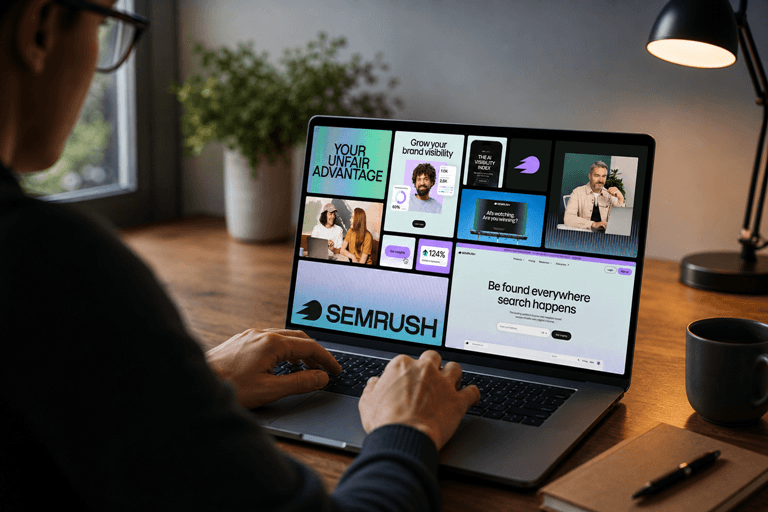
If your current SEO process feels scattered, exhausting, or overly dependent on disconnected tools, it may be worth simplifying your workflow. Explore Semrush One, learn the essentials step by step, and focus on building strategies that save time while creating results that actually matter long term.
Popular on OTW Right Now!



About The Author

Gagan Bhangu
Founder of otechworld.com and managing editor. He is a tech geek, web-developer, and blogger. He holds a master's degree in computer applications and making money online since 2015.