
A Practical Guide to Interpreting Vehicle History Information
A man buys a Cherokee off a private seller. Six months go by without the car giving any reason to worry about it. Starts in the morning, gets driven, parked at night. Normal.
Then one afternoon, a mechanic pulls the codes and finds three stored faults that were cleared recently, plus evidence of a transmission repair nobody mentioned. The seller is long gone. The Cherokee is the buyer’s problem now.
This happens more than people assume, and it isn’t always a deliberate con. Sometimes the person selling a car bought it that way themselves and passed the problem along without knowing. Sometimes they knew exactly what they had. The buyer finds out either way, usually in a waiting room, staring at an estimate they weren’t expecting.
Most of what gets missed in a used car purchase gets missed not because it was hidden well, but because nobody explained where to look before the purchase happened. You figure it out afterward. This is the part that usually comes before that.
What the VIN Report Actually Shows and What It Doesn’t
Seventeen characters on a plate at the base of the windshield and on a sticker inside the door jamb. That number has followed this car since the day it was built. Write it down before the conversation goes anywhere.
Carfax Reports compile records tied to that number. Title history, ownership changes, reported accidents, every dealer visit where someone typed the mileage in before they did anything else, auction records, open recalls. The report comes back as a timeline going years into the past, and most buyers are surprised by how long it is.
Here’s what the report won’t tell you, though, and this part matters as much as what it does show. Anything that wasn’t officially reported doesn’t exist as far as the database is concerned. Two people settle a fender bender with cash in a parking lot and agree to keep insurance out of it; the repair is invisible. A small shop that doesn’t feed into the national databases fixes a frame and moves on, gone. The report is honest about what got recorded. It just doesn’t know what to do.
So a clean report is good. It’s genuinely good. It just doesn’t mean the car has no history. It means no history that anyone wrote down.
Reading the Title History Without Glossing Over It
Most people skim the title section of the VIN report too fast. This is the part worth slowing down for.
At some point,t an insurance company looked at what it would cost to fix that car and decided it wasn’t worth it. They paid out, took ownership, and stamped salvage on the title. No amount of good repair work changes that. The car could run perfectly for another ten years, and the title still says what it says.
After that, someone picks it up, fixes it, and gets it through a state inspection. Which they did. What the state confirmed is that the car met the minimum standard to be back on public roads, not that whoever fixed it did a thorough job of it. That’s a rebuilt or reconstructed title, and that distinction is worth understanding before you’re already interested in the car.
Flood titles are the ones that make experienced mechanics pause. Water damage to an electrical system isn’t something that gets fully fixed; it gets managed, and sometimes not even that. Moisture sits in connectors and harnesses and corrodes slowly over months. A flooded car can seem completely normal for half a year before the electrical faults start showing up, random, hard to pin down, and expensive to chase. Some of these cars get dried out and detailed and sent through a couple of private sales into a state where buyers have no reason to suspect anything. The VIN report usually catches it. Usually.
Lemon law buybacks are less common but worth knowing about. The manufacturer gave up trying to fix it. Some states put that on the title. Others don’t require it. Either way, it tends to show up in the report regardless of what the physical title says.
Look at the ownership history, too. How many people have had it and how long each one stayed. Someone who kept a car for six months and moved it on didn’t fall in love with it. Four owners in three years is a pattern worth sitting with before you become the fifth.
The Odometer Entries in the Report vs. What the Dash Says
The VIN report logs the mileage every time the car goes somewhere official. Dealer service, registration, and state inspection. Line those readings up from oldest to newest and just look at them. Numbers that go steadily up over the years are fine. A reading that goes backward, or a stretch where the mileage reappears noticeably lower than where it left off, is the conversation to have before the test drive.
Digital odometers made it harder to tamper with than the old mechanical ones, but not impossible. A salvage yard cluster showing lower miles, some reprogramming equipment bought online, and someone who’s done it before.
Everything the report missed is still in the car somewhere. Pedal rubber doesn’t wear through to bare metal at 58,000 miles. Neither does a seat bolster crack and compress like that. The car has been somewhere the odometer isn’t telling you about. Believe the bolster before you believe the dash.
Accident History That Never Made It Into Any Database
The report shows accidents that went through insurance. That’s it.
Private cash settlements happen constantly. Someone gets clipped in a lot, the other driver hands over $800, and they both move on. A body shop fixes it, and nobody reports anything to anybody. That repair might have been done well. It might have been done to look fine from ten feet away. Either way, it isn’t in any database, and you won’t find it by running a VIN.
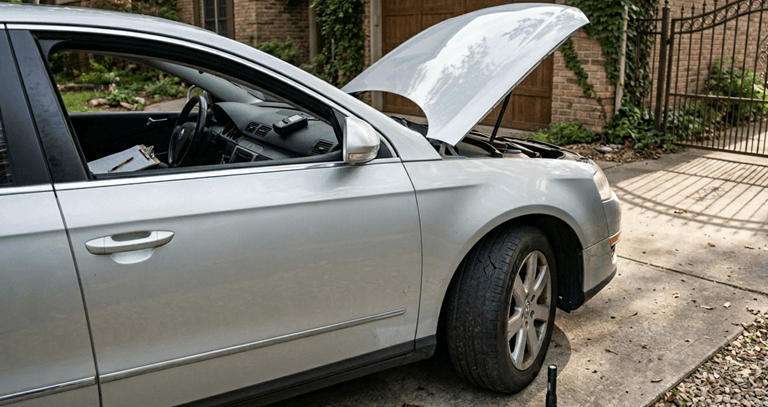
You find it by looking at the car. Hood up, get to the front, and look back along both sides. The hood to fender gap, the bumper to headlight gap. Both sides should look like each other, and the spacing should stay consistent along its length. A car that came off the line straight has consistent gaps. One that got hit and put back together usually doesn’t, not perfectly anyway.
Look at the door jambs when the doors are open. Factory paint in those areas was applied before the car was assembled and looks a certain way. A door or quarter panel that got replaced means someone had to mask and shoot that jamb separately, and it sometimes looks slightly different, with a different texture, faint overspray on a rubber grommet, or a bolt head.
Every window has a date code pressed into one corner, small enough that most people walk right past it. On original glass, it’ll be within a few months of when the car was built. Windshields get replaced constantly, rocks and chips, that means nothing. Find a side window or rear quarter glass with a date years newer than everything around it, and something happened on that corner of the car that the body panels aren’t telling you about.
Take it outside in real light and walk slowly along the side panels from a low angle. Factory paint and repainted paint don’t age the same way, and in the right light, that difference shows up, in the texture, in the color, sometimes just in a feeling that one panel doesn’t quite belong with the rest.
Service Records and the One Thing Most Buyers Don’t Ask About
A glovebox with dealer printouts, shop invoices, and an oil change sticker on the door jamb belongs to someone who paid attention. An empty glovebox belongs to someone who either didn’t keep records or didn’t have any to keep, and those are two different situations worth telling apart.
When there’s nothing, ask where it was serviced and call that shop yourself before you make any decisions. Dealers almost always have records going back years. Independent shops vary, but it’s worth the call.
What you’re trying to work out is whether someone actually looked after this car or just drove it until something broke. Oil changes are the basic measure of that, every 5,000 to 7,500 miles, roughly depending on the car.
Timing belts are the thing most buyers never think to ask about,t and probably should. Rubber belt, specific replacement interval, usually somewhere between 60,000 and 105,000 miles, depending on the manufacturer. On an interference engine, when it goes, it goes completely. The pistons and valves have nothing keeping them apart. They find each other,r and that’s the engine done. A car sitting past that interval without a record of the work is carrying a risk the asking price probably doesn’t reflect.
While the hood is up, check the transmission fluid if there’s a dipstick for it. Should be reddish and not smell like much. Dark brown with any burnt smell means the transmission has been running on neglected fluid for a while. How long is hard to say, but usually longer than it should have been.
The coolant reservoir should be bright, green, orange, or pink, depending on what the car takes. Murky brown means nobody’s touched it in years, maybe ever, and cooling systems that get ignored long enough find ways of making that your problem.
What the Car’s Computer Has Been Logging This Whole Time
Nobody tells you this part. Every modern car is running several computers at once, and those computers log faults the way a phone logs errors, quietly, whether anything visible happens or not. The check engine light is just a notification. The code behind it stays in memory even after someone switches the notification off.
Under $30 at any auto parts store, or free to borrow if you don’t want to keep one. The port is under the dashboard, usually right below the steering column. Push the scanner in, and it reads whatever’s been sitting in there.
Here’s what the reset leaves behind. The check engine light goes dark, but the system’s readiness monitors show incomplete because the car hasn’t been driven enough since the reset to finish running them. A car that gets driven every day should have all of those showing complete. Several showing incomplete on a car that supposedly runs fine every day means someone cleared something recently and was hoping you wouldn’t look that closely.
Airbags don’t go off in minor accidents. There’s a threshold, and it isn’t low. So when a scanner finds a deployment record in the airbag module on a car that looks clean and repaired, that record is telling you something about how hard whatever happened actually was, whether the bodywork admits it or not.
The Mechanic Who Has No Reason to Tell You What You Want to Hear
Most people have never booked a pre-purchase inspection and don’t know anyone who has. It just isn’t something that comes up until after something goes wrong. A friend mentions it while you’re venting about a repair bill. A mechanic brings it up while explaining what they found. You look it up at some point and realize it exists and costs less than a single month’s car payment, and feel a little annoyed that nobody mentioned it before.
Your mechanic, not theirs. Someone who’s never met the seller and has no reason to tell you the car is fine if it isn’t.
They put it on a lift and spend an hour going through it properly. Brakes, tires, frame, suspension, codes, heat, and AC. At the end, you get the actual picture of what the car is, not an edited version of it.
Most of the time, it’s small stuff. Tires are getting toward the end of their life. Rear brakes at maybe 30 percent. A minor seep at the valve cover gasket that’s been weeping slowly for months. Nothing that kills the deal, just things to factor into what you’re willing to pay. Watch how the seller reacts when you bring up the inspection. Most people who have nothing to hide say fine, no problem. The ones who get a little stiff about it are usually stiff for a reason.
Rust, Which Lives Underneath and Shows Up Late
Crouching down next to a car while the seller watches feels awkward enough that most people just don’t. So the underside stays unlooked at, and whatever is happening underneath stays hidden until it becomes a repair bill.
Phone flashlight, two minutes, that’s all it takes.
Light surface rust on brake rotors or small brackets is normal on any used car. What isn’t normal is rust that’s eaten into the frame rails, the structural beams running the length of the car, front to back. Flaking metal there, soft spots, these aren’t cosmetic problems. They’re expensive when they’re fixable at all.
Look at the subframe while you’re down there. Water sits in the places where metal meets metal and doesn’t move, and the subframe has a lot of those spots. That’s usually where rust starts before it shows up anywhere more obvious.
Some sellers spray black rubberized undercoating on the underside before a sale because it covers rust. A thick, fresh application on an older car that otherwise shows its age normally is worth treating with some suspicion.
Those small bubbles along the door bottoms, wheel arches, and around the trunk lid aren’t the beginning of a rust problem. They’re in the middle of one. Rust works inward to outward, and the paint lifting is just the point where it finally ran out of room to hide.
Putting It Together Before Any Money Changes Hands
VIN report first, always. A full report through something like a Cheap Carfax Report runs a fraction of what dealers charge for the same information. Title history, ownership count, odometer entries in order. If anything looks off, that’s the conversation to have before you go any further.
Clean report, then find your own mechanic and get the inspection booked. Tell them you want the full picture, small stuff included, not just a pass or fail.
Real test drive, real roads, enough time for the car to actually warm up. Take someone with you if you can.
Service records, or at least the name of the shop that has them. Call that shop yourself.
Ask about the title, any accidents, and anything repaired. Then just listen to how comfortable they are giving the answer, not only what they say. A person who’s lived with a car for five years answers differently from someone who’s hoping the conversation moves on.
Sometimes you can’t put your finger on any single thing. The gaps are almost right. The seller’s answers are almost satisfying. The test drive was almost fine. Almost is doing a lot of work in that sentence, and usually it means something.
Those are the ones to leave for someone else.
Popular on OTW Right Now!



About The Author

Gagan Bhangu
Founder of otechworld.com and managing editor. He is a tech geek, web-developer, and blogger. He holds a master's degree in computer applications and making money online since 2015.