
Creating a Balanced Living Room with Modern TV Furniture
The television has become more than an entertainment device. In many homes, it is part of the central living-room arrangement, positioned alongside sofas, lighting, bookshelves, decorative pieces, and storage furniture. As a result, the area around a television can noticeably affect the look and functionality of an entire room.
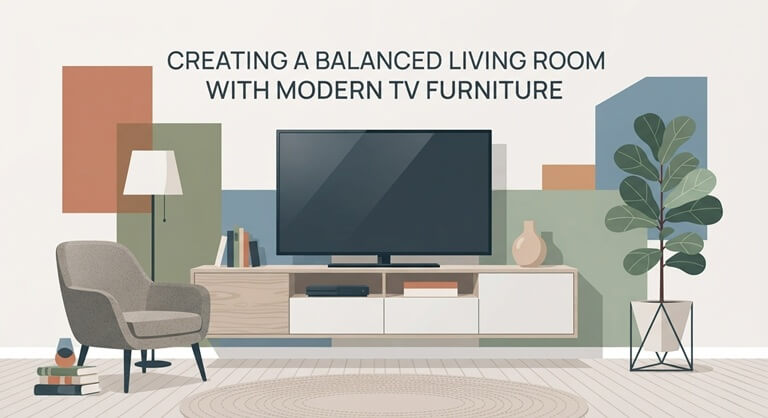
There is more to the selection of furniture in this room than just picking up something that will hold up a TV. Proper design can arrange electronic goods, provide valuable storage, reduce visual clutter, and enhance the room’s overall uniformity. It’s here that modern television furniture has become a vital component of modern home decor.
The Television as a Central Feature
Living rooms are frequently built around a focal point. This could have been a fireplace or a large artwork in the past. In today’s world, the TV often fulfills that role.
A TV on a good stand is likely to bring more organization to the arrangement than one on an improper surface. The furniture underneath provides a visual basis and also allows space for items like media players, game consoles, speakers, and decorative items.
Another factor is that wall-mounted televisions are becoming increasingly popular, which has changed how people interact with this space. A low unit under a screen, even if it is mounted on the wall, can offer storage and act as a connecting line between the screen and the rest of the room.
Combining Style and Practicality
When selecting living room furniture, consider a few key functions. It should blend in with the interior, but have enough room for daily storage.
A modern TV stand can contribute to this balance by combining contemporary styling with practical storage. A television unit can feature cupboards, shelves, drawers, or open compartments that can be used for various purposes depending on the design.
Closed storage helps to keep cables, remotes, gaming accessories, and more out of sight. Open shelving can also be beneficial for book display, ornaments, photographs, or selected technology.
This combination makes television furniture particularly useful in homes where maintaining a tidy appearance is important.
Considering Room Proportions
Furniture size can greatly affect living room aesthetics. If under a large TV, the unit is too small, it can look out of proportion, and if it is too large, it can overwhelm a small room.
Consider the TV size when planning for the room. The width, height, and depth determine how easily a unit fits into the space available.
Low furniture also tends to be found in modern interiors as they offer a level plane that will not make the space feel cluttered. This can be useful in smaller areas to help keep the space open whilst offering storage facilities.
Storage and Everyday Organization
Less obvious advantages of television furniture are organization. Many modern homes have multiple electronic devices, each of which has its own cables, controllers, chargers and accessories.
If they are not stored properly, they can easily pile up around the TV. They have specific spots on shelves and in cupboards, so the space is easier to manage.
Another factor to consider is cable management. Furniture will not solve the problem of stray wires, but suitable openings and compartments can help to tidy up the wiring and make it less visible.
When the living room is not a mess, you can create an organized entertainment zone without having to change the decorations.
Matching Different Interior Styles
Modern television furniture doesn’t necessarily have to have a uniform look. Modern interiors can use a variety of materials, finishes, colors and shapes.
Minimalist rooms can be enhanced with basic pieces that have simple lines and minimal decoration. Television units can pair with wood-effect finishes and matching furniture to lend more traditional ambiance to the interior. Neutral colors can allow for flexibility for the unit to adapt to future decorating needs.
Consistency of visuals is an important factor. While furniture shouldn’t always match the other objects in a room down to the last detail, its scale, tone, and texture should nestle nicely into its context.
Designing Around Everyday Use
The living room is, in the end, a practical area. There, people watch TV, entertain guests, relax, read, play games, and spend time with family members. Furniture should, therefore, be used to facilitate these activities rather than to fill a “blank space.
A convenient viewing position and comfortable TV height adjustment can improve the viewing experience, as can easy access to frequently used accessories. Meanwhile, unnecessary items within the enclosed area can contribute to a more peaceful setting.
This hands-on approach is especially pertinent in an era when living rooms are increasingly used for other household activities as well as entertainment.
Looking Beyond Trends
While interior trends fluctuate, well-designed furniture can last a long time. Homeowners might want to consider versatility, proportions, storage needs, and the ability to fit with existing decor when picking a piece that isn’t necessarily following a “hot trend.”
The television furniture market is expected to be around for a while. Screens will be thinner, bigger, and more wall-mounted, but the need to organize related equipment and create visual balance in the room will remain.
In the end, a well-selected television can have a subtle but significant role in the interior design. It is a way of linking technology to the environment or the furniture, a functional storage option, and it contributes to the organization of one’s home. With proper attention to size, function, and style, the TV space can become part of the room instead of a TV placed in it.
Popular on OTW Right Now!




About The Author

Gagan Bhangu
Founder of otechworld.com and managing editor. He is a tech geek, web-developer, and blogger. He holds a master's degree in computer applications and making money online since 2015.