
Why Cybersecurity Is the Wrong Place to Make Budget Cuts
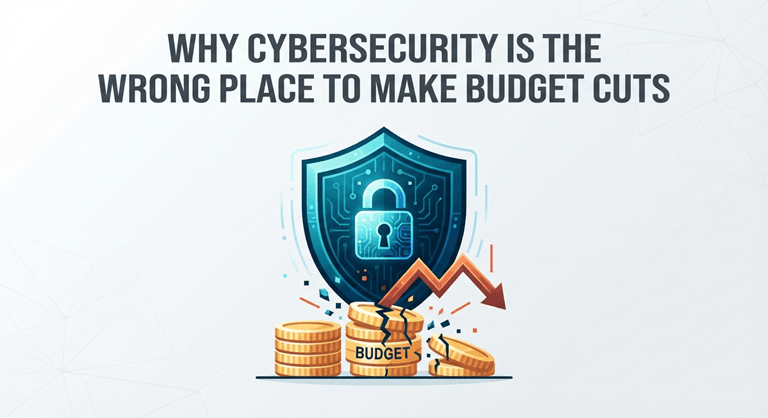
When budgets tighten, cybersecurity often lands on the chopping block first. It doesn’t sell products or bring in revenue, so leadership sees it as a cost to trim rather than a shield. That thinking creates more risk than it saves in dollars.
The truth is a single breach can wipe out years of savings in a matter of days. Before your company makes that cut, it’s worth looking at what’s really at stake and where the real savings live.
The Real Cost of a Security Incident Outpaces Any Budget Line
The average cost of a data breach now sits well above what most companies spend on security in an entire year. That gap alone tells you which side of the ledger deserves more attention. When you compare recovery costs to prevention costs, the math rarely favors cutting corners.
A breach rarely stays contained to IT. Operations grind to a halt while teams scramble to contain the damage, and every hour offline chips away at revenue. Customers notice outages too, and rebuilding their confidence often takes far longer than the incident itself lasted.
Before trimming any part of the security budget, take a closer look at cybersecurity pricing and what different providers actually include. Some plans bundle monitoring, response, and recovery support, while cheaper ones leave gaps that only show up once something goes wrong.
Beyond the immediate financial hit, a breach leaves a lingering mark. Customers who lose trust after an incident often take their business elsewhere, and word travels fast in most industries. Reputational damage rarely shows up on a balance sheet, but it shapes revenue for years afterward.
Attackers Don’t Slow Down When Your Defenses Do
Automated tools and AI-assisted scripts now probe networks around the clock, testing thousands of systems for weaknesses in the time it once took a person to check one. This shift means attacks happen faster and more often, regardless of how tight a company’s budget looks from the outside.
Until recently, smaller businesses would assume that only big businesses with deep pockets were being targeted by hackers. This is no longer the case. Today, attackers are targeting smaller organizations because their “defenses are weaker, and a successful attack is easier to achieve.”
The vast majority of breaches accessible to date go back to a system missing a patch. While it may be a small time saver in the short term, it leaves a door, which automated scanners can open in hours after the vulnerability becomes public. Patching is one of the more affordable defenses that are available.
When companies let go of people and make budget cuts, that usually indicates that their security infrastructure is being scaled back and may suggest a lessened ability to respond. Nothing else may have changed in a company aside from the round of cuts, but it can make the company a more attractive target.
Compliance Penalties Add a Second Layer of Financial Risk
In many industries, the regulators have come to expect a minimum level of security, and any lack of security can result in fines in addition to the cost of the breach itself. Those penalties may be increased as a function of the failure, thus making weak controls a bad bet, not a saving measure.
As cyber insurance policies continue to grow in prevalence, their policies are increasingly asking for proof of particular safeguards before making a payout. Security is an important issue, and if a company skimps on its job, the insurance company may refuse to cover the claim or may demand more premiums the next year. Either way, whatever the initial budget cut was meant to save is lost.
Security requirements are becoming increasingly important in many contracts with clients and vendors, and are a condition of doing business in many of them. Failure to do so can result in lost contracts, renegotiation, or triggered penalty clauses when a partner discovers a breach. Lots of years went into those relationships, and they can disappear in a flash.
Companies, under pressure to comply with notification laws in a timely manner, typically hire attorneys and consultants to get the job done quickly. Time is not on your side when it comes to legal work, rushed or not, and it’s no more economical to work fast and spend less than it is to work slowly and spend more.
Where Companies Actually Find Sustainable Savings
Security teams often buy multiple products that accomplish the same goal but differ slightly. If the entire toolkit is audited and overlaps are eliminated, there is generally greater budget available than if no coverage is provided.
Most companies don’t realize that the cost of having a full in-house team is higher than hiring an agency. The cost of a full in-house team is greater than most companies realize, and it involves salaries, training, and turnover. A managed security provider shares those costs with numerous clients, and can often provide the same level of protection at a lower cost.
Manual monitoring consumes time that can be better spent doing other tasks. Routine tasks such as categorizing alerts by severity, for example, allow a smaller staff to focus on real threats rather than getting overwhelmed by alerts that turn out to be false alarms.
Exposure, not size or number of personnel, should determine the allocation of spending, for not all systems are at equal risk. Examining the sources of sensitive information and where an attacker is most likely to strike can help guide where to invest.
Building a Resilient Security Budget for Uncertain Times
The cost of security isn’t an overhead cost; it’s a necessity. It acts more like an insurance policy for an annual risk, and the way it is viewed may impact the leadership’s budget priorities during the budget process. Label determines the right decision.
The cost of a significant breach, downtime, fines, and lost customers is a lot more real than an abstract warning. A boardroom will give greater weight to numbers derived from actual situations than to general concern.
When it comes to buy-in, security teams often find themselves talking tech on the one hand, and dollars and risk on the other. If you translate the case into business language, decision makers can more easily see why the investment matters and what the business costs and consequences are.
A one-time annual budget is not enough to cope with the shifting threats. Quarterly security spending will enable a company to allocate its budget to the likely threat that seems to be most urgent at the time, instead of remaining on the same course that was effective at the start of the year – and was no longer valid by March.
Turning Security Into a Business Priority, Not a Line Item to Cut
Security decisions are more effective if they’re not only the purview of the IT department. Integrating finance, legal and operations on the table allows everyone to see what’s at stake and therefore makes it easier to gain buy-in to maintaining the budget when it is being cut elsewhere in the organization.
Training employees to identify phishing and protect data costs far less than most security strategies, and it’s one of the biggest doorways attackers use. There are more incidents that can be prevented with a well-trained staff than with an expensive piece of software.
Having consistent visibility of security metrics ensures that it isn’t lost between budget cycles. Rather than security being a one-off cost they agreed to years ago, short updates of threats blocked, incidents avoided, and money saved can help the leadership realize the continuing benefit.
When the storm hits, companies that have invested in security during slower times are better able to recover and spend less on security as a result. While it may be possible to save money in the short term, this is not always the most cost-effective solution in the long term, and those who know this are ahead of the curve.
Wrap Up
It may seem like a simple decision on paper to reduce cybersecurity expenditure, but the sums don’t add up when viewed against the cost of breaches, fines, and lost trust. While it’s important to ensure the door remains open, it’s better to save smarter by streamlining tools and automating work.
Don’t budget for security as an expense to cut when you’re strapped for cash; budget it as an integral part of your business. Businesses that safeguard this budget will save many more resources when cleaning up after an incident in the future.
Popular on OTW Right Now!
-
 From Antivirus to Algorithms: How the Meaning of “Safe Online” Has Changed
-
 The Strategic Importance of Advanced Security Intelligence in Modern Operations
-
Your Password Was Stolen Years Ago. Criminals Are Still Using It
-
 How to Choose Secure Infrastructure for Privacy-Sensitive and High-Bandwidth Workloads

About The Author

Gagan Bhangu
Founder of otechworld.com and managing editor. He is a tech geek, web-developer, and blogger. He holds a master's degree in computer applications and making money online since 2015.