
From Antivirus to Algorithms: How the Meaning of “Safe Online” Has Changed
Not long ago, being safe online had a simple definition. You installed antivirus software, avoided suspicious email attachments, and hoped for the best. That list was comprehensive because the threats were relatively easy to understand and were mostly viruses and worms that were spread through clear-cut human errors. These days, the same checklist is only half as complete. Algorithmic data marketplaces, social platforms, and redundant business systems are all part of online safety, and they operate discreetly without anyone realizing the danger. The definition has not only expanded, but it’s been reshaped.
If you ask someone in the 90s what it means to be safe online, you’ll hear the term firewall or an antivirus subscription. Speak to anyone today about that, and you’ll get a lot more complicated answer. This may include asking if a marketplace price may be too good to be true, questioning the normal screening of users on a chat platform, and assuming that a company has upgraded its systems prior to a breach. The goalposts have shifted, and most people haven’t really gotten the message.
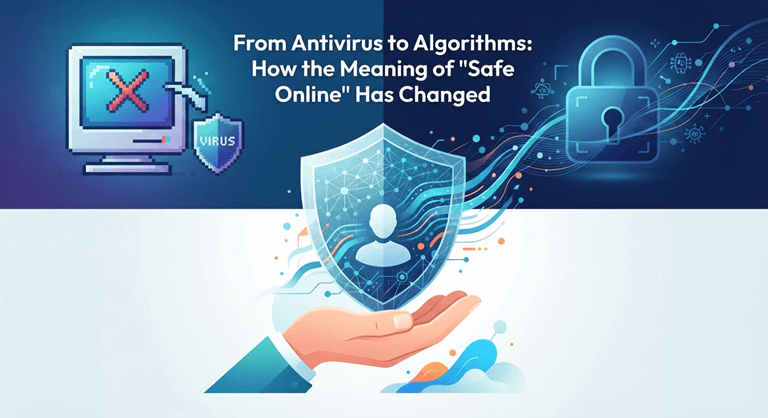
This change happened gradually, then suddenly. As more and more of life went online – banking, shopping, friends, you name it – so did the opportunities to get fooled, scammed, or exposed. One antivirus can’t protect you from a bogus pricing scam on a trading site, a poorly moderated chat room, or old software a company uses that leaks user information. Today, safety is more about systems running in the background, often through algorithms most users are never aware of.
The significance of this moment is that many risks are hidden today. This used to be a virus that would notify users with a crashed computer or some weird pop-up window. The dangers of today are more muted. A scam listing can look legitimate until someone checks the actual market price. A chat platform may appear to be a safe space to chat, but without proper moderation, the bad guys can still get in. An old piece of business software could be successful for years without revealing any information, but in secret. Safety is not only something visible, but also something structural, a change that is more difficult for the normal user to perceive.
It’s a peaceful kind of risk; that’s what makes trust in a company or platform even more important. A user who has come to a marketplace or new social app doesn’t know the code that powers it. They must trust that the people who constructed it have considered the risks beforehand. The burden of that’s passed onto the companies developing the tools, and clearly the best have gotten the message.
This change has caused 20th-century software companies to have a newfound appreciation for the word “safety”. Rather than asking, “how do we block a bad file,” they’re asking, “how do we build a system in such a way that trust is added in at all layers? It involves using test tools before recommending them, bidding dozens of times between different price sources to spot scams, thinking about moderation from the start of a platform, and stopping outmoded technology from getting in the way. Each of these experts is a different part of this new safety puzzle, and together the stories show how the idea of a safe online space has evolved.
These are all different areas of the web, each with its own path to safety. They don’t wait until there’s a problem to solve before fixing it. Instead, they develop systems that detect problems early, like a fake VPN, a scam listing, an unmoderated talk, or a forgotten element of old-fashioned software. A proactive mindset, not any one tool, is what real safety looks like today.
Safety Now Means Verifying Before You Trust
The concept of trying something before recommending it is easy to understand but rarely applied in a world of short reviews and paid promotions. It is better to make actual tests to see if a tool works as it promises than to quote a company’s marketing copy. It’s better to run real tests to see whether a tool works as promised than to quote a company’s marketing copy. This type of practical certification is becoming an apparent mark of a company’s commitment to online safety.
Mark Saunders, Founder of VPNGENIX, built his entire approach around this idea, testing every VPN and security tool himself before ever recommending it to readers.
“I served in the Army before I ever touched a keyboard for a living, and that same instinct to protect people never left me. At VpnGenix, we test every VPN ourselves instead of trusting a company’s marketing claims. One reader told us our streaming safety guide saved him from a fake sports site that stole his card details. Real online safety today means checking the tool, not just installing it and hoping for the best.”
This same principle of verification shows up in a very different corner of the internet: digital item marketplaces, where prices can shift by hundreds of dollars between platforms. Igor Pustovoy, CEO of Skinbase, built a platform that pulls live pricing data from dozens of marketplaces so buyers can spot a bad deal before it costs them money.
“Years ago, staying safe online mostly meant avoiding sketchy downloads, but digital marketplaces created a whole new kind of risk. At Skinbase, we pull live pricing data from more than 30 marketplaces so traders can spot a scam listing before they ever click buy. One trader avoided losing 800 dollars simply by comparing our price data against a suspiciously cheap offer. Safety today is about transparency, not just avoiding viruses.”
Safety Now Means Designing Trust Into the System Itself
Verification only goes so far when risk exists in human interaction, not just in single transactions. But social sites have another problem altogether: how to ensure that a conversation between two strangers who have never met is of high quality and safe. This is because the security aspects should be a primary concern of the platform and not an optional inclusion when issues arise.
Becky Stones, Founder of StrangerLine, designed her platform around this exact challenge, building moderation and privacy protections into the experience from the very beginning.
“Meeting a stranger online used to feel risky in a way that kept people from ever saying hello. We built StrangerLine with moderation, reporting, and privacy controls baked in from day one, not bolted on later. I have watched thousands of genuine friendships start because people finally felt safe enough to talk to someone new. Real online safety now means protecting the conversation, not just the device having it.”
Almost beneath the radar, though, is another set of risks associated with the outdated business technology that lies behind the scenes of nearly every platform until it fails. John Turns, Vice President of Strategy at Seisan, has spent two decades helping companies replace old systems before they become a target for attackers.
“In 20 years of consulting, I have seen more breaches caused by outdated systems than by any hacker’s clever trick. At Seisan, we help teams retire legacy software that quietly leaves the door open for attackers. One client cut critical vulnerabilities by more than half simply by modernizing systems nobody had touched in a decade. Staying safe online today depends more on smart algorithms than any ol’ antivirus scan.”
The New Definition of Safe Online
All four stories have a similar conclusion: VPNs, digital marketplaces, social platforms, and enterprise technology. Internet security isn’t a stand-alone application in the corner. It is a mentality that influences the development, testing, pricing, moderation and ongoing maintenance of a product over time. The companies spearheading the change realize they must earn trust at each turn, not simply because of a padlock in a browser bar.
In the future, companies that not only recognize the importance of safety but also treat it as a never-ending effort will be the ones that continue to be selected. Today, algorithms, live data, and judicious design play as significant a role as antivirus software did in the past in preventing online accidents. Users are also getting smarter, asking more difficult questions about the platforms, just as they wouldn’t believe a lock icon or a well-known logo meant that everything was good. Companies that are ready to make safety the product of every layer, and that’s an awakening that’s leading to true progress.
The lesson is simple and worth remembering. The key to being safe online today is not to install one tool and then leave. It’s a matter of trusting companies that constantly check, constantly update, and constantly put people first, one decision at a time. But as the internet continues to evolve, so will this commitment to continuous care and not just a software update, and that will be the best way to say you’re safe online.
Popular on OTW Right Now!

About The Author

Gagan Bhangu
Founder of otechworld.com and managing editor. He is a tech geek, web-developer, and blogger. He holds a master's degree in computer applications and making money online since 2015.