
How AI Is Changing Physical Security
Artificial intelligence isn’t just a concept from science fiction anymore; it’s a practical tool that’s changing industries. One of the biggest areas that is transforming is physical security. Here, AI is turning simple monitoring into an active, smart defense system. AI analyzes camera and sensor data, assisting security teams in faster detection of threats, predictive risk identification, and unprecedented response capabilities.
AI’s Impact on Surveillance
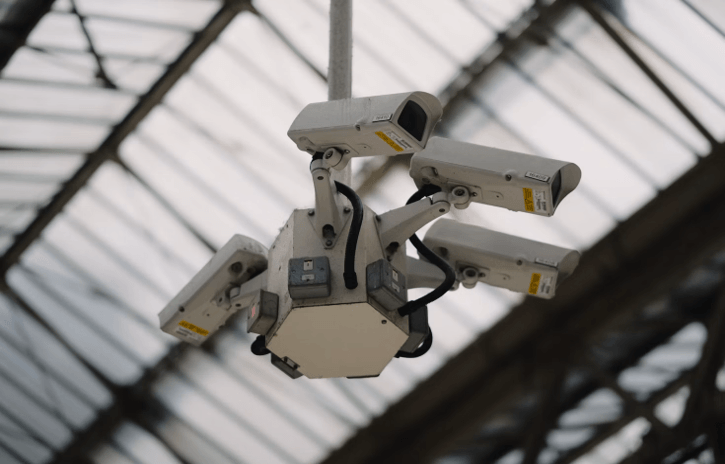
Surveillance systems have primarily been used over the years to look back at events. After an event, it took hours for security personnel to review videos to determine what occurred. With AI, all that changes. Rather than capturing video, an AI-powered camera can analyze video feeds while they are streaming.
This technology can detect and classify objects and distinguish between people, vehicles, and animals. It can also detect certain actions, such as somebody standing around a sensitive area or a car driving the wrong way. Training AI on the norm of activity helps it quickly identify any activity that deviates from that norm, which could be a sign of trouble. This dynamic analysis is essential to the role of AI in security, enabling teams to intervene before it gets worse.
Smart Video Management Systems
With so many high-definition cameras, organizations are collecting more video data than they can possibly handle. A security operator can’t effectively watch dozens or hundreds of live feeds at once. This is why AI-driven management platforms are crucial. Modern enterprise video management software uses AI to organize, index, and search through huge amounts of video footage almost instantly.
A security officer can simply type in a query such as “a person in a red jacket” or “a blue sedan” that came onto the screen between 2:00 PM and 3:00 PM, without having to watch hours of video. All relevant clips will appear in a few seconds. This capability can significantly reduce the time spent investigating cases and allow staff to be engaged in active monitoring and response.
Predictive Analytics for Better Protection
Predicting potential threats is one of the most potent applications of AI in the field of security. AI algorithms can detect patterns in data that can frequently be seen in advance of a security incident. This is a change from reacting to being proactive.
In cases such as a large public space, AI can be used to track and analyze crowd density and movement patterns to identify potential safety risks, like choke points or unusual movement. Likewise, it can be trained to recognize the usual times for a commercial building to be serviced by a truck, and alert to an unusual time for a truck to arrive. These predictive abilities use principles similar to those for anticipating digital threats, where AI in cybersecurity helps identify and stop malware before it can cause damage.
Automating Incident Response
If a threat is identified, every second counts! The initial steps of the first-response process can be automated by AI, ensuring timely and consistent action is taken. This will minimise the risk of human failure and will accelerate the response overall.
If an AI system detects an unauthorized person in a restricted area, it can automatically:
- Lock nearby doors to contain the individual.
- Send an alert to the closest security guard’s mobile device, including a map and a live video feed.
- Turn on the lights and sound the alarms in that specific area.
- Record the event with a time-stamped log for future review.
This automation isn’t intended as a substitute for human decision-making, but instead is designed to enhance it. AI can take care of repetitive, time-consuming tasks, freeing up time for security professionals to dedicate to strategic coordination and situation management.
Future Trends in Security Tech
AI is still in the process of evolving in the field of physical security. One can expect even more advanced features in the near future. AIs could potentially use thermal and optical sensors to scour perimeters on their own, day and night.
There will also be greater integration of various data types, as AI is used to link video and audio analytics, access control logs, and other sensor data to provide a more comprehensive understanding of the security environment. As these systems become more connected, protecting the AI platforms themselves from digital attacks and data leaks will be just as important as the physical security they provide.
The technology of security is constantly evolving. With AI, we have the ability to not only stay ahead of potential threats but also predict them, making the world a safer and more secure place for us all.
Popular on OTW Right Now!

About The Author

Gagan Bhangu
Founder of otechworld.com and managing editor. He is a tech geek, web-developer, and blogger. He holds a master's degree in computer applications and making money online since 2015.