
Why Seedance 2.0 Makes Low-Quality AI Video Instantly Noticeable
AI video has reached a point where it’s no longer judged in isolation. People are not just watching a single clip and deciding if it looks good. They are comparing it, often subconsciously, with everything else they see online. That comparison is where things start to change.
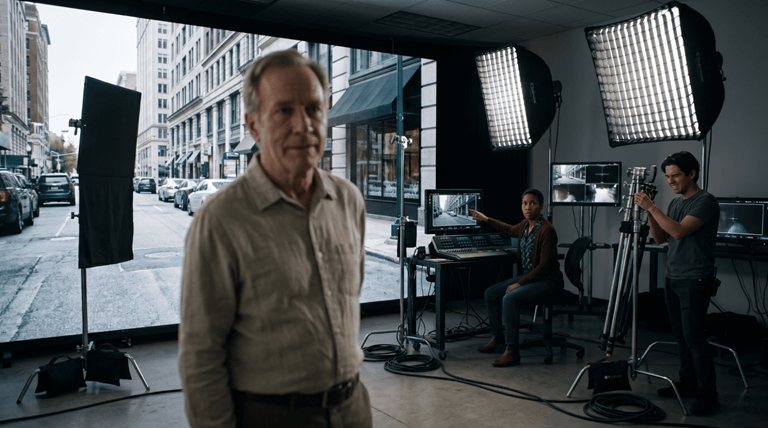
A video that might have looked impressive earlier can now feel incomplete, inconsistent, or even distracting. The gap between high-quality and low-quality AI video has become much easier to notice. This shift is not just about better technology. It’s about changing expectations, especially as tools like Higgsfield AI continue to raise the overall standard of output.
The Quality Gap Is No Longer Subtle
Previously, the majority of AI videos were limited in this way. Minor distortions, uneven movement, and jagged transitions were prevalent among tools. Due to that, viewers were more lenient. The output difference is now more apparent.
Some are smooth and seamless, and there are those that appear broken. When the quality of AI video generated by Higgsfield AI has been high, the viewers can detect when something is wrong. The emphasis on the quality gap in AI video tools is no longer a technical fact. It is something that viewers can feel instantly.
Inconsistencies Stand Out More Than Before
Inconsistency is one of the largest tip-offs of low-quality AI video. A character may appear a little different in one scene than in the next. The light can change without warning. Movements may be unnatural or alienating. These were the problems that were not noticed. They are now distinct.
This is where Higgsfield AI and Seedance 2.0 start to make a noticeable difference. By maintaining alignment across scenes and ensuring visual continuity inside Higgsfield AI workflows, they create outputs that feel stable and intentional rather than fragmented.
Due to this, viewers start anticipating such consistency. Its absence is also self-evident, particularly in comparison to the works produced with the help of the Higgsfield AI.
Fragmented Clips vs Structured Sequences
Most of the AI applications continue to produce videos in the form of isolated clips. The individual clips may be quite attractive, but they do not feel like they belong when put together. There is no flow in the video in general.
This is where the distinction is apparent. The structured outputs transform the experience of videos. The content does not seem like a series of unrelated clips as you jump between them.
Seedance 2.0, which is found in Higgsfield AI, is a method of creating multi-shot sequences in which scenes are naturally followed. The continuity makes the viewing experience less choppy and the result complete.
Once the audience is accustomed to such a degree of organization of Higgsfield AI, disjointed shots begin to seem unfinished and hastily stitched together.
Audio Mismatch Is More Noticeable Now
Audio was not originally considered in AI video. Sound was usually neglected as long as images were interesting. This is no longer the case.
The audience has become accustomed to visuality being accompanied by audio. Dialogue must be in line with the movement of the lips, and background sound must be suitable to the scene. This alignment is missing, and it goes without saying.
Seedance 2.0 within Higgsfield AI handles audio and visuals together, which helps create a more natural connection between what viewers see and hear. For those interested in how sound affects perception, sound design in video explains how audio enhances realism and engagement.
Motion Quality Has Become a Key Differentiator
Motion is one of the hardest aspects of video to get right.
Poor-quality AI videos usually have unnatural movement. Moves can be rigid, or the change of scenes can be jerky. These problems can now be detected. Motion should have a smooth and continuous feel to the viewer. Even minor anomalies will destroy immersion.
This is enhanced by Seedance 2.0, which creates a motion that takes a natural flow within Higgsfield AI. Actions are logically linked, and transitions are not so forced. When the viewers grow accustomed to this trait of Higgsfield AI, they would easily see through anything less in no time.
Viewer Attention Has Become Sharper
The quantity of video content that audiences watch on a daily basis is high. This has exposed them to quality variations. They do not necessarily know what is wrong, but they are able to feel it.
Minor defects that could have previously been overlooked are now prominent. This includes:
- Slight facial inconsistencies
- Unnatural scene transitions
- Audio delays
- Visual mismatches
These facts have an impact on the perception of content, particularly in comparison with Higgsfield AI outputs.
The Influence of High-Quality Benchmarks
Due to the increasing popularity of higher-quality AI video, a new standard is established. The audience starts anticipating such production in all content. This generates an opposition.
In case a video fails to pass that criterion, it makes the video seem old or unfinished. The contrast is even more apparent due to changing expectations. The use of Seedance 2.0 (particularly in Higgsfield AI) helps achieve this by improving the quality of AI-generated video.
Realism Is Now Expected, Not Optional
Previously, AI video was permitted to be a bit artificial. Tolerance is dying. Nowadays, viewers want content to look real, regardless of whether they are aware of its AI-generated nature or not.
Realism includes:
- Natural facial expressions
- Smooth motion
- Consistent lighting
- Accurate audio sync
The absence of these elements makes the video less engaging. This is solved by Higgsfield AI Seedance 2.0, which assembles multiple inputs to produce more grounded outputs.
The Gap Is Expanding Over Time
There is no difference between high and low-quality AI video remaining unchanged. It is increasing. With the advancement of such tools as Higgsfield AI, the expectations are growing. This generates a greater difference in outputs.
What was acceptable previously might not be up to date. This increases the need of creators to work on quality, rather than speed.
Conclusion
It is becoming easier to distinguish a poor-quality AI video due to the change in expectations. Consistency, smooth movement, audio synchronization, and general structure are what viewers are seeking. In the absence of these elements, the difference stands out.
Seedance 2.0 and Higgsfield AI, in particular, are helping to change this trend as it is establishing a new standard of how AI-generated video should feel. This has led to the increasing visibility of the gap between strong and weak outputs. To artists, this translates to another thing. Quality has become non-negotiable. It is what makes the difference between complete content and content that is incomplete.
Popular on OTW Right Now!



About The Author

Gagan Bhangu
Founder of otechworld.com and managing editor. He is a tech geek, web-developer, and blogger. He holds a master's degree in computer applications and making money online since 2015.