
Lifting Beam Rental: Smarter Heavy Load Management for Modern Operations
Heavy lifting operations are among the most logistically demanding tasks in construction, manufacturing, and industrial project management. Whether you are relocating oversized machinery, positioning structural steel, or managing complex rigging on a job site, the equipment you choose directly determines both safety outcomes and operational efficiency. For many project managers and site supervisors, the decision between purchasing and renting specialized lifting equipment is not simply a financial one — it is a strategic one. Understanding how to align your equipment choices with project timelines, load specifications, and budget constraints is essential to running a professional, compliant, and cost-effective operation.
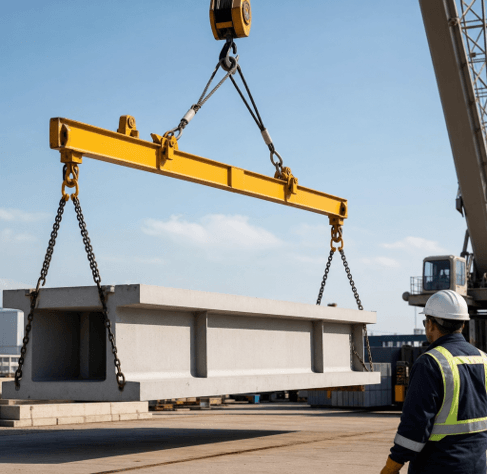
Why Lifting Beam Rental Makes Strategic Sense
Purchasing heavy lifting equipment outright is a significant capital investment. For businesses that do not require spreader bars or lifting beams on a continuous basis, ownership introduces ongoing costs, including maintenance, storage, inspection compliance, and eventual depreciation. Rental, by contrast, allows companies to access precisely the right equipment for each specific job without the burden of long-term asset management. This flexibility is particularly valuable in industries where project scopes vary widely from one contract to the next.
Rental also guarantees that equipment employed on any particular project is up to date and safe for use and complies with the load rating requirements. The good ones have a regular inspection regime, so their customers know that the equipment they use has been regularly checked and is suitable for demanding applications. This alleviates a major compliance drag on the operator and liability risks on the job site.
Matching Equipment to Load Requirements
A mistake that’s often made in heavy lifting is picking equipment that’s readily available but not actually needed. An undersized lifting beam will add stress concentration, and an oversized beam will add unnecessary weight and handling complexity. Before any decisions are made about equipment, the load must be analyzed, including load weight, center of gravity, lift points, and rigging geometry. Knowledgeable rental companies can help project teams choose the right beam setup from the start — avoiding expensive changes during the project.
Integrating Lifting Operations into Broader Logistics Planning
Heavy lifting is seldom done alone. Normally, it is one part of a comprehensive logistics chain, such as transport, site preparation, planning coordination, and load securing. As operations grow more complex, the value of integrated planning tools becomes increasingly apparent. For example, route optimization software has become a critical asset for logistics managers who need to coordinate the movement of heavy equipment and oversized loads across road networks efficiently. These tools help to minimize redundant travel time and route clashes, directly impacting fuel expenses as well as reducing the risk of delivery delays, leading to expensive project overruns.
It might seem more straightforward than it actually is, but there’s a direct link between lifting operations and transportation logistics. Equipment is to be delivered on time and in proper condition, meeting transport regulations. The delivery of equipment can hold up project timelines, especially when there is a tight connection between crane availability, crew availability, and windows of opportunity for deliveries. When selecting lifting equipment, it is important to consider it within the context of the overall logistics project rather than as a stand-alone procurement.
Load Securing and Road Safety Compliance
The transport of lifting beams and spreader bars to and from job sites comes with its own set of regulations. Load securing is more than just a good idea — in most jurisdictions, it is a requirement, and those that are not can lead to heavy penalties, vehicle impoundment and, most importantly, road safety issues. According to guidance on securing loads and maintaining safe roads, operators must ensure that all transported loads are properly restrained to prevent movement during transit. This is especially applicable to heavy lifting equipment that may move if not properly secured at speed, causing potentially catastrophic consequences during braking or cornering.
For project managers, it is crucial to ensure that all their transport contractors are well-versed in the proper way of securing loads to heavy lifting equipment. Spreader bars and lifting beams are frequently irregularly shaped and have high mass concentrations, which may necessitate special securing arrangements. It is also a good idea to keep records of compliance with these requirements, as this will be very useful during regulatory inspections and also for internal control purposes.
Tway Lifting: A Trusted Partner for Specialized Lifting Equipment
Tway Lifting has built a reputation for providing reliable, professionally maintained lifting equipment for project-specific applications. The company’s product line encompasses a wide variety of rigging and lifting solutions suited to the needs of the complex industrial and construction environments. They have a rigorous inventory that guarantees that all equipment that is taken to a job site is inspection-ready and fit for purpose. Project teams can take advantage of professional advice on equipment selection, which can help them choose the appropriate equipment for the required load and lift situation.
At Tway Lifting, they understand the context in which each of their clients works. The team will not provide a ‘one-size-fits-all’ list of equipment; instead, they will first understand the project timeline, load specs, and site constraints prior to making recommendations. This consultative approach helps to minimise the risk of equipment being used incorrectly and enables support for lifting operations from the start of work to the end to be safer and more efficient.
The Context Paragraph: Rental as a Practical Solution
For project managers evaluating their options, lifting beam rental offers a practical, cost-effective alternative to outright purchase, particularly for businesses that require high-capacity equipment on an intermittent basis. Renting avoids the expense of ownership and offers access to a variety of beam shapes, sizes, and rigging equipment. It also guarantees that the equipment used on a specific project is up to date, compliant and well-maintained – something imperative when working in a safety-critical environment.
Planning for Success: Key Considerations Before You Rent
A pre-lift assessment is important for project teams to do before entering a rental agreement. This involves working out the total suspended load, plotting the number and location of lift points, checking the necessary beam span, and verifying that the crane or hoist used is rated for the suspended load plus the lifting beam weight. Any of these factors will pose a risk that no amount of rigging experience can overcome.
The communication among the rental company, the rigging crew, and the site supervisor is also crucial. A well-documented lift plan, which contains information about the equipment used and the accountability of the operators, provides accountability and assists with a safe working environment. In addition to the value of the equipment, many rental companies will help create or review lift plans.
Conclusion
The strength of the equipment is not the only factor that is important in effective heavy lifting operations. They demand meticulous scheduling, accurate tool and equipment choices, adherence to regulations, and efficient integration with the larger logistics and transportation systems. Renting lifting beams provides a flexible and well-supported solution for all of these goals without the financial and administrative responsibility of equipment ownership. Complex lifts can be accomplished safely, on time, and on budget by working with seasoned providers, utilizing the latest in logistics equipment, and having safety protocols in place throughout the entire process.
Popular on OTW Right Now!



About The Author

Gagan Bhangu
Founder of otechworld.com and managing editor. He is a tech geek, web-developer, and blogger. He holds a master's degree in computer applications and making money online since 2015.