
How Route Optimization Software Reduces Fuel Costs and Delivery Delays
The $87 Billion Problem Nobody Talks About
Picture this. A delivery driver in Dallas circles the same block three times. Why? The address pinned on his outdated GPS sits two streets over. Meanwhile, his diesel tank drains, the customer fumes, and somewhere in a quiet office, a fleet manager watches profit margins shrink in real time. This scene plays out thousands of times daily across American highways, and it’s costing the logistics industry a staggering fortune.
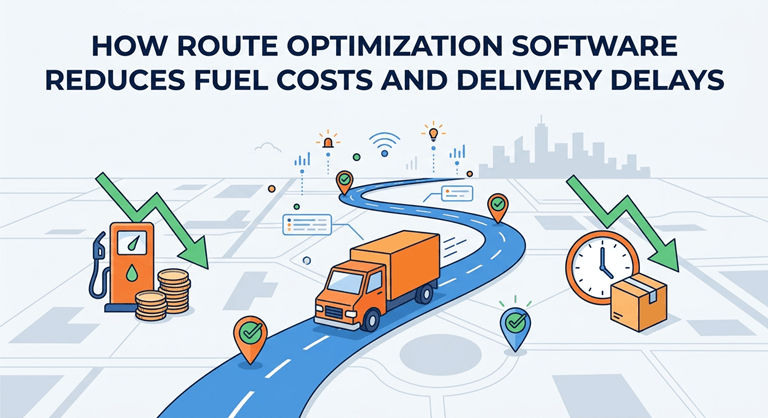
According to the American Transportation Research Institute, fuel remains the second-largest operational expense for U.S. trucking fleets, accounting for nearly 28% of total marginal costs. Pair that with the fact that the average American delivery company loses around $4 to $10 per failed delivery attempt, and you’ve got yourself a financial bleed that no business can afford to ignore. So what’s the fix? Smart software. Smarter routing. And a whole lot less guesswork. This means Mobility Infotech Logistics.
Why Old-School Route Planning Just Doesn’t Cut It Anymore
Remember when dispatchers used to plan delivery routes with paper maps, sticky notes, and pure gut instinct? Those days are gone. Today’s logistics landscape moves at lightning speed, with consumers demanding same-day shipping, real-time tracking, and flawless execution every single time they hit that order button. Manual planning simply cannot keep pace with this kind of relentless demand.
Here’s the kicker. Studies from McKinsey reveal that last-mile delivery makes up over 53% of total shipping costs. That’s more than half your logistics budget burning away on the final stretch alone. Without proper Route Optimization Software, fleets waste fuel on inefficient detours, drivers burn hours stuck in avoidable traffic, and customers get those dreaded “your package is delayed” notifications. Nobody wins.
The Magic Behind Modern Route Optimization Software
But how does this technology make wonders? The fundamentals of the Route Optimization Software are computational data processing that takes only a few seconds to process a lot of data. From traffic patterns to weather, vehicle capacity to driver schedules, delivery windows to fuel prices, and even updates on road construction. The system then generates the most optimal route that it can, which can save fleets 15% to 30% on fuel costs, based on data from Aberdeen Group research.
Smart Algorithms Doing the Heavy Lifting
Each optimized route is underpinned by a strong algorithm in the background, tirelessly working to create the best possible route. These machine learning models use past delivery data to identify potential delays, modify routes as per the changes in the day,y and make decisions in real time. Imagine having a fantastic logistics expert in your pocket and making lightning-quick decisions that would take several hours for a human planner to make!
Integration That Just Makes Sense
Modern platforms are not standalone. Seamlessly integrates with current fleet management, GPS tracking, warehouse management, and customer notification systems. It is a seamless system, so dispatchers, drivers, and customers are all on the same page, avoiding that frustrating communication breakdown that results in missed deliveries and angry phone calls.
Last Mile Route Optimization: Where the Real Money Lives
So let’s discuss the last mile. This is the most costly, the most complicated, ed and the most aggravating aspect of any travel to delivery. Smart fleets are also making millions there, though. Last-mile route optimization is a real solution to the urban delivery chaos, taking care of all the problems from limited parking spaces, road congestion, confusion in apartment complexes, and customer availability windows.
According to a Capgemini study, 55% of consumers would switch to a competitor if they were regularly late with their deliveries. Ouch. The one figure should give all logistics managers a tremble. Fleets have seen between 10% and 25% delivery time savings in the last mile based on last-mile mile optimization, and a significant improvement in their customer satisfaction scores. When people are happy, they stay around. They share with their peers. They leave glowing reviews.
Tackling the Urban Delivery Maze
Urban streets and roads have unique issues that rural roads do not. Picture the Loop in Chicago, or downtown in the city of San Francisco, or downtown Manhattan. The limited parking facilities, one-way roads, bike lanes, and pedestrian zones make it difficult for a simple drop off. These micro-level details are taken into account by the advanced last-mile route optimization software, which will recommend optimum parking, building entry points, and even the best time windows to avoid the pedestrian rush hour.
Real-Time Route Optimization: The Game Changer
Static routes are dead. Long live dynamic routing. Here’s why this matters more than ever. Traffic accidents happen. The weather shifts suddenly. Customers change their delivery preferences mid-route. New orders pop up that need urgent attention. Without real-time route optimization, your carefully planned morning schedule becomes useless by lunchtime.
The trucking industry loses an estimated $74.5 billion a year due to delays caused by traffic congestion, according to the U.S. Department of Transportation. Real-time systems can counteract this by constantly assessing road conditions and dynamically rerouting drivers around any issues that might arise, before they turn into expensive delays. Drivers receive immediate alerts right to their smartphones, keeping them always on the right track.
The Power of Live Data Streams
Suppose you knew what was going on as soon as it happened, you could send your entire East Coast fleet down the right road in no time, and you could avoid thousands of dollars in fuel expenses and lost delivery time. Real-time route optimization provides just that. The system’s inputs include live traffic data, weather data from APIs, and IoT sensor information, which continuously give you a picture of the roads in your operational area.
Crunching the Numbers: ROI That Actually Matters
Looking for some facts and figures? Fuel savings for companies that have put into place a full route optimization package range from 10% to 30%, depending on the complexity of operations and the size of the fleet. The American Trucking Association says that a 5% increase in route efficiency can yield a mid-sized fleet even more than $400,000 per year. It’s a lot of cash on the table for any individual who is ready to use modern technology.
Fuel is not the only consideration, though; there’s maintenance. Less vehicle wear and tear, fewer brake replacements, less tyre wear,r and longer engine life are a result of optimized routes. Factor in labor savings because of the increased number of stops by drivers per shift, and the economic benefits are really stunning. Implementations can bring a positive ROI in just 6 months for some fleets.
The Sustainability Bonus Nobody Saw Coming
The following is something that isn’t discussed enough. The direct impact of a decrease in fuel consumption is a decrease in carbon emissions. According to the EPA, transportation is responsible for 29% of the total U.S. GHGs, and medium and heavy-duty trucks make up a significant portion of that. Smart routing isn’t business-cum-good. It is indeed beneficial for the environment.
Today, large U.S. companies are asking their logistics providers to report on sustainability. Businesses with route optimization can proudly declare such environmental successes, metrics, and reduced carbon footprints. This is no longer simply a feel-good marketing mumbo-jumbo. It is no longer an option to win big jobs in 2026 and on.
Mobility Infotech Logistics Perspective
Mobility Infotech Logistics sees route optimization as an ongoing decision intelligence system and not a plan. The platform uses real-time traffic data, delivery requirements, and predictive routing to continuously optimize routes to minimize fuel consumption, on-time delivery rates, and adapt to unexpected operational shifts. The emphasis is on moving from the “fleet at large” to a “data-driven” execution layer to reduce inefficiency in the entire last-mile network.
Wrapping It Up: The Future Is Already Here
The discussion is no longer about the adoption of route optimization software technology, but how to implement it. How fast can you get it up and running before your competition gets the win? The logistics operations of the United States that do not get digitalized will be squeezed out by leaner, smarter, and faster competitors. Those who will accept it? In ways that no one could have ever envisioned, they will flourish.
Looking to cut fuel expenses, eliminate delivery delays, and please your customers? The same reason is the reason why Mobility Infotech Logistics is there. The money actually can be saved. The time is now.
Popular on OTW Right Now!
About The Author

Gagan Bhangu
Founder of otechworld.com and managing editor. He is a tech geek, web-developer, and blogger. He holds a master's degree in computer applications and making money online since 2015.